Luxury sofas can look similar online. But in person, the difference is obvious: one feels substantial, supportive, and built to last. The other feels fine in the showroom—and tired a few years later.
So what are you really paying for?
In this guide, we’ll break down the hidden (and not-so-hidden) parts of a luxury sofa—from leather selection to frame construction—so you can tell what’s worth the premium (and what’s just marketing). This is written for discerning Texas homeowners and design-minded buyers who want heirloom-quality pieces that blend modern style, rustic Western charm, and refined craftsmanship.
Quick answer: You’re paying for higher-grade materials (especially 100% top-grain leather), a stronger internal structure (like solid wood frames), more skilled labor (upholstery and finishing), better comfort engineering, and the option to customize fit and details so the piece works for your room—not a generic floor plan.
Table of Contents
- What Makes a Leather Sofa Luxury?
- The Leather: What You’re Buying (and What to Ask)
- The Frame: Where Long-Term Value Really Lives
- Suspension and Support: Why Comfort Holds Up (or Doesn’t)
- Cushions and Fill: The Difference Between Plush and Perfect
- Upholstery Work: Seams, Panels, and Precision
- Artisan Details: Carving, Tooling, Embossing (Done Right)
- Proportion + Design: The Room-Read Factor
- Customization: Making the Sofa Belong in Your Space
- How to Shop Smart in a Showroom (A Simple Checklist)
- Conclusion: How to Judge a Luxury Sofa in 5 Minutes
What Makes a Leather Sofa Luxury?
A luxury sofa isn’t defined by a single feature—not size, not a brand label, and not even leather by itself. Real luxury is the combination of materials, structure, and workmanship that holds up under everyday life.
Think of it like a well-built home. Great paint helps, but the foundation, framing, and craftsmanship are what keep it solid for decades. A luxury sofa works the same way.
In practical terms, a luxury sofa should deliver:
- Materials that age well (not materials that look good for one season)
- Structure that stays tight and supportive over years of sitting, lounging, and moving
- Craftsmanship you can see in the fit, finish, and alignment
- Design integrity (proportion, silhouette, and balance that feels intentional)
- Options that let you tailor the piece to your space and lifestyle
When those elements align, the sofa feels “right” in a way that’s hard to describe—but easy to notice. It doesn’t just fill a room. It anchors it.
One helpful mindset: Don’t judge luxury by what’s easiest to photograph (color, tufting, decorative trim). Judge it by what’s hardest to fake: material quality, internal construction, and the level of handwork.
The Leather: What You’re Buying (and What to Ask)
If you’re considering a premium leather sofa, leather quality is the first place to focus—and the first place some brands cut corners. Leather can be beautiful, durable, and full of character… or it can be heavily corrected, coated, or pieced together in ways that don’t wear the same over time.
Texas Leather Interiors specializes in 100% top-grain leather. If you want a deeper breakdown of what that means, start with this guide to understanding leather grades (including full-grain vs top-grain). The grade and finish affect what you’ll notice every day:
- Feel: substantial, warm, and natural (not slick or plastic-like)
- Appearance: depth, variation, and believable texture
- Aging: whether the piece develops a richer patina or simply looks worn out
- Durability: how it handles daily use, movement, and friction
What “top-grain” looks like in real life: You’ll often see natural character in the hide—subtle variation, grain movement, and a surface that looks alive under light. If you’re comparing hides and finishes, this texture and grain guide can help you spot the differences faster.
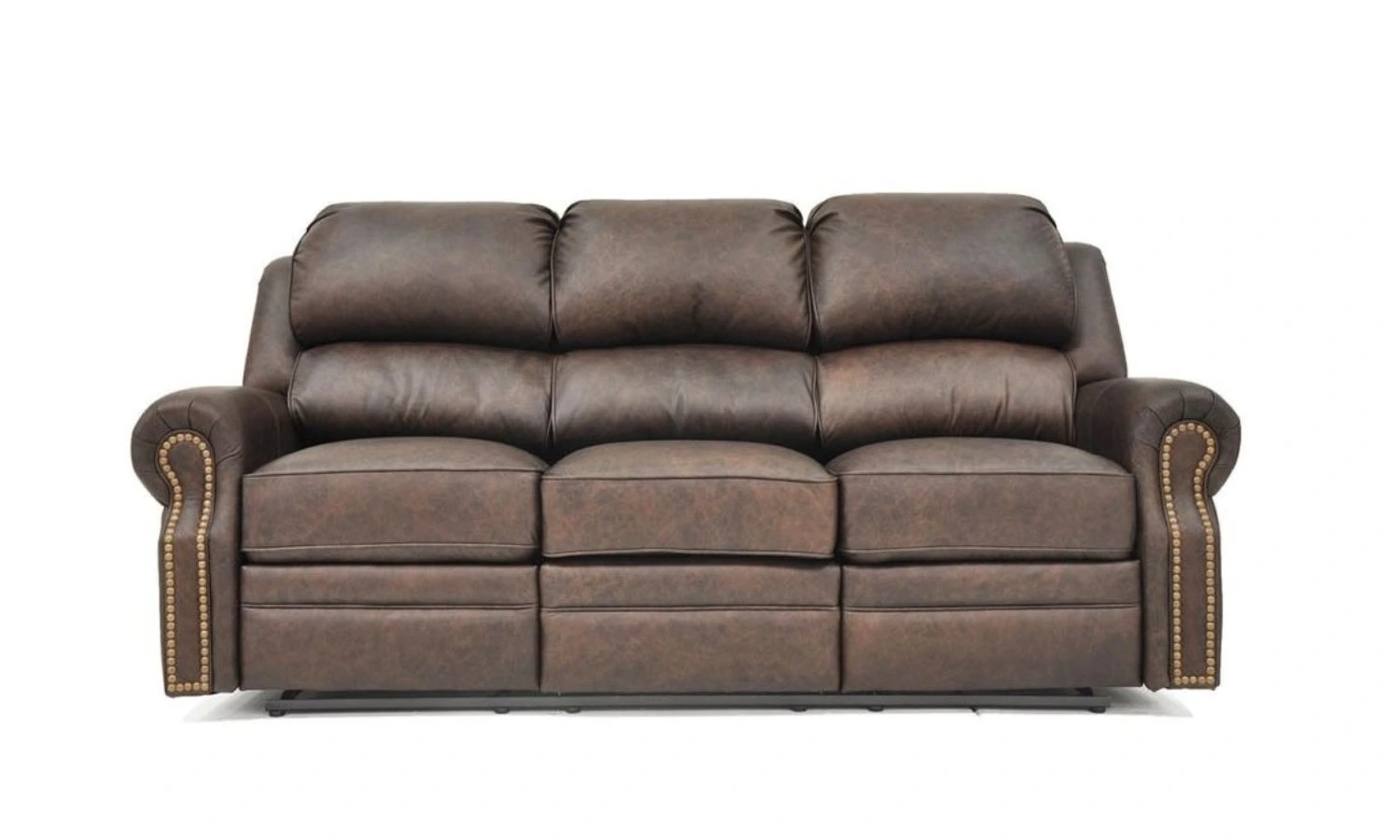
Why leather finishes matter: The finish determines how the leather behaves. Some leathers feel softer and more natural. Others are more protected and forgiving (a plus for certain households). Neither is “best” in all situations—the right choice is the one that matches how you live.
And if you’re wondering why a quality leather piece can become more compelling over time, here’s a helpful look at why leather sofas look better with age.
Questions to ask in the showroom:
- Is it 100% top-grain on all seating and contact surfaces?
- What finish is used (smooth, distressed, lightly protected, etc.), and what does that mean for care?
- Which leather options handle high-traffic living (kids, pets, entertaining) without losing their look?
- Can you see a sample swatch in the same lighting as your home (daylight vs warm bulbs can change everything)?
Simple at-home thought exercise: Picture how you actually use your sofa. Do you put your feet up? Eat in the living room? Host people often? The best leather is the one that supports your lifestyle without making you nervous to sit down.
The Frame: Where Long-Term Value Really Lives
Most people shop with their eyes. The best buyers shop with their hands—and ask about the frame.
A solid wood frame is one of the clearest indicators of long-term value because the frame is what keeps the sofa square, stable, and comfortable year after year. It’s also the part you won’t see once the sofa is upholstered—which is why lower-end pieces can hide compromises here.
Think of the frame like a foundation. If it flexes too much, everything attached to it (springs, cushions, leather panels, seams) takes more stress. Over time, that stress can show up as squeaks, sagging, and uneven wear.
What to ask about frame construction:
- What type of wood is used in the structural frame?
- How are corners reinforced?
- How is the frame assembled (and what’s done to prevent loosening over time)?
What to look for (practically):
- Stability test: lift one front corner slightly. A well-built sofa feels solid—not like it’s twisting.
- Arm test: lean gently on the arm. It should feel firm and quiet, not wobbly.
- Sound test: sit down and shift your weight. Creaks and pops can be a sign of a weaker internal build.
None of this is about being picky. It’s about understanding what you’re paying for: structure that stays tight after years of real living.
Suspension and Support: Why Comfort Holds Up (or Doesn’t)
This is where a sofa can feel great for 10 minutes—and disappointing after 10 months.
Suspension is the internal support system underneath the cushions. It’s what prevents the seat from turning into a hammock over time. When suspension is well built, you get:
- Even support (no sagging “favorite spot” after a short period)
- Better posture and easier sit-to-stand comfort
- Longer-lasting seat shape across the entire sofa

Why it matters for leather: Leather doesn’t hide dips and unevenness the way some fabrics can. If the support system breaks down, the silhouette changes—and the sofa can start to look tired even if the leather itself is still in good condition.
Showroom test you can do in one minute:
- Sit in the middle for 60 seconds.
- Shift to the edge and sit again.
- Notice if the support feels consistent—or if one area feels softer, lower, or less stable.
If you love a sofa’s look, but it feels uneven from the start, it rarely “gets better” at home. Good support should feel confident immediately.
Cushions and Fill: The Difference Between Plush and Perfect
Luxury comfort isn’t always the softest option. Many mass-market sofas feel ultra-plush on day one because they’re designed to impress quickly. A higher-quality build aims for something more important: balanced resilience.
That balance means the sofa is:
- Supportive enough that you don’t bottom out
- Comfortable enough that you want to use it every day
- Structured enough to keep its shape and tailored look
What affects cushion performance: the foam core (its quality and firmness), any wraps (like softer layers that add comfort), and how the cushion is constructed. Small differences here can change how a sofa feels after thousands of sits.
Simple test: stand up and look at the cushions. Do they bounce back quickly and evenly, or do they look tired immediately?
Another test: sit down, then place your hand next to your hip and press. If the cushion collapses too easily with very little resistance, it may feel “comfy” now—but it can lose support sooner.
In a luxury piece, comfort is designed for the long term. The best seat isn’t just soft—it’s supportive, consistent, and easy to live with.
Upholstery Work: Seams, Panels, and Precision
Leather shows workmanship more than fabric. Poor work looks messy fast. Great work looks calm, tight, and intentional.
Because leather is a natural material (and each hide has unique characteristics), upholstery work requires judgment. Skilled upholsterers make decisions about panel placement, tension, and alignment that can’t be fully automated. That human skill is a real part of what you’re paying for.
If you want to go deeper on the details that separate “nice” from “investment-grade,” this breakdown of stitching, tooling, and finishing details is a useful reference.
Check these details up close:
- Seam alignment: panels match and flow cleanly across the piece
- Tension: leather is fitted smoothly (not baggy, not overstretched)
- Consistency: stitching looks deliberate and even
- Edges and corners: transitions look crisp rather than bulky or lumpy
What good upholstery feels like: When you run your hand across a seat or arm, the leather should feel like it belongs there—secure, smooth, and properly supported underneath. If you feel loose areas or “floating” sections, the piece may not hold its tailored look over time.
If you’re investing in a premium sofa, inspect it the way you’d inspect a tailored jacket: how it fits, how it’s stitched, and how the details sit from every angle.
Artisan Details: Carving, Tooling, Embossing (Done Right)
Premium detailing should feel integrated—not added on.
Texas Leather Interiors is known for elements like hand-carved wood, tooled leather, and embossed details. These touches can add a distinct signature—especially for Western or Hill Country spaces—but they’re most powerful when they support the overall silhouette.
What you’re paying for with artisan details:
- Time: handwork takes longer than machine-applied decoration
- Skill: the difference between “busy” and “refined” is experience
- Consistency: patterns, depth, and finishing need to look intentional
- Integration: details should look designed into the piece, not attached afterward

A helpful rule: the detail should support the silhouette, not compete with it. The best pieces read as refined from across the room, then reward you up close.
Design tip: In a more modern interior, consider placing artisan details strategically (for example, subtle embossing or a clean carved element) rather than using heavy ornamentation everywhere. In a more Western setting, you can lean in further—just keep an eye on balance so the room still feels elevated rather than themed.
Proportion + Design: The Room-Read Factor
Two sofas can use similar materials and still land very differently in a room. Why? Proportion.
Luxury pieces often feel better in a space because the scale is resolved: the arms don’t look too bulky, the seat depth supports how people actually sit, and the overall silhouette feels balanced from multiple angles.
Luxury proportions typically get these right:
- Seat depth that matches real living (lounging vs upright conversation)
- Back height that feels supportive without making the sofa look heavy
- Arm scale that looks substantial but doesn’t steal seat space
- Overall balance so the piece feels designed—not simply oversized
How to judge proportion in your own home: Measure your wall, your walkways, and the distance to other key pieces (coffee table, chairs, fireplace hearth). Then compare those measurements to the sofa’s total width and depth. A beautiful sofa can still feel wrong if it blocks traffic flow or overwhelms the room.
If you’re planning for a larger layout, this guide to choosing a leather sofa set for an open concept living room can help you think through spacing and pairings before you buy.
If you’re furnishing a ranch home, a second home, or a primary residence, this is where modern style can blend beautifully with rustic Western charm—without looking forced.
Customization: Making the Sofa Belong in Your Space
Customization is one of the most practical reasons people upgrade to premium furniture. Instead of forcing your room to accept a standard size, you can tailor a piece so it fits your architecture, layout, and daily habits.
With Texas Leather Interiors, buyers often look for customization in areas like:
- Configuration (sofa, sectional layouts, chaise options)
- Sizing (scale that fits your wall length, traffic flow, and room shape)
- Leather selection (color, texture, finish, character)
- Style details (wood finishes, tooling/embossing accents, carved elements)

Why customization is part of “value”: If a sofa fits the room correctly, it’s easier to live with—and easier to keep long-term. You’re less likely to replace it because the layout doesn’t work, the scale feels off, or the material choice doesn’t match the way your household actually uses the space.
This is also where working with a design team can pay off. A luxury leather sofa should solve a real design problem: comfort, layout, scale, and a cohesive look that fits your home instead of fighting it.
How to Shop Smart in a Showroom (A Simple Checklist)
Showrooms are designed to make furniture look its best—which is helpful, but it can also make comparison difficult. Use this simple process to stay focused on what matters.
Step 1: Start with your non-negotiables
- Room size and layout (measure before you shop)
- How you sit (lounging, upright, mixed use)
- Household realities (pets, kids, frequent entertaining)
Step 2: Compare the build, not just the look
- Leather: confirm grade (ex: 100% top-grain), finish, and suitability for your lifestyle
- Frame: ask about solid wood construction and long-term stability
- Support: sit for 60 seconds; check edge support; look for consistent feel
- Workmanship: inspect seams, panel alignment, and leather tension
Step 3: Check the “room-read” factor
- Does the scale match your space (not just the showroom)?
- Does the sofa’s silhouette support your style (modern, Western, transitional)?
- Will it look grounded with your floors, rugs, and wall colors?
Step 4: Ask about options
- Can you customize configuration, size, and leather?
- Are there finish options that better match your home (wood tone, nailhead style, detailing level)?
If you’re shopping in Texas, seeing pieces in person is especially valuable. You can find Texas Leather Interiors showroom details here: https://texasleatherinteriors.com/locations/.
Conclusion: How to Judge a Luxury Sofa in 5 Minutes
Premium pricing makes sense when the value is structural: better leather, stronger frames, durable support, precise upholstery work, disciplined design, and customization that helps the piece feel made for the room—not just delivered to it.
If you want to evaluate a sofa quickly, focus on what’s hard to fake:
- Leather quality: grade, finish, and how it feels up close
- Frame stability: does it feel rigid and quiet?
- Support system: consistent comfort across the seat
- Workmanship: clean seams, fitted panels, and intentional details
- Proportion: scale that makes the room feel balanced
And if you’re weighing your purchase as a long-term investment, this guide on how long leather furniture lasts is a solid final read.
When those are right, the sofa doesn’t just look expensive—it feels inevitable in the space.
Next step: Request a free design consultation at our San Antonio or Austin showroom.