Category

Leather Furniture

Why Matching Furniture Sets Can Make a Room Feel Flat

Living room featuring a white sofa, navy blue accent chairs, and a cognac leather recliner, demonstrating how mixing furniture styles creates a layered and cohesive space.

You can spend real money on a living room and still end up with a space that feels oddly one-note. One of the most common reasons is an overreliance on matching furniture sets: the sofa, loveseat, chair, and tables all repeating the same shapes, finishes, and details.

The result is usually tidy and coordinated-, but it can also feel like the room came as a package-and not in a good way. Today’s design direction leans toward spaces that feel curated: mixed materials, varied silhouettes, and furniture that looks collected over time instead of purchased in one trip. (If you want a concrete example of this approach, see Layered Living Room Leather Furniture.)

In this post, you’ll learn why matching sets can flatten a room, what designers do instead, and a practical, homeowner-friendly way to create depth without turning the space into a visual mess. We’ll also cover where customization (especially in top-grain leather) can help you get that collected look with a more refined finish.

Table of Contents

  1. Quick Answer: Why Matching Furniture Sets Can Feel Flat
  2. What Flat Looks Like in a Real Room
  3. Cohesion vs. Identical: The Key Mindset Shift
  4. The Collected Formula (What to Repeat, What to Vary)
  5. How to Mix Pieces Without Visual Chaos
  6. Mixing Materials (Leather, Wood, Metal, Textiles) on Purpose
  7. Fixing Flatness With Shape and Scale
  8. How to Update a Matching Furniture Set-Without Replacing Everything
  9. Where Customization Makes the Biggest Difference
  10. A Quick Checklist for a Room That Feels Collected
  11. Conclusion

Quick Answer: Why Matching Furniture Sets Can Feel Flat

Matching furniture sets can make a room feel flat because they repeat the same visual information across the largest objects in the space. When outlines, finishes, and upholstery all match, your eye has fewer contrasts to notice-so the room reads as one continuous block instead of a layered composition.

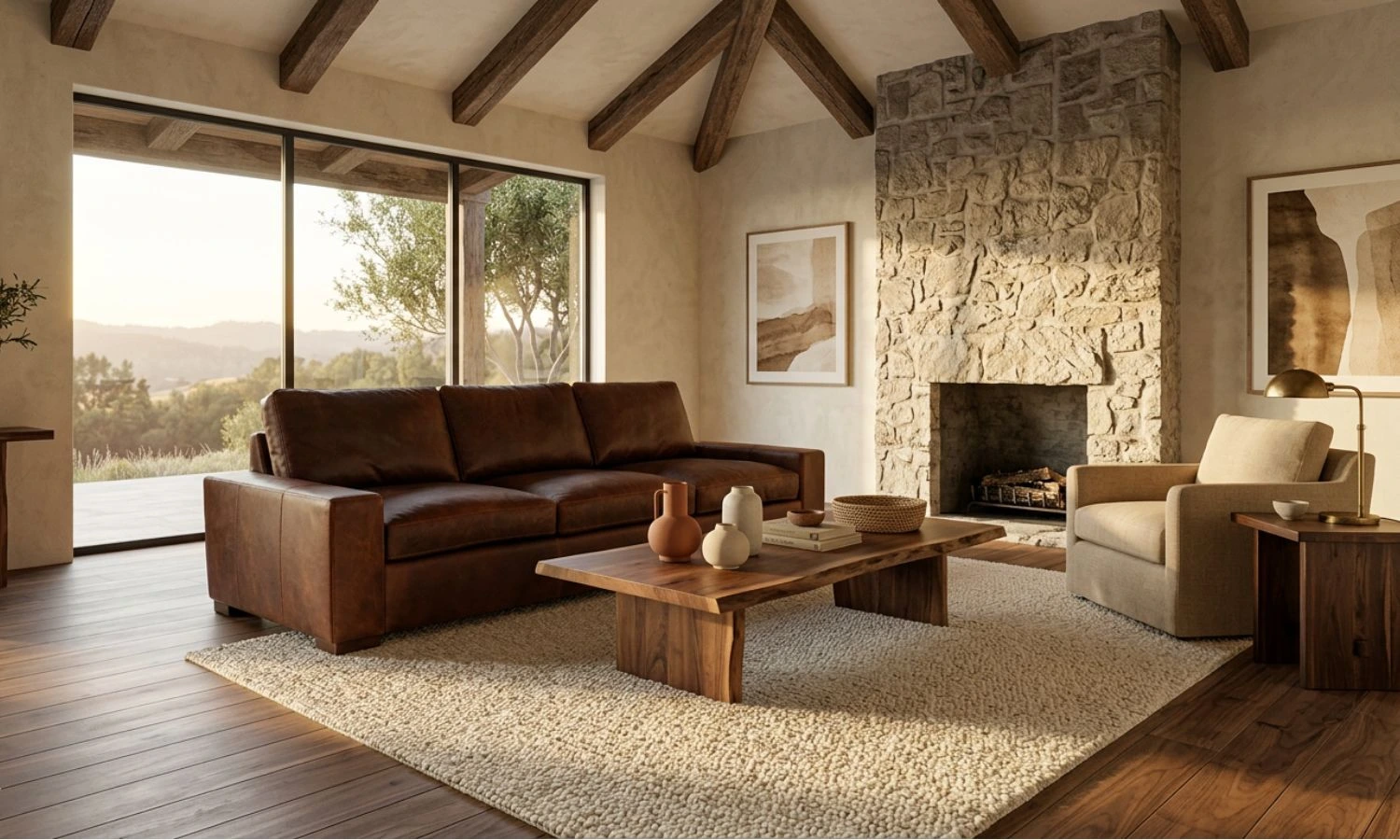
Dark brown leather sofa paired with a patterned accent chair, wooden furniture, and a stone fireplace in a warm traditional living room.

In most rooms, that flat feeling comes from a combination of three things:

  • Low contrast: the same color value and texture across multiple big surfaces.
  • No hierarchy: if everything matches, nothing becomes the focal point.
  • Less personality: a set communicates the collection’s style, not necessarily yours.

The fix: keep the room cohesive by repeating a few elements (like tone, proportion, or an accent finish), but purposefully vary silhouettes, textures, and materials so each piece has a role.

If you want a simple rule to remember: match less, coordinate more.

What Flat Looks Like in a Real Room

Flat doesn’t always mean boring-and it doesn’t mean the furniture is poor quality. It usually means the room feels visually heavy, overly uniform, or strangely lifeless even after you’ve cleaned, styled, and added decor.

A room often starts to feel flat when multiple big pieces share all (or most) of these traits:

  • Same silhouette: thick arms everywhere, similar back heights, identical base styles.
  • Same material everywhere: all smooth leather, or all the same fabric texture.
  • Same finish family: tables, legs, and wood tones that blend into one mass.
  • No focal hierarchy: everything competes equally-or nothing stands out at all.

Here are a few common symptoms homeowners notice:

  • The room photographs fine but feels underwhelming in person.
  • You keep buying pillows or accessories, but it still looks incomplete.
  • Everything feels the same height and weight from across the room.
  • The seating group feels like one large object instead of distinct pieces.

It’s not that the pieces are wrong. It’s that the room lacks contrast, punctuation, and a sense of story. And because furniture sets are made to match perfectly, they remove many of the small variations that create depth.

This is especially helpful in Texas interiors, where many homes mix modern lines with rustic Western character. A statement leather sofa can “make the room,” but only if the surrounding finishes support it (the right rug, the right wood tones, and the right lighting).

Cohesion vs. Identical: The Key Mindset Shift

Here’s the design principle that changes everything:

Cohesion is a relationship between pieces-not a requirement that they be identical.

Matching furniture sets create cohesion by making everything the same. Curated rooms create cohesion by making different pieces feel like they belong together.

Think of it like getting dressed. A matching suit is consistent, but it isn’t your only option. A great outfit can mix a jacket, shirt, denim, and boots-as long as the colors, proportions, and details relate. Rooms work the same way.

To build cohesion without going identical, designers typically lean on a few connectors:

  • Color direction: warm neutrals, earth tones, soft grays, deep charcoals.
  • Undertones: keeping woods warm with warm, or cool with cool, so finishes don’t fight each other.
  • Repeated lines: clean modern frames, gently curved profiles, or more traditional shaping.
  • Consistent quality level: mixing is easier when materials and craftsmanship feel equally intentional.

And to be fair, furniture sets are tempting for good reasons. They make shopping feel simple, they remove decision fatigue, and they guarantee no mistakes. The tradeoff is that they can also remove the variety that makes a room feel dimensional.

The Collected Formula (What to Repeat, What to Vary)

If you want a room that looks collected (not showroom-matched), use this approach. It’s structured enough to prevent visual chaos, but flexible enough to feel personal.

Repeat 2 Things

Repeats create calm. They tell your eye, Yes, this is one room. Great options include:

  • A color family: warm neutrals, saddle brown, charcoal, or soft creams.
  • A vibe: tailored and modern, rustic and textural, refined and transitional.
  • A finish cue: a consistent metal finish, a repeated wood undertone, or a shared leather tone.

If you want the easiest repeat for living rooms: choose one dominant upholstery direction (for example, warm brown leather) and let other pieces support it instead of copying it.

Vary 2 Things

Variations add depth. They create the collected over time look. Consider varying:

  • Silhouettes: pair a clean-lined sofa with a more open-frame chair (or a gentle curve).
  • Textures: mix smooth leather with woven fabric, natural fiber rugs, or matte ceramics.
  • Visual weight: balance substantial seating with airier tables or lighter accent pieces.

One practical way to keep variation from feeling random is to plan it in layers:

  1. Layer 1 (big shapes): sofa/sectional + chairs.
  2. Layer 2 (hard surfaces): coffee table + end tables + console.
  3. Layer 3 (soft surfaces): rug + drapery + throws + pillows.
  4. Layer 4 (finishing): lighting + art + accessories.

When you vary the big shapes and materials first, the room feels dimensional before you add any decor. That’s the difference between a room that feels styled and a room that feels designed.

How to Mix Pieces Without Visual Chaos

Mixing is easiest when you choose an anchor piece and build around it. The anchor keeps decisions grounded, and everything else becomes a response to it.

Step 1: Pick Your Anchor (Usually the Sofa or Sectional)

Start with the largest seating piece because it sets the scale and tone of the room. For many Texas homes, a top-grain leather sofa or sectional is a strong anchor: durable, grounded, and visually rich without needing a loud pattern.

Before you commit, get clear on what the anchor should do. Ask:

  • Is this room for everyday lounging, or mostly entertaining?
  • Do you want a conversational layout, or a media-focused layout?
  • Do you need deep, relaxed seating-or a more upright, tailored sit?

Then decide what you want that anchor to be visually:

  • Quiet foundation: clean-lined leather that lets art, lighting, and textiles shine.
  • Statement piece: more character in the leather, wood detailing, or Western-inspired craftsmanship.

If you want to go deeper on construction and what separates truly investment-grade seating from mass-manufactured options, see The Anatomy of a Luxury Sofa.

And if you’re furnishing a more open floor plan, this guide can help you think through scale and layout: Best Leather Sofa Set for an Open-Concept Living Room.

Either approach can work. The key is to avoid making every piece the statement and then wondering why the room feels busy-or making every piece identical and then wondering why it feels flat.

Step 2: Add One Contrast Piece

Now you’re layering. A contrast piece breaks the matchy-matchy effect immediately-without requiring a total redesign.

Good contrast choices are usually near neighbors to your anchor. They relate, but they don’t copy. For example:

  • If your sofa is smooth leather, try a chair with texture (woven fabric, performance linen, or a nubby neutral).
  • If your seating is substantial, choose a more open-base coffee table (metal base, slimmer legs, or a lighter top).
  • If your room is all straight lines, add one curve (chair, mirror, or rounded table).

If your space is tighter (or you just want more flexibility), these ideas can help you choose the right profile: Leather Accent Chairs for Small Spaces.

That one move creates a focal point and gives the room a more intentional rhythm.

Step 3: Keep Proportions in the Same Family

This is where many rooms go off track. You can mix styles, but the scale needs to make sense together. Pay attention to:

  • Seat heights: chairs and sofas should feel like they belong in the same conversation group.
  • Arm thickness: one chunky piece can work; four chunky pieces often feels heavy.
  • Leg presence: mixing a skirted sofa with spindly-legged chairs can feel disconnected unless other elements tie them together.
  • Table heights: coffee and side tables should serve the seating, not float above it.

A simple homeowner trick: take a photo of the sofa and the chair from the side, then compare back height, seat height, and arm thickness. If one piece looks like it belongs in a different room entirely, it’s usually a proportion issue-not a color issue.

Step 4: Limit the Loud Moves

If you bring in a bold texture, a high-contrast wood finish, and dramatic hardware all at once, the room can feel busy. A refined, collected room usually has one strong move per zone-then supports it with quieter pieces.

Examples of a single loud move:

  • A dramatic leather tone (like a rich cognac) paired with calm neutrals elsewhere.
  • A statement chair silhouette with simpler tables and lighting.
  • A bold rug that introduces pattern while the upholstery stays solid.

One reason leather works so well as an anchor in a collected room is that it develops more character over time. If you’re curious what that looks like in real homes, read Why Leather Sofas Look Better With Age.

When you limit strong moves, the room stays readable. That readability is what makes a space feel expensive even when the design is simple.

Mixing Materials (Leather, Wood, Metal, Textiles) on Purpose

Material mixing is one of the fastest ways to add depth-especially when you’re trying to move beyond matching furniture sets. The goal isn’t to add as many materials as possible. The goal is to add the right contrast in the right places.
Leather + Textile: Balance Polish With Softness

Leather brings structure and richness. Textiles bring softness and a more lived-in, layered feel. A common designer approach is leather main seating + textile accent seating (or vice versa), tied together with a rug and a few repeating tones.

To keep this looking refined (not mismatched), choose your textile based on what the leather needs:

  • If the leather is dark: consider lighter textiles to lift the room.
  • If the leather is warm: choose textiles with warm undertones (cream, oatmeal, camel, warm gray).
  • If the leather has a lot of character: keep textiles quieter so the leather remains the focal point.

If you’re deciding between different leather looks (smooth vs. more visible grain, matte vs. more sheen), this can help: Leather Furniture Texture and Grain Guide.

And don’t forget comfort. A room feels luxurious when it’s inviting to use, not just nice to look at.

Wood Finishes: Don’t Chase Perfect Match

Exact wood matches are harder than they look, especially across different manufacturers. Almost matching finishes can actually look like a mistake because they feel accidental.

Instead:

  • Choose one dominant wood tone for larger pieces (like a console or cocktail table).
  • Add a second tone that’s clearly different (lighter, darker, or more rustic) so it feels intentional.
  • Focus on undertones (warm vs. cool) and overall character (refined vs. weathered).

This is especially useful in Texas interiors where you may already have strong fixed elements-wood floors, ceiling beams, stone fireplaces, or iron accents. Those built-ins count as part of your finish palette.

Metal and Stone: Use Them as Relief

When a room is heavy with upholstery and wood, metal or stone can act like visual breathing room. A slim metal base, a lighter stone top, or a mixed-material table can add contrast without adding another bulky shape.

Two practical guidelines:

  • Repeat metal finishes at least twice. For example, black iron on a table base + picture frame + lighting detail.
  • Use stone where you want light and clarity. It can brighten a seating group that otherwise reads as all brown or all dark.

Fixing Flatness With Shape and Scale

Even with varied finishes, a room can still feel flat if all the big pieces share the same silhouette. Shapes create movement. When everything is the same shape, your eye stops traveling-and the room feels static.

Do a quick outline check by standing at the main entry to the room and looking at the seating group as a single composition. Then ask:

  • Too many rectangles? Add one curve (chair, ottoman, mirror, or round table).
  • Everything low and wide? Add height with a taller cabinet, bookcase, or statement floor lamp.
  • Is everything visually heavy? Swap in one open-frame piece (chair, console, or table base).

Scale matters just as much as shape. Rooms feel off when furniture is too large for the floor plan-or when pieces are undersized and float away from each other. A few checks that help:

  • Rug scale: in most living rooms, the front legs of seating should sit on the rug.
  • Table reach: side tables should be close enough to actually use from the seat.
  • Walking paths: maintain clear circulation so the room feels comfortable to move through.

Often, one silhouette change does more than a dozen new accessories. If the room feels flat, look at the big outlines first-then decorate.

How to Update a Matching Set-Without Replacing Everything

If you already own a matching set, you’re not stuck with a flat room. You can de-set it in phases, and you can do it in a way that respects what you already own.

Phase 1: Rearrange Before You Replace

Before you buy anything, experiment. Try:

  • Separating matching chairs so they aren’t a pair in the same sightline.
  • Moving the loveseat to a different room (or removing it temporarily) to reduce visual bulk.
  • Changing the angle of a chair to create a more dynamic layout.

Sometimes the flatness is really a layout issue-and you can fix it for free.

Phase 2: Replace One Thing That Creates Contrast

When you’re ready to make a change, start with a piece that will have a big visual payoff:

  • Replace one matching chair with a contrasting accent chair.
  • Swap the matching table group for one mixed-material coffee table.
  • Change one large texture (a rug is often the easiest) to introduce pattern and dimension.

The goal isn’t to make everything different. It’s to introduce enough variation that the room feels layered and personal.

Phase 3: Upgrade With Intention, Not Urgency

A collected room is built over time. If you replace everything at once, you can accidentally recreate the same set effect-even if the pieces don’t technically match. Make one strong decision, live with it, then choose the next piece based on what the room still needs.

Where Customization Makes the Biggest Difference

This is where a high-end retailer can be a real advantage. Instead of accepting a pre-determined set, you can create cohesion through intentional choices-without forcing every piece to match.

At Texas Leather Interiors, many collections are available with options that help you build a curated room. If you want a starting point for pieces designed around that mix-and-match approach, explore the Texas Leather Collection:

  • Top-grain leather choices that change the tone from modern and tailored to warm and rustic.
  • Configuration flexibility for sectionals and seating arrangements that fit real floor plans.
  • Finish and detail decisions (wood tones, textures, and accents) that create a more personal result.

Customization works best when it solves a specific problem: scale, layout, comfort, or the need to complement finishes you’re already keeping. Instead of thinking, What set should I buy? a better question is:

What does my room need the furniture to do-and how do I want it to feel?

If you’re working with a design expert, come prepared with:

  • Room measurements (including wall lengths and walkways).
  • Photos from multiple angles (daylight and evening if possible).
  • Notes on what stays (floors, rugs, existing art, or inherited pieces).
  • How you actually use the room (TV, conversation, entertaining, reading).

That information makes it much easier to build a cohesive plan with mixed pieces-and avoid defaulting back to matching furniture sets.

A Quick Checklist for a Room That Feels Collected

Use this checklist as a quick audit when you’re shopping, rearranging, or planning a refresh.

  • Anchor piece chosen: sofa/sectional sets the tone and scale.
  • 2 repeats: color family, vibe, and one finish/detail cue.
  • 2 variations: silhouette, texture, and visual weight.
  • One contrast move per zone: don’t introduce five bold changes at once.
  • Proportions align: seating heights and table heights work together.
  • Wood tones intentional: one dominant + one clearly different (not almost-matching).
  • Layout works in real life: walking paths are clear, tables are within reach, lighting serves the seats.

If you check most of these boxes, your room will almost always look more curated-even with simple decor.

Conclusion

Matching furniture sets can feel flat because they remove contrast-one of the key ingredients that makes a room feel designed, lived-in, and personal. The alternative isn’t disorder. It’s a more curated approach: repeat a few elements for cohesion, then vary silhouettes, textures, and materials so the space feels collected over time.

Ready to build a room with more depth (and a better fit for the way you live)? Request a free design consultation at our San Antonio or Austin showroom.

November 10, 2026 in Leather Furniture

Why Matching Furniture Sets Can Make a Room Feel Flat

You can spend real money on a living room and still end up with a space that feels oddly one-note. One of the most common reasons is an overreliance on…
Read More
November 10, 2026 in Leather Sofa

How to Choose the Right Leather Sofa Color for Your Living Room

A leather sofa isn’t just a seat, it’s one of the biggest color decisions in your entire home. Get the color right and the room feels pulled together for decades.…
Read More
October 16, 2026 in Leather Furniture

How to Create a Layered Living Room With Leather Furniture

Leather has a natural presence. It feels substantial, it ages with character, and it can instantly elevate a living room. But there’s a catch: if the rest of the space…
Read More
October 16, 2026 in Leather Sofa

The Anatomy of a Luxury Sofa: What You’re Really Paying For

Luxury sofas can look similar online. But in person, the difference is obvious: one feels substantial, supportive, and built to last. The other feels fine in the showroom—and tired a…
Read More

How to Create a Layered Living Room With Leather Furniture

Spacious living room featuring brown leather sofas and armchairs, a patterned area rug, natural wood furniture, and a stone fireplace.

Leather has a natural presence. It feels substantial, it ages with character, and it can instantly elevate a living room. But there’s a catch: if the rest of the space isn’t layered intentionally, even beautiful leather can make a room feel flat, heavy, or “too matching.”

This guide is for Texas homeowners (and designers) who want a layered look that feels refined, livable, and collected—not themed. You’ll learn a practical, step-by-step way to layer rugs, wood, textiles, lighting, and accents around leather furniture so the room feels warm, dimensional, and finished.

Quick context: Texas Leather Interiors is a San Antonio-based luxury retailer specializing in handcrafted, top-grain leather pieces, with showrooms in San Antonio, Houston, Austin, and The Woodlands. Their style sweet spot—modern comfort with a touch of Western character—is a perfect match for this kind of layered approach. And if you love the idea of pieces that only get better over time, you’ll appreciate why leather sofas look better with age.

Table of Contents

  1. What “Layered” Actually Means (and Why Leather Needs It)
  2. Step 1: Start With the Leather (Tone, Texture, Scale)
  3. Step 2: Add Depth With Rugs (The Fastest Win)
  4. Step 3: Bring in Wood for Warmth and Structure
  5. Step 4: Use Textiles to Soften Leather Without Hiding It
  6. Step 5: Layer Lighting to Make Leather Look Richer
  7. Step 6: Finish With Accents That Add a Point of View
  8. A Simple Layering Sequence You Can Follow
  9. Common Layering Mistakes (and Quick Fixes)
  10. Conclusion

What “Layered” Actually Means (and Why Leather Needs It)

A layered living room is built with contrast + repetition + restraint. Instead of relying on one texture everywhere, you mix materials that play well together—then repeat key tones so the room still feels cohesive.

Leather is the ideal anchor for a layered space because it brings:

  • Visual weight (it naturally becomes a focal point)
  • Tactile richness (grain, pull-up, patina, stitching)
  • Long-term style authority (leather rarely feels “temporary”)

But that same visual weight is why leather needs layering. Without softer supporting materials, a room can lean too hard in one direction—too sleek, too rustic, or too “showroom.” Layering is what makes leather feel intentional, not overpowering.

A Simple Way to Think About Layering

Imagine the room in five levels. The goal is not to max out every level—it’s to give each one a clear job:

  • Base layer: flooring + rug (defines the zone and adds softness)
  • Anchor layer: leather sofa/sectional/chairs (sets the character and scale)
  • Structure layer: wood/metal tables + casegoods (adds warmth and function)
  • Comfort layer: pillows, throws, window treatments (adds touchable contrast)
  • Personality layer: art, objects, greenery (adds point of view and finish)

If your living room feels unfinished, it’s usually because one of these layers is missing (often the rug or lighting), or because one layer is doing too much (often decor clutter).

Step 1: Start With the Leather (Tone, Texture, Scale)

Before you choose a rug or coffee table, read the leather like a designer would. The leather’s color, sheen, grain, and scale will quietly tell you what the room needs. If you want a quick refresher on what those details mean, see this leather furniture texture and grain guide.

Choose a Leather “Lane” (Then Build Around It)

  • Cognac / saddle leather: warm, welcoming, relaxed-luxury
  • Deep espresso leather: grounded, architectural, dramatic
  • Black leather: modern, crisp, higher contrast
  • Distressed / pull-up leather: character-rich, natural, ranch-refined

From there, consider the finish:

  • More sheen: reads dressier and more modern; pairs well with matte rugs and textured textiles.
  • More matte: reads relaxed and natural; pairs well with refined metals and cleaner-lined tables.
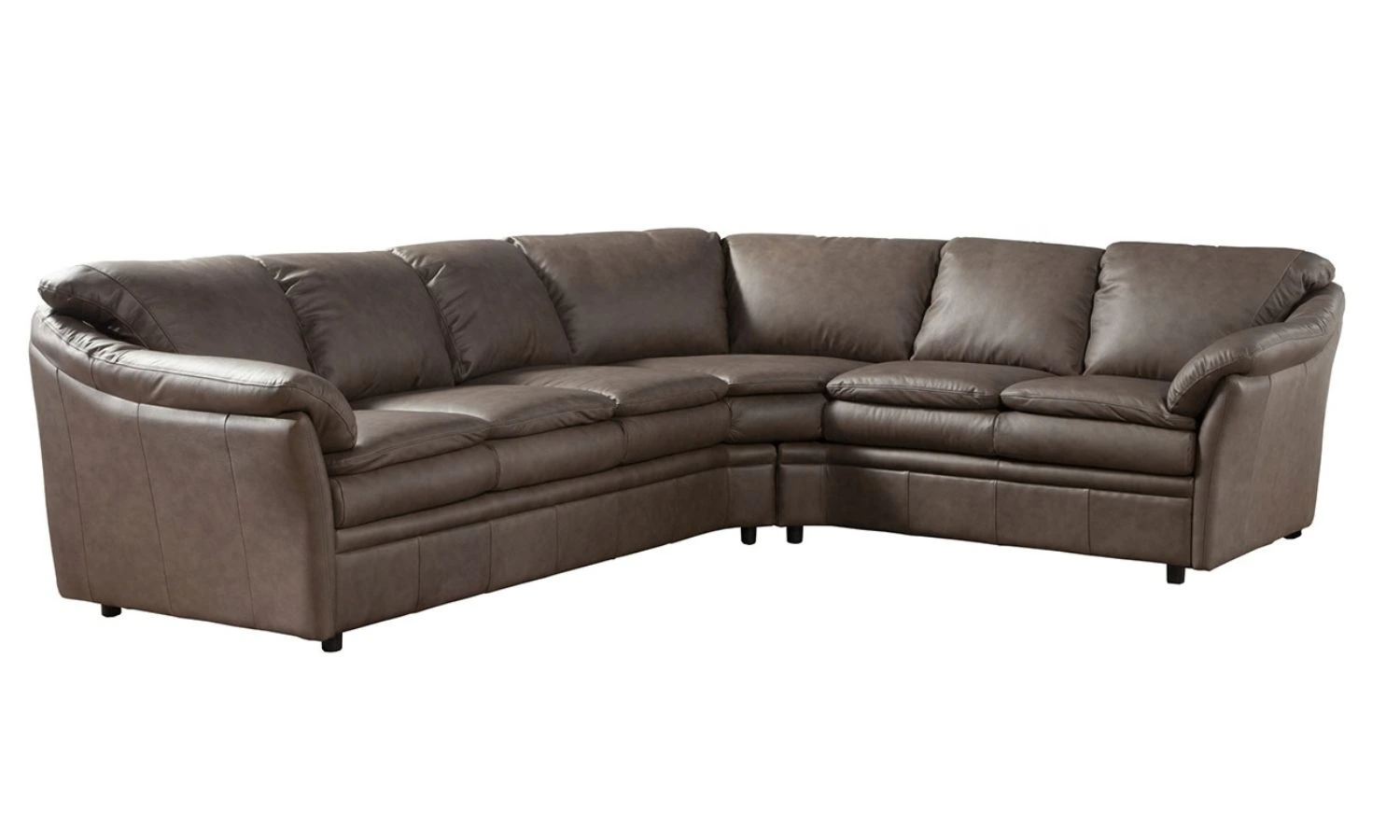
Brown leather sectional sofa with plush cushions and a curved design, showcasing a comfortable seating option for a layered living room.

Pro tip: Don’t try to match every brown in the room to the leather. That’s one of the quickest ways to make a luxury space look flat. Aim for a family of related tones instead—two or three “browns” that clearly belong together but aren’t identical.

Get The Scale Right (So The Room Feels Balanced)

Leather often comes in substantial silhouettes (deep seats, thick arms, generous cushions). That’s part of the appeal—but it changes what the room needs around it:

  • If your leather piece is large and low (common with sectionals), add height with a floor lamp, taller art, or a bookcase to keep the room from feeling compressed.
  • If your leather piece is tailored and upright (like a classic sofa or club chair), add softness with a thicker rug, layered textiles, and warmer lighting.
  • If your leather is dark, plan on at least one lighter counterbalance (rug, curtains, or a light accent chair) so the seating doesn’t visually “sink” into the space.

If you’re deciding between a sofa and a sectional as your anchor piece, this breakdown on leather sofa vs sectional can help you choose the right silhouette for your layout. And if you’re thinking long-term (as you should with investment-grade pieces), it’s worth reading how long leather furniture lasts before you buy.

A Simple Palette Rule That Works

If you want a clean framework, use:

  • 1 anchor: the leather sofa/sectional/chair
  • 2 supporting neutrals: rug + main textiles (think ivory, oatmeal, charcoal, warm gray)
  • 1–2 accent notes: one metal + one color accent (brass + olive, or black metal + rust, etc.)

This prevents the common mistake of adding five accent colors and wondering why the room feels busy.

Step 2: Add Depth With Rugs (The Fastest Win)

If you only change one thing to create a layered effect, change the rug. A rug does three big jobs in a leather-centered room:

  • Softens leather’s structured look
  • Defines the seating zone (especially in open layouts)
  • Adds pattern without competing with leather’s grain

In open layouts, the rug becomes even more important because it’s doing visual “architecture.” If your living room flows into the kitchen or dining room, you may also want to review what tends to work best for an open-concept living room before you lock in your seating plan.

Get The Rug Size Right First

Most living rooms look “unfinished” because the rug is too small. In general, you want the front legs of your main pieces on the rug at minimum. In larger rooms, go bigger so the whole arrangement feels intentionally placed.

Quick sizing check: If you can see a big “moat” of bare floor around your seating, your rug is probably undersized.

Pick The Right Texture (Not Just The Right Color)

Leather already has texture (grain, stitching, natural variation). Your rug should add a different kind of texture:

  • Wool: resilient, refined, and comfortable underfoot—an easy luxury upgrade.
  • Flatweave: cleaner profile, great for a modern ranch look and for high-traffic homes.
  • Vintage-style / faded pattern: brings depth and “collected” character without feeling loud.
  • Natural fiber (jute/sisal): adds earthy contrast; consider a softer layer elsewhere if comfort is a priority.

If durability is a priority (kids, pets, guests, everyday use), you may also like this practical guide to leather furniture for families.

Dark brown leather sofa paired with a natural wood coffee table, textured area rug, and stone fireplace in a warm, neutral living room.

Rug Directions That Complement Leather

Leather Tone/Style

Rug Direction Result

Cognac / saddle brown

Cream wool, faded vintage, muted geometric

Warm, collected, refined

Dark brown / espresso

Light neutral, textured wool, subtle stripe

Balanced (less visually heavy)

Black leather

Ivory/gray/taupe, higher-contrast pattern

Modern and intentional

Distressed / character leather

Flatweave, restrained Southwestern influence, simple weave

Rustic without feeling themed

Light tan leather Charcoal, denim blue, olive, layered neutrals

Airy, dimensional, relaxed

Placement Details That Make the Room Feel Designed 

  • Center the rug on the seating conversation area, not the room. In open layouts, the rug is what visually “builds the room.”
  • Leave a consistent border where you can. Uneven edges can make the layout feel accidental.
  • Use a quality rug pad. It improves comfort, prevents shifting, and makes the whole room feel more substantial.

Bottom line: the rug doesn’t need to match the leather. It needs to create contrast so the leather reads as the hero.

Step 3: Bring in Wood for Warmth and Structure

Wood is leather’s natural companion: both have grain, variation, and a sense of permanence. The key is to use wood like a supporting actor—present, important, but not overpowering.

Choose the Wood Tone Based on the Mood You Want 

  • Walnut / darker woods: polished, architectural, modern-luxury
  • Oak / mid-tone woods: versatile, open, transitional
  • Reclaimed / distressed woods: patina, warmth, modern ranch credibility

Mix Wood Finishes the Right Way

You don’t need every wood surface to match. You do need them to feel like they belong in the same family. Use this simple approach:

  • Pick a “dominant” wood: usually your coffee table or your largest casegood.
  • Add one “supporting” wood: side tables or a console that is clearly different, but complementary (lighter, darker, or more rustic).
  • Repeat one detail: a similar undertone (warm vs. cool), or a repeated metal finish on hardware/legs.

Shape and Silhouette Matter as Much as Finish 

Leather can be smooth and tailored, or rugged and character-rich. Let your tables either echo or intentionally contrast:

  • Tailored leather + clean-lined wood: feels modern and composed.
  • Tailored leather + rustic wood: feels modern ranch (one of the strongest combinations).
  • Distressed leather + refined wood: keeps the room elevated, not overly casual.

Pro tip: One strong wood moment (a substantial coffee table, a mantel, a console) often reads more luxurious than five smaller rustic pieces. The more “character” your wood has, the more you’ll want to edit everything else.

Step 4: Use Textiles to Soften Leather Without Hiding It

Textiles are where the room becomes comfortable and lived-in. But there’s a specific goal when you’re decorating around leather: soften it, don’t smother it. A handcrafted leather piece is worth seeing—grain, stitching, shape and all.

Pillows: Fewer, Better, More Intentional

Instead of piling on lots of small pillows, choose a few that bring texture first, pattern second. Here are two easy formulas:

  • The 2-2-1 method: two solid textured pillows + two subtle pattern pillows + one accent pillow (different shape or color).
  • The “quiet luxury” method: three pillows max, each a different texture (linen + wool + velvet), all within a tight palette.

Texture options that look especially good against leather:

  • Linen: relaxed, breathable, great against smooth leather
  • Wool / woven textures: instant warmth and depth
  • Velvet (sparingly): adds refined contrast
  • Leather-on-leather accents (sparingly): a tooled leather pillow or small detail can be a sophisticated Western nod—just avoid overdoing it.

Throws: One Strong Layer Is Enough

A single throw (folded, not tangled) can make the room feel inviting. Focus on contrast:

  • Against a smooth leather sofa, try a chunky knit or woven throw.
  • Against distressed leather, try a cleaner weave (linen, cotton blend) so the room stays refined.

Don’t Forget Window Treatments

Window treatments are an underrated layer—especially in bright Texas light. They can soften the room visually, reduce glare on leather, and help everything feel finished. Simple options that work well with leather:

  • Linen or linen-blend drapery: adds softness and height.
  • Woven shades: bring an organic texture that pairs naturally with leather and wood.
  • Tailored drapery + woven shade combo: a luxury look that still feels livable.
Taupe leather sofa styled with neutral throw pillows, a soft knit blanket, a round wood coffee table, and a cream area rug.

Textile Layering Checklist

  • Does this add a different texture than the leather?
  • Does it connect to something else (rug, art, lighting) so it feels deliberate?
  • Are you leaving enough leather visible to appreciate the craftsmanship?
  • Is the room starting to feel “busy”? If yes, remove the weakest textile layer first.

Step 5: Layer Lighting to Make Leather Look Richer

Leather changes dramatically depending on lighting. The grain can look flat under harsh overhead light—and deep and dimensional with the right side lighting. If your leather doesn’t look as rich at night as it does in the showroom, lighting is usually why.

Build a Layered Lighting Plan

A well-lit living room typically includes:

  • Ambient lighting: overall illumination (overhead fixtures, recessed)
  • Task lighting: table/floor lamps for reading and conversation
  • Accent lighting: art lights, picture lights, shelf lighting

Use Warm Light (and Dimmers) for Leather

Warm light is usually more flattering on leather because it brings out depth and softness. Cool light can make leather feel stark or emphasize shine. Dimmers are especially helpful because they let the room shift from daytime clarity to evening comfort.

Placement Tips That Instantly Improve the Room

  • Add at least two lamps in the living room (table lamps, floor lamps, or one of each). Side lighting creates shadow, which is what reveals texture.
  • Use shade materials that soften light (linen, fabric, parchment-style) rather than hard, shiny shades that can create glare on leather.
  • Give seating its own light. A reading lamp near a leather chair makes that chair feel like a destination, not just extra seating.

Step 6: Finish With Accents That Add a Point of View

Accents are where a layered room becomes personal. They’re also where rooms go off the rails—usually because there’s too much, or everything is the same scale. When leather is the anchor, accents should support the story, not compete with it.

Use Fewer, Larger Accents (Especially With Substantial Seating)

A large leather sectional will visually “absorb” tiny decor. Instead, choose pieces that can hold their own:

  • Oversized art above the sofa
  • A substantial ceramic bowl or tray on the coffee table
  • A tall vessel or sculpture on a console
  • A pair of weighty lamps that visually anchor side tables

Art Sizing (the Rule That Prevents the “Floating Frame” Look)

  • Above a sofa, aim for art that’s roughly two-thirds the width of the sofa (or a well-balanced pair/triptych).
  • If you want multiple pieces, keep frames consistent and spacing intentional so it feels curated, not random.

Expand the Material Mix

If leather + wood are your main materials, bring in 2–3 of these for contrast:

  • Ceramic (matte glaze is especially good with leather)
  • Stone (travertine, marble, or a textured natural stone)
  • Aged metal (antique brass, blackened steel)
  • Glass (helps lighten a heavier palette)
  • Natural fiber (woven baskets, subtle grasscloth)

How to Style a Coffee Table Without Clutter

Try this simple structure:

  • One grounding piece: a tray or large book stack
  • One sculptural object: bowl, ceramic piece, or collected item
  • One organic element: greenery, branch, or florals (even a single stem)

In Texas homes, a Western note can feel elevated when it’s expressed through materials and craftsmanship (tooled leather details, hand-finished wood, earthy ceramics)—not loud motifs everywhere.

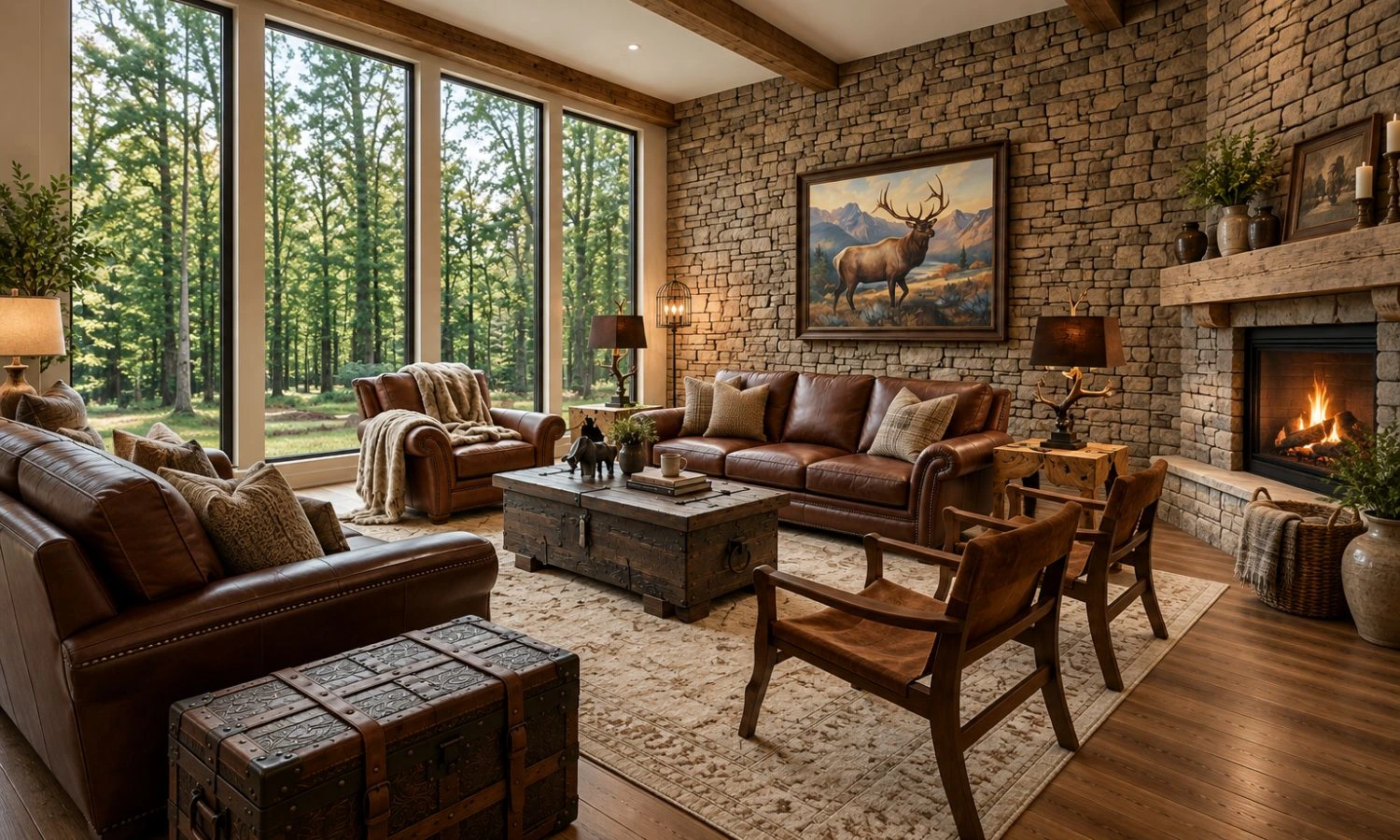
Rustic living room featuring brown leather sofas, wooden accent tables, a stone fireplace, and large windows overlooking a wooded landscape.

A Simple Layering Sequence You Can Follow

If you’ve ever bought pieces you love individually, but the room still doesn’t feel “done,” it’s often because the layers were built out of order. Here’s a straightforward sequence you can use whether you’re furnishing from scratch or refreshing what you already have:

  1. Choose the leather anchor. Focus on quality, comfort, silhouette, and scale. This is the investment piece that sets the tone.
  2. Lay the rug foundation. Size first, then color/pattern. The rug defines the “room within the room.”
  3. Add wood structure. Coffee table, side tables, console, or shelving. Choose one dominant wood tone and one supporting tone.
  4. Bring in textiles selectively. Pillows and throws for texture and comfort, plus window treatments for a finished look.
  5. Layer lighting. Add lamps to create depth and flattering shadows. Dimmers help everything feel richer at night.
  6. Edit accents last. Art, objects, and greenery—fewer, better pieces with intention.

A Quick “Layering Audit” You Can Do in 10 Minutes

  • Stand in the doorway. Does your eye know where to land first? (It should be the leather anchor.)
  • Look for one missing layer: rug scale, lighting, or height (often art) are the usual culprits.
  • Remove one item that doesn’t add texture, function, or meaning. Layering improves quickly when clutter goes away.

Quick test: Step back and ask, “What’s the hero here?” If it’s the leather (it should be), remove or swap anything that competes with it.

Common Layering Mistakes (and Quick Fixes)

Most layering problems are easy to fix once you know what you’re seeing. Use these as a diagnostic checklist.

Mistake: Everything Is the Same Darkness

What it looks like: dark leather + dark floor + dark rug + dark tables, so the room feels heavy.

Fix: Add contrast with a lighter rug, lighter textiles, or a lighter accent material (ceramic, glass, or a lighter wood tone). Even swapping two pillows to a lighter tone can make the seating feel more dimensional.

Mistake: The Rug Is Too Small

What it looks like: the rug sits like an “island” under the coffee table instead of connecting the seating.

Fix: Move up a size. This alone can make the room feel intentionally designed.

Mistake: Pillows Are Doing All the Work

What it looks like: lots of pillows, but the room still feels unfinished.

Fix: Look at the big layers first (rug, lighting, wood). Pillows should be the finishing touch—not the solution.

Mistake: No Height Variation

What it looks like: everything sits at the same height (low sofa, low table, low accessories), so the room feels flat.

Fix: Add one taller element: a floor lamp, taller art, or a bookcase. Height adds energy and makes the room feel styled, not just furnished.

Mistake: “Themed” Styling Instead of Refined Western Character

What it looks like: too many literal motifs that compete with the natural beauty of leather and wood.

Fix: Choose one or two heritage-driven accents and let the leather, wood, and craftsmanship carry the story.

Mistake: Shiny Glare on Leather at Night

What it looks like: the leather feels harsh or reflective once the sun goes down.

Fix: Add side lighting (lamps) with softer shades, and use dimmers. Leather almost always looks better with warm, layered light.

Conclusion

A layered living room isn’t about filling the space—it’s about building depth with purpose. When you start with quality leather furniture and layer in rugs, wood, textiles, lighting, and well-edited accents, the room feels warmer, more dimensional, and more personal (without losing that refined, high-end finish).

If you’re ready to start browsing anchor pieces, take a look at the Texas Leather Collection for handcrafted options with lasting character.

Want a second set of expert eyes? Request a free design consultation at our San Antonio or Austin showroom and we’ll help you build a layered living room that fits your home, your layout, and your style—down to the details.

November 10, 2026 in Leather Furniture

Why Matching Furniture Sets Can Make a Room Feel Flat

You can spend real money on a living room and still end up with a space that feels oddly one-note. One of the most common reasons is an overreliance on…
Read More
November 10, 2026 in Leather Sofa

How to Choose the Right Leather Sofa Color for Your Living Room

A leather sofa isn’t just a seat, it’s one of the biggest color decisions in your entire home. Get the color right and the room feels pulled together for decades.…
Read More
October 16, 2026 in Leather Furniture

How to Create a Layered Living Room With Leather Furniture

Leather has a natural presence. It feels substantial, it ages with character, and it can instantly elevate a living room. But there’s a catch: if the rest of the space…
Read More
October 16, 2026 in Leather Sofa

The Anatomy of a Luxury Sofa: What You’re Really Paying For

Luxury sofas can look similar online. But in person, the difference is obvious: one feels substantial, supportive, and built to last. The other feels fine in the showroom—and tired a…
Read More

Leather Furniture for High-Traffic Homes: What Actually Matters

Spacious living room featuring a brown leather sectional, matching leather armchairs, and rustic wood and stone accents in a high-end Texas home.

In a busy home, furniture doesn’t get a gentle “showroom life.” It gets movie nights, family gatherings, weekend guests, kids climbing up and down, pets claiming their spot, and the everyday habit of putting your feet up after a long day. In that reality, leather furniture can be an excellent long-term choice—but only if you focus on the few factors that actually determine how it holds up.

Texas Leather Interiors (based in San Antonio, with showrooms across Texas) specializes in handcrafted, top-grain leather pieces designed for real living—whether your style leans clean and modern, subtly Western, or a refined blend of both. This guide breaks down what matters most so you can buy with confidence and avoid the common “looked great at first” regret.

In a hurry? Here’s the short version

  • Leather quality and finish come first. The right top-grain leather and finish will do more for durability than any trend-driven silhouette.
  • Construction is the deal-breaker. A strong frame, supportive suspension, and resilient cushions are what keep comfort consistent.
  • Configuration should match how your household moves. The best layout is the one that fits your traffic patterns (not just the one that looks best online).
  • Choose a look that will age well. In a high-traffic room, you want patina—not “premature wear.”

Table of Contents

  1. What to Prioritize (the Real Checklist)
  2. Start With Top-Grain Leather (and the Right Finish)
  3. Pick a Color and Texture That Forgives Real Life
  4. Look Past the Surface: Frame, Support, and Cushions
  5. Get the Configuration Right for High-Traffic Flow
  6. Stress Points That Separate “Lasting” From “Worn-Out”
  7. Homes With Kids or Pets: Smart Leather Choices
  8. How to Evaluate a Piece in the Showroom (Quick Test)
  9. Simple Care Habits That Protect the Investment
  10. Modern + Western: How to Balance It Without Overdoing It
  11. Why Texas Leather Interiors Is Built for High-Traffic Homes
  12. Conclusion

What to Prioritize (the Real Checklist)

If you only remember one thing, make it this: high-traffic performance is mostly decided by what you can’t see in a product photo. Before you fall in love with a silhouette, confirm these fundamentals—because they determine whether your leather furniture looks better with age or simply looks used.

A High-Traffic Room Has Predictable “Wear Zones”

Most rooms wear unevenly. One seat becomes “the seat.” One arm becomes the leaning post. One corner of the sectional gets constant use because it’s closest to the kitchen, the TV, or the back door. Your goal is to choose a piece that can handle that reality without sagging, flattening, or looking tired.

The Practical Checklist

  1. Leather grade + finish: Choose authentic top-grain leather and a finish that fits your household’s pace (and your expectations for patina).
  2. Frame + support: The internal build is what keeps the piece square, stable, and comfortable year after year.
  3. Cushion design: Resilient cushions prevent the “permanent dent” that shows up in heavily used seats.
  4. Scale + layout: If it blocks walkways or crowds the room, it will feel wrong even if it’s beautifully made.
  5. Details at stress points: Arms, seams, seat edges, and stitching tell you how the piece will age under real use.
  6. Customization options: Busy homes benefit from getting size, layout, leather, and detailing exactly right instead of settling for the closest standard option.

Keep this order on purpose. Style matters, but it’s the final layer—not the foundation.

Start With Top-Grain Leather (and the Right Finish)

“Leather is durable” is true in the same way “wood is strong” is true. It depends on what kind—and how it’s finished.

Texas Leather Interiors specializes in 100% top-grain leather, which is a strong starting point for longevity because it offers real substance and natural character—not a thin surface designed to imitate it. In a high-traffic room, that material integrity matters because it affects how the surface responds to friction, oils from hands, daily contact, and the natural changes that come with time.

If you want a clearer baseline for comparing options, start here: Understanding Leather Grades (Full-Grain vs. Other Options).

Why Top-Grain Leather Is a Practical Upgrade

  • It feels substantial. In daily use, you notice the difference in hand-feel and overall “presence.”
  • It develops character. The right leather doesn’t just survive; it gains depth and warmth as it’s lived in.
  • It supports a luxury look without being fragile. High-end doesn’t have to mean high-maintenance when the material choice is right.
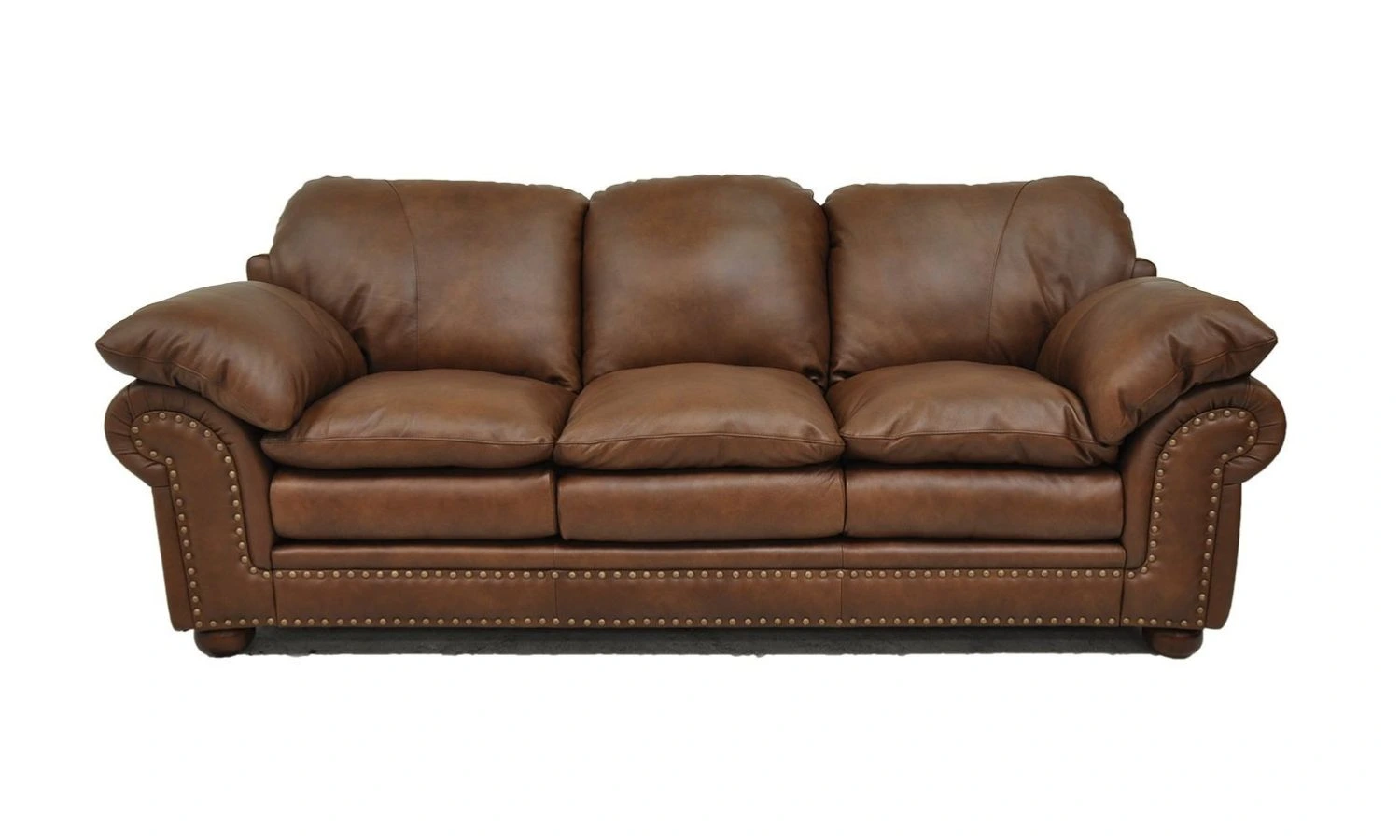
Brown leather sofa with plush cushions, rolled arms, and decorative nailhead trim, showcasing a classic design for everyday living.

Match the Finish to Your Household (Two-Minute Primer)

Finishes vary, but the homeowner takeaway is simple: some leathers are more protected (more forgiving), and some are more natural (more expressive). Neither is “better” universally. The right answer depends on your home.

  • If your home is truly busy: Ask to see leather options that are designed to be more forgiving day to day (less likely to spotlight every scuff or spot).
  • If you love natural character: Ask for leathers that will develop patina in a way that looks richer over time—especially if you enjoy a more heritage, Western, or rustic-luxury feel.

The goal isn’t perfection. The goal is a surface that still looks intentional after years of use. For more on that idea, see: Why Leather Sofas Look Better With Age.

Explore materials and collections: https://texasleatherinteriors.com/

Pick a Color and Texture That Forgives Real Life

In high-traffic spaces, the “best” color is the one that works with your lifestyle and your architecture. A shade that looks perfect under showroom lighting can feel completely different next to your floors, rugs, stone, cabinetry, and natural light.

Color: Think in Day-to-Day Visibility, Not Just Aesthetics

Every color has trade-offs. The key is choosing trade-offs you can live with.

  • Mid-tones are often the easiest. They’re a practical sweet spot: they tend to be less revealing than very light leathers and less likely to show dust, lint, and minor wear than very dark leathers.
  • Very light leathers can look stunning (and modern). They may simply require more intentional habits in busy rooms (especially if you have frequent guests, kids, or darker denim in regular rotation).
  • Very dark leathers can feel dramatic and refined. They can also make texture, dust, and pet hair more noticeable depending on your household.

Texture: A Subtle Tool for “Looking Better Longer”

Texture is often what makes a well-used piece still look upscale. A little natural grain and visual movement can help a surface read as rich and dimensional instead of flat and “worn.” This is especially effective in homes that blend modern lines with rustic Western charm, where tactile materials are part of the design language.

If you’d like a deeper (but still homeowner-friendly) breakdown, this guide is useful: Leather Furniture Texture and Grain Guide.

Use Your Home’s Materials as the Guide

Leather furniture doesn’t live alone. It sits next to wood tones, metals, stone, tile, and textiles. When in doubt, take photos of your room in daylight and bring them to the showroom. You’ll make a better decision when you’re viewing leather choices in the context of your actual home.

If your home gets strong Texas sunlight, also consider placement and window exposure. Smart layout choices help leather age evenly and maintain the same color story across the full piece.

Look Past the Surface: Frame, Support, and Cushions

Here’s the uncomfortable truth: a piece can look impressive and still fail early if the structure underneath isn’t built for daily use. High-traffic rooms don’t just test materials; they test engineering.

Frame: Stability Is What You Feel (and What You Stop Noticing)

When a frame is strong, you don’t think about it. The leather furniture feels solid when you sit down, shift your weight, or lean on an arm. When a frame is weak, small issues show up quickly: wobble, squeaks, joints that loosen, or a piece that slowly loses its “square” shape.

Support System: What Prevents Sagging in the Favorite Spot

Most high-traffic wear complaints are really support complaints. If one seat becomes the default, the support in that zone has to hold up under repeated compression. Ask direct questions about how the seat is supported and what it’s designed to handle.

Cushions: Comfort Now Is Easy—Comfort Later Is the Test

In the showroom, almost anything can feel comfortable for 30 seconds. What matters is whether the cushion keeps its shape and support after thousands of sits. For busy families, cushion resilience is what prevents the “permanent crater” look.

Simple Questions to Ask (No Technical Deep-Dive Required)

  • What is the frame made of, and how is it reinforced?
  • What supports the seat long-term?
  • What kind of cushion construction is used, and how does it hold its shape?
  • What parts of the piece tend to show wear first, and how should we choose leather/finish to address that?

This is where handcrafted leather furniture earns its reputation. In a high-traffic home, “built well” isn’t a luxury detail—it’s what keeps the leather furniture comfortable and visually refined for the long run.

Close-up views of a brown leather sofa highlighting its textured leather, stitched upholstery, tufted detailing, and decorative nailhead trim.

Get the Configuration Right for High-Traffic Flow

A high-traffic room has patterns: the route from the kitchen to the living room, the path to the patio, the angle people take to sit down and talk, and the way guests enter and exit seating areas. A layout that ignores those patterns will never feel quite right—no matter how beautiful the furniture is.

Start With a “Traffic Map”

Before you decide between a sofa, sectional, or chairs, do a quick traffic map of the room:

  • Where do people walk most often?
  • Where do they naturally stop and sit?
  • Which seats will become the default favorites?
  • Do you need lounging space, conversation seating, or both?
  • Are there doors, fireplaces, or sightlines the furniture must respect?

Choose the Format That Matches Real Use

  • Sofa + chairs: Often best when you want flexible conversation seating and clearer walkways.
  • Sectional: Often best when the room is the main hangout zone and you want generous lounging capacity.
  • Recliners (done right): Useful for comfort-first households, especially when the recliner is designed to look refined rather than oversized.

Why Customization Matters More in Busy Homes

Custom sizing and configuration is a major advantage for high-traffic spaces because real rooms rarely match standard dimensions. A few inches can be the difference between an elegant walkway and a constant bottleneck. Texas Leather Interiors offers customization that allows homeowners and designers to tailor layout, scale, leather, and details to the space—especially helpful in open-plan great rooms, Hill Country homes, and ranch properties where proportion matters.

For a helpful overview of layout decisions (especially for larger Texas living rooms), see: Choosing the Right Leather Sectional Configuration in Texas.

If you’re not sure what configuration works, a design expert can help you avoid the two most common mistakes: buying too large (the room feels crowded) or too small (the room feels under-furnished and temporary).

Stress Points That Separate “Lasting” From “Worn-Out”

High-traffic wear tends to concentrate in the same places. When you’re evaluating a piece, focus on the areas that take the most abuse—because those details often reveal the difference between “this will age beautifully” and “this will look tired quickly.”

The Four Areas to Inspect Up Close

  • Arms: These get leaned on, grabbed, and brushed past constantly. If you have a large family or you entertain often, arms may get more contact than any other part of the piece.
  • Seat edges: The front edge is where people slide in and out. In busy rooms, this edge needs to keep its shape and visual crispness.
  • Seams and stitching: Clean tailoring and strong stitching matter more than decorative elements. Seams should look intentional and consistent.
  • Back cushions: In everyday lounging, back support gets compressed repeatedly. Pay attention to whether backs feel supportive, not just soft.

Details That Can Add Both Beauty and Resilience

In the right design, details like contrast stitching, tooled leather accents, embossed elements, or hand-finished wood can create a richer look while also making a piece feel more substantial. The key is balance: details should support the overall design language, not overwhelm it.

Well-made leather furniture doesn’t just “hold together.” It holds its posture—so the room still looks intentional, not tired.

Homes With Kids or Pets: Smart Leather Choices

Many families assume leather will be too delicate. In reality, the right leather choice can be one of the most practical options for a home with pets or kids—because it’s easier to wipe clean than many fabrics and it doesn’t hold odors the same way porous textiles can.

Choose Leather That Matches Your Real Habits

  • Choose a forgiving finish. You want a surface that fits your routine, not one that requires you to change how your family lives.
  • Prioritize comfort + cleanability. In a busy household, easy care often matters more than having the most “delicate” look.
  • Consider texture. A bit of grain and natural movement can help a piece stay visually rich even with daily use.

Practical Tips That Make a Real Difference

  • Pets: Keep nails trimmed to reduce accidental surface scratches. If your pet has a favorite spot, consider a throw that complements the room (and is easy to wash).
  • Kids: Establish simple “rules of the road” (no markers, no sticky snacks without a tray, wipe spills promptly). You don’t need perfection—just consistency.
  • Denim and dyes: If you’re considering very light leather, ask the showroom team what they recommend for a household where dark denim is common.

If you want more family-specific guidance, this is a good next read: Leather Furniture for Families.

Most importantly, ask about your specific leather selection. Different leathers behave differently, and a quick conversation with a design expert can save years of frustration.

How to Evaluate a Piece in the Showroom (Quick Test)

Showrooms are designed to inspire. Your job is to be practical for five minutes—so you can be happy for the next ten to twenty years.

The Five-Minute Test

  1. Sit like you sit at home. Lean back, put your feet where you normally would, and stay there long enough to feel the support—not just the softness.
  2. Check seat depth and height. Comfort is personal. Make sure the piece fits the people who will use it most.
  3. Do the “arm test.” Rest your arm where you naturally would. In a busy home, the arm experience matters more than you think.
  4. Look at tailoring up close. Seams, corners, and cushion alignment tell you a lot about workmanship.
  5. Ask what can be customized. Size, configuration, leather, stitching, trim, wood finish, and detailing can often be tailored.

Bring the Right Information With You

  • Room measurements (including walkway clearance needs)
  • Photos of the room in daylight
  • Notes on how you use the space (TV room, entertaining, reading, daily family hangout, second home, etc.)

Texas Leather Interiors also offers interior design guidance, which is especially helpful if you’re selecting pieces for a large room, a second home, or a Western-modern blend where balance matters.

Simple Care Habits That Protect the Investment

Good care doesn’t have to be complicated. Think “consistent and gentle,” not “high-maintenance.” The goal is to keep dust and grit from building up and to handle small issues before they become permanent.

Easy Habits for Busy Households

  • Dust and wipe regularly with a soft cloth so grit doesn’t settle into seams and stitching.
  • Address spills promptly using the care guidance recommended for your specific leather.
  • Avoid harsh household cleaners unless they’re confirmed safe for that leather finish.
  • Rotate cushions (when possible) to distribute wear more evenly.
  • Manage sunlight exposure with thoughtful placement and window treatments when needed.

One Important Note About Products

Not all leather responds the same way to conditioners and cleaning products. Before you use anything beyond gentle dusting and wiping, ask for care recommendations based on the exact leather you choose. That small step helps protect both appearance and feel over time.

Modern + Western: How to Balance It Without Overdoing It

The best Western-influenced interiors don’t look themed. They look authentic—rooted in materials and craftsmanship, edited with restraint. The strongest rooms feel collected and confident: modern enough to feel current, and warm enough to feel grounded.

A Reliable Formula for a Refined Western-Modern Room

  • Start with a clean anchor. A refined silhouette (sofa, sectional, or chairs) gives the room structure and prevents the space from feeling overly busy.
  • Add Western character through materials. Hand-finished wood, tooled or embossed leather details, and warm, tactile hides communicate heritage without leaning on clichés.
  • Repeat materials intentionally. Echo leather tones in a rug, a wood finish, or metal accents so the room feels designed, not random.

Two Common Mistakes to Avoid

  • Too many statement elements. One or two focal pieces usually create a stronger result than trying to make every item a centerpiece.
  • Ignoring scale. Western-inspired pieces often need generous proportions to feel authentic. In smaller rooms, choose Western character through detail, not bulk.

If you’re drawn to rustic Western charm, explore the Western Collection here: https://western.texasleatherinteriors.com/

Why Texas Leather Interiors Is Built for High-Traffic Homes

Busy households need furniture that’s designed to be used, not just admired. Texas Leather Interiors is a strong fit for homeowners and designers looking for investment-grade pieces because the offering aligns with what high-traffic rooms demand: authentic materials, refined craftsmanship, and customization that respects real homes.

  • 100% top-grain leather across a wide range of options
  • Handcrafted construction with premium materials and a focus on long-term comfort
  • Custom sizing and configuration for real rooms (not just standard layouts)
  • Modern, traditional, transitional, and Western-inspired luxury styles—so you can match the home, not a trend
  • Signature details including hand-carved wood and tooled/embossed leather accents (where desired)
  • Artisan-made in the USA and Mexico by skilled craftspeople
  • Showrooms in San Antonio, Houston, Austin, and The Woodlands
  • Interior design guidance to help you choose leather, scale, and configuration with clarity
  • Large in-stock selection (helpful when you want luxury without endless waiting)

Conclusion

For high-traffic homes, the best leather pieces aren’t the ones that simply look impressive on day one. They’re the ones that still feel supportive, look intentional, and fit your lifestyle years later. Focus on top-grain leather and the right finish, insist on strong construction, choose a configuration that matches how your household moves, and select a style that will age with character—not frustration.

If you’re weighing long-term value, this can help you set realistic expectations: How Long Does Leather Furniture Last?

Ready to make confident choices for your home? Request a free design consultation at our San Antonio or Austin showroom (see locations here: https://texasleatherinteriors.com/locations/) to explore leather options, configurations, and handcrafted details that fit the way you live.

November 10, 2026 in Leather Furniture

Why Matching Furniture Sets Can Make a Room Feel Flat

You can spend real money on a living room and still end up with a space that feels oddly one-note. One of the most common reasons is an overreliance on…
Read More
November 10, 2026 in Leather Sofa

How to Choose the Right Leather Sofa Color for Your Living Room

A leather sofa isn’t just a seat, it’s one of the biggest color decisions in your entire home. Get the color right and the room feels pulled together for decades.…
Read More
October 16, 2026 in Leather Furniture

How to Create a Layered Living Room With Leather Furniture

Leather has a natural presence. It feels substantial, it ages with character, and it can instantly elevate a living room. But there’s a catch: if the rest of the space…
Read More
October 16, 2026 in Leather Sofa

The Anatomy of a Luxury Sofa: What You’re Really Paying For

Luxury sofas can look similar online. But in person, the difference is obvious: one feels substantial, supportive, and built to last. The other feels fine in the showroom—and tired a…
Read More

Leather Furniture for Families: What Makes It Practical for Everyday Living?

Leather furniture arranged in a stylish living room with a leather sofa, armchair, coffee table, and decorative accents

A Tuesday-night reality check: a juice cup tips over, someone dives for a napkin, the dog jumps up to investigate, and the “nice” sofa becomes the center of the action. If you have kids (or you entertain a lot), you already know the challenge—your living room has to look pulled together and hold up to real life.

That’s where well-made leather earns its reputation. The right leather furniture can be comfortable, resilient, and easy to live with—without making your home feel overly casual or temporary.

In this post, you’ll learn what makes leather truly practical for everyday family living—from spills and frequent seating to comfort, cleaning, and long-term durability—plus how Texas homeowners can choose pieces that fit their space and style (including options from the Texas Leather Collection).

Table of Contents

  1. What “Practical” Leather Furniture Means for Families
  2. Why Leather Works for Spills, Crumbs, and Busy Routines
  3. Why Top-Grain Leather Matters in High-Use Homes
  4. Don’t Forget the Frame: Construction That Supports Daily Life
  5. Comfort That Holds Up From Weekday Lounging to Weekend Hosting
  6. The Family-Friendly Leather Cleaning Playbook (Do’s and Don’ts)
  7. Kids, Pets, and “Favorite Spots”: How Leather Ages in Real Homes
  8. How to Keep a Family Room Stylish (Not Precious)
  9. A Practical Checklist for Choosing Leather Furniture for Your Family
  10. When Customization Is Worth It
  11. Why Seeing Leather in Person Changes Everything
  12. Quick Frequently Asked Questions
  13. Conclusion: Practical Luxury That Fits Real Texas Living

What “Practical” Leather Furniture Means for Families

For a family, “practical” is not code for basic. It means the furniture is designed to be used—often—and still look intentional. It also means you don’t have to reorganize your life to protect the room.

In day-to-day terms, practical leather furniture tends to deliver four things:

  • Confidence: You’re not worried about every snack, spill, or seat.
  • Comfort: It’s the place everyone naturally gravitates toward.
  • Cleanability: Everyday messes don’t become a weekend project.
  • Longevity: It stays relevant and functional as your household changes.

That combination matters most in the rooms where life actually happens. A family sofa might host homework, weekend naps, sleepovers, birthday parties, and quiet coffee before the day starts. If your furniture has to work that hard, it should feel inviting and substantial—not delicate.

It’s also worth saying out loud: practical doesn’t mean “indestructible.” Kids will be kids. Pets will be pets. The goal is furniture that can handle the normal bumps and spills of a lived-in home, and that still feels refined enough to anchor a well-designed space.

That’s why many Texas homeowners treat leather as a foundation material. It’s relaxed enough for real use, but polished enough for a home that’s meant to feel elevated—especially when the leather and craftsmanship are chosen well.

Why Leather Works for Spills, Crumbs, and Busy Routines

Family rooms are high-traffic by design. Leather can be a smart choice in these spaces because it typically allows for quicker, simpler cleanup than many absorbent fabrics—especially when you handle messes promptly.

Think of it this way: when life is moving fast, you want a surface that helps you reset the room in minutes, not hours. A quick wipe after a small spill. A fast pass to remove everyday dust. Fewer lingering reminders of last night’s popcorn.

Everyday family messes usually fall into a few categories, and leather tends to do well with the common ones:

  • Snack fallout: crumbs, salt, sticky fingerprints, and the little smudges that appear when kids carry food from the kitchen to the sofa.
  • Frequent touch: sunscreen hands, lotion, hair products, and everyday skin oils from regular seating.
  • Water-based spills: juice, water, sparkling water, tea, and the occasional splash from a wet towel.
Hand wiping water from a brown leather sofa with a soft cloth to clean a fresh spill

Leather also supports a more relaxed way of entertaining. When guests gather for a game, holiday, birthday, or casual dinner, the seating should feel generous and comfortable, not precious. Leather helps the room look polished while still being ready for people to sit, lean back, laugh, snack, and stay awhile.

The bigger advantage is psychological: when your main seating is chosen for everyday use, you can actually use the room without treating every moment like a risk to the furniture.

Why Top-Grain Leather Matters in High-Use Homes

Not all leather performs the same way. For families who want practical luxury, material selection matters as much as style.

Texas Leather Interiors specializes in 100% top-grain leather—a premium option known for its refined look and substantial feel. In a busy household, that matters because your furniture is touched constantly: kids climbing up for movie night, guests settling in during the holidays, someone stretching out after a long day.

Top-grain leather also brings natural depth and variation. Instead of looking “flat,” it can have tone and character that make the room feel layered. If you want to get more specific about what you’re seeing and feeling, their texture and grain guide is a helpful reference.

From a practical standpoint, top-grain leather can be a strong middle ground for many homes: it’s premium enough to look elevated in your main living area, but it’s still a material you can live on daily. (And if you’re comparing leather types, it helps to understand the differences—see Understanding Leather Grades: Full-Grain Furniture.)

Color choice matters, too. Families often do best with tones that feel forgiving in day-to-day life—think warm browns, cognac, saddle, chestnut, deeper chocolate, or balanced grays. Very light leathers can be beautiful, but they may show everyday marks more quickly in high-use homes. The right option depends on your household and how you use the room.

Don’t Forget the Frame: Construction That Supports Daily Life

Families often focus on the upholstery first. But the “practical” part of practical luxury is also about what you can’t see.

Look for furniture built to handle years of sitting, shifting, leaning, and lounging—especially in the main gathering space. Texas Leather Interiors is known for handcrafted pieces that pair premium leather with solid wood frames and refined craftsmanship, which supports the kind of everyday use that quickly exposes shortcuts.

Here’s what strong construction helps with in a family home:

  • Stability: Furniture that doesn’t wobble when people sit down quickly (or when kids climb up).
  • Consistent comfort: Seats that keep their support instead of feeling uneven after heavy use.
  • Clean-looking lines: A piece that keeps its shape tends to keep its “designed” look longer.

Details like tight seams, clean tailoring, and well-executed stitching aren’t just visual. They also affect how the piece holds up when it’s used daily. If you’re curious what to look for, their guide on stitching, tooling, and the details that define quality breaks it down in plain terms.

If your household uses the sofa like a multi-purpose zone (TV, reading, snack time, scrolling, napping), the inside build matters just as much as the outside material.

Comfort That Holds Up From Weekday Lounging to Weekend Hosting

Comfort is personal—and in a family home, it’s non-negotiable. The most loved pieces usually have one job: make everyone feel at ease.
Here’s a practical way to think about comfort before you buy:

  • Weeknights: Do you want deep seating for movie nights, or a more upright sit for conversation and homework?
  • Weekends: Do you host often? If so, does the layout encourage people to face each other—not just the TV?
  • Everyday flow: Will kids (and guests) be able to move through the room without bumping corners or squeezing past furniture?

This is where sectional configurations, seat depth, and scale make a bigger difference than most people expect. Deep seats can feel amazing for lounging, but they may not be ideal if you like a supportive, upright sit. Higher backs can be great for taller family members. Wider arms can double as a casual perch during parties. And if you use an ottoman daily, you’ll want it to be the right height for the seat.
A simple “test sit” checklist helps:

  • Sit normally for two minutes. If it feels good right away, great. If it feels good after two minutes, it’s better.
  • Lean back like you would at home. Check neck and shoulder support.
  • Put your feet up. See if the seat depth and back angle still feel right.
  • Picture a full room. If three people sit on it at once, will everyone be comfortable?

If you’re leaning toward a sectional, it’s worth reading Choosing the Right Leather Sectional Configuration in Texas before you finalize the layout. You can also browse current options in leather sectionals and sofas, loveseats, and chairs to compare silhouettes and scale.

And if your room is an unusual shape—or your household is growing—custom sizing and configuration can turn a “pretty good” fit into a room that functions effortlessly.

The Family-Friendly Leather Cleaning Playbook (Do’s and Don’ts)

Let’s keep this realistic: leather isn’t maintenance-free, but it can be maintenance-friendly. The goal is simple habits that match a busy schedule.
Think of leather care like basic kitchen cleanup: a little consistency prevents big problems. Most families do best with quick daily habits and a light routine that keeps the surface looking fresh.

Do

  • Wipe spills promptly. Use a soft, clean cloth; address liquids before they have time to settle.
  • Blot, don’t scrub. Press gently and lift—especially with sticky spills—so you don’t spread the mess.
  • Dust regularly. A quick, gentle dusting helps keep the surface looking fresh.
  • Use leather-appropriate care products. If you condition or clean beyond a wipe-down, choose products intended for leather.
  • Keep a “reset kit” nearby. A soft cloth in a drawer or basket makes quick cleanups easy in the moment.

Don’t

  • Don’t use harsh household cleaners. Strong chemicals can be too aggressive for leather.
  • Don’t soak the surface. A lightly damp cloth is usually more than enough for everyday cleanup.
  • Don’t let spills sit. The faster you act, the easier the cleanup tends to be.
  • Don’t ignore sunlight and placement. Thoughtful placement supports consistent aging and everyday comfort.

A simple routine that works for most families

  • Daily or as needed: quick wipe where spills happen; pick up crumbs.
  • Weekly: light dusting and a gentle wipe-down of arms, headrests, and the “favorite spot.”
  • Seasonally: talk with a leather specialist (or your retailer) about the right care approach for your specific leather and finish.

These small routines are what make leather feel truly livable—especially when you’re juggling kids, guests, and everything else.

Kids, Pets, and “Favorite Spots”: How Leather Ages in Real Homes

In a family room, the same seat gets used. A lot. That’s normal.

One of leather’s strengths is that it can develop a lived-in richness over time. Instead of needing to look untouched to look good, quality leather can age with character—especially in a home where memories are being made daily.

That said, families should set realistic expectations. Leather can show signs of life: light creasing where people sit most, small marks from everyday use, and gradual softening in the favorite seat. For many homeowners, that’s part of the appeal—it looks authentic, not manufactured.

If you have pets, here are a few practical considerations:

  • Nails and jumping: keep nails trimmed; discourage running leaps onto the arms and backs.
  • Hair: leather can make pet hair easier to lift off compared to many fabrics.
  • Blanket strategy: a simple throw in the “pet spot” can be a low-effort way to protect one area.

Two more tips help keep wear looking intentional:

  • Rotate where you sit when you can. It’s an easy way to distribute use more evenly.
  • Use the room the way you actually live. The best family rooms aren’t fragile. They’re welcoming.

How to Keep a Family Room Stylish (Not Precious)

Practical furniture does not have to be plain. In fact, family spaces often look better when the main pieces have real presence—texture, depth, and craftsmanship that hold the room together.
Texas Leather Interiors is known for a blend that fits many Texas homes: modern style paired with rustic Western charm and refined detailing. Depending on the direction you want, that can mean:

  • Clean-lined leather seating that feels modern and architectural
  • Hand-carved wood accents that add warmth and dimension
  • Tooled or embossed details that bring artisan character without feeling overdone

To make leather feel family-friendly (and still elevated), focus on the supporting pieces. A few styling moves do a lot of work:

  • Add softness: layered pillows and a textured throw keep leather from feeling too formal.
  • Ground the room: a rug helps define the seating zone and makes the space feel comfortable and finished.
  • Choose a durable coffee table: family rooms do better with a surface that can handle board games, snacks, and everyday use.
  • Mix materials: leather looks especially rich next to wood, stone, woven textures, and metals.

Style becomes practical when it’s timeless. If your furniture feels “you” instead of “this year,” you’re less likely to replace it just because trends shift.

A Practical Checklist for Choosing Leather Furniture for Your Family

If you want a simple way to choose with confidence, use this checklist. It keeps the focus on real-life use—not just the photo.

  1. Define the room’s job. Movie nights? Entertaining? Daily hangout? Reading and conversation?
  2. Count real seating needs. Start with your household, then add your typical guest count.
  3. Measure for traffic flow. Leave comfortable pathways so the room stays easy to use.
  4. Decide on comfort style. Deep and lounge-y, or supportive and upright?
  5. Choose a look that can evolve. Modern, Western, transitional—or a balanced blend.
  6. Plan for everyday care. If snacks and spills are common, choose accordingly and keep care easy.
  7. Think long-term. Will this still work when kids are older, or when you host more?

Two Quick Measuring Tips That Prevent Headaches

  • Tape the footprint on the floor. Painter’s tape helps you see how a sofa or sectional will feel in the room—especially with kids running through.
  • Measure the “path” in and out. Doorways, hallways, stair turns, and tight corners matter just as much as the room size.

When you buy around how your family lives, leather becomes less of a “design risk” and more of a reliable anchor.

When Customization Is Worth It

Customization is especially valuable when your room is doing a lot: open floor plans, long living rooms, combined living-and-media spaces, or homes where entertaining is frequent.

It’s worth exploring custom sizing or configurations when:

  • Your room dimensions make standard pieces feel cramped or undersized
  • You need a sectional layout that fits the space (not the other way around)
  • You want to balance statement style with everyday comfort
  • You’re furnishing a primary home, ranch home, or second home with long-term plans

Customization can also be a practical choice when you want the room to feel finished. Details like the right chaise placement, the right number of seats, or the right leather tone can make the difference between a room that looks “almost right” and one that feels intentional.

If you’re exploring built-to-fit options, Maximize Your Space With Custom Leather Sectionals is a great next read—especially for households that need a layout that supports everyday flow.

Texas Leather Interiors is built for this kind of decision-making, offering handcrafted options designed to feel personal. Many pieces can be tailored in configuration and upholstery, with design guidance available for homeowners and interior designers who want a clear plan before they commit.

Why Seeing Leather in Person Changes Everything

Leather is one of those materials that’s hard to judge through a screen. Color, texture, softness, and scale are simply clearer in person.

Seeing leather in a showroom also helps you answer practical questions quickly:

  • Does this leather feel smooth, soft, and comfortable for everyday seating?
  • Does the color still look right in different lighting?
  • Does the seat depth feel right for your family’s height and lounging style?
  • Do the details (wood, stitching, embossing) feel refined—or too busy for the room?

Texas Leather Interiors has showrooms in San Antonio, Houston, Austin, and The Woodlands. You can find the closest location (and plan a visit) here: Texas Leather Interiors showroom locations. They also offer interior design guidance to help homeowners connect lifestyle needs with the right size, configuration, and style direction.

Quick Frequently Asked Questions

Is leather furniture a good idea with kids?

It can be—especially when you choose quality leather and build simple cleanup habits into your routine. The biggest advantage for many families is that everyday surface messes are typically easier to address quickly.

What should I prioritize first: leather quality or comfort?

Prioritize both. A family piece has to feel good every day and hold up to heavy use. Start with comfort and layout, then confirm the material and construction match the level of daily use your home demands.

Will leather look too formal for a family room?

Not if the style and details match your home. Leather can read modern, transitional, rustic, or Western depending on the silhouette, finish, and surrounding decor.

Does leather feel hot in the summer or cold in the winter?

Leather adjusts to your home environment. In warm months, it may feel cool at first touch; in winter, it can feel cooler until it warms up. A throw blanket nearby solves most comfort complaints quickly—and it adds softness to the look.

What’s the best leather color for a family room?

Many families like mid-tone to deeper colors because they’re forgiving with everyday use. But the “best” choice depends on your lighting, your other materials (floors, rugs, wood), and how you use the room. Seeing options in person is the easiest way to decide.

How long does quality leather furniture last?

High-quality leather furniture is often chosen because it’s built for long-term ownership. Longevity depends on the leather, the construction, and basic care habits, but families typically invest in leather when they want something that won’t feel disposable.

Conclusion: Practical Luxury That Fits Real Texas Living

Leather furniture works for families when the material, construction, comfort, and scale match the way the home is actually used. The goal is not furniture that stays untouched. It is furniture that supports everyday life while still giving the room a refined, intentional look.

If you’re furnishing a home in Texas and want help balancing comfort, character, and long-term fit, contact Texas Leather Interiors to speak with a design expert today.

November 10, 2026 in Leather Furniture

Why Matching Furniture Sets Can Make a Room Feel Flat

You can spend real money on a living room and still end up with a space that feels oddly one-note. One of the most common reasons is an overreliance on…
Read More
November 10, 2026 in Leather Sofa

How to Choose the Right Leather Sofa Color for Your Living Room

A leather sofa isn’t just a seat, it’s one of the biggest color decisions in your entire home. Get the color right and the room feels pulled together for decades.…
Read More
October 16, 2026 in Leather Furniture

How to Create a Layered Living Room With Leather Furniture

Leather has a natural presence. It feels substantial, it ages with character, and it can instantly elevate a living room. But there’s a catch: if the rest of the space…
Read More
October 16, 2026 in Leather Sofa

The Anatomy of a Luxury Sofa: What You’re Really Paying For

Luxury sofas can look similar online. But in person, the difference is obvious: one feels substantial, supportive, and built to last. The other feels fine in the showroom—and tired a…
Read More

The Art of Full-Grain Leather Furniture: Stitching, Tooling & Details That Define Quality

Handcrafted full-grain leather Western sofa with detailed stitching, tooling, and rustic wood accents in a luxury living room

Full-grain leather furniture is more than a design choice. It’s a statement of craftsmanship, durability, and timeless elegance. For homeowners drawn to Western aesthetics, the artistry behind hand-stitched seams, hand-tooled leather, and carefully placed nailhead accents transforms a simple sofa, chair, or sectional into a centerpiece that tells a story.

At Texas Leather Interiors, we specialize in furniture that honors the spirit of the Old West while offering modern comfort. Every piece is hand-crafted from full-grain leather, solid wood frames, and artisan details that ensure longevity, character, and unmatched beauty. From rustic ranch homes to refined modern interiors, our Western-inspired collections elevate spaces with pieces that last for decades.

In this guide, we’ll explore what makes Western upholstery unique, why full-grain leather is the cornerstone of quality, and how details like stitching, tooling, and hardware define furniture that stands the test of time.

Table of Contents

  1. What Makes Western Upholstery Unique
  2. The Enduring Appeal of Full-Grain Leather
  3. Hand-Stitching: Craft Meets Durability
  4. Leather Tooling & Embossing: Functional Art
  5. Nailhead Trim & Decorative Hardware
  6. Custom Configurations for Personalized Luxury
  7. Longevity & Investment in Quality Furniture
  8. Choosing Authentic Western Leather Furniture
  9. Bringing Western Craftsmanship into Your Home

What Makes Western Upholstery Unique

Western furniture is immediately recognizable for its rugged yet refined aesthetic, combining practicality with artisan craftsmanship. Unlike mass-produced furniture, which prioritizes speed and cost, authentic Western pieces reflect handcrafted details, durable materials, and timeless design.

The Heritage of Western Craftsmanship

The roots of Western upholstery go back to the American frontier. Ranchers, traders, and settlers needed furniture that could survive the rigors of daily life, from dusty plains to family gatherings, while also reflecting personal pride and style. The motifs, stitching, and tooling patterns you see today carry that legacy, blending functional durability with expressive artistry.

Many of these techniques were adapted from saddlery and leatherwork, where artisans created not only practical gear but also works of art. This tradition translates directly into modern furniture, allowing homeowners to bring a piece of history into their homes. Learn more about our Western-inspired pieces in the Western Collection.

Signature Features of Western Upholstery

  • Hand-Tooling: Intricate leather carvings that feature Western symbols such as longhorns, horses, floral patterns, and geometric designs.
  • Hand-Stitching: Reinforced seams that add both durability and decorative detail.
  • Nailhead Accents: Functional hardware that enhances both structure and aesthetic appeal.
  • Solid Wood Frames: Premium hardwood frames ensure stability, weight-bearing capacity, and long-term use.

Pro Tip: Look for furniture where the stitching, tooling, and nailhead accents are harmonious with the wood and leather finish, a hallmark of true artisan craftsmanship.

Mini Customer Story: A homeowner in Austin shared that her hand-tooled leather sofa has become the centerpiece of her living room, admired by visitors for its rustic elegance and artisanal detailing.

Western leather furniture showcasing handcrafted upholstery, rustic design elements, and solid wood construction

The Enduring Appeal of Full-Grain Leather

Full-grain leather furniture is the pinnacle of quality in Western upholstery. Unlike corrected, split, or bonded leather, full-grain leather preserves the natural top layer of the hide, keeping its original markings, grain, and strength. This is what allows each piece to develop its own unique character and patina over time.

Why Full-Grain Leather Stands Apart

  1. Exceptional Durability: Full-grain leather resists tearing, stretching, and fading, even with daily use.
  2. Enhanced Comfort: Its natural fibers allow airflow, ensuring seating remains comfortable and breathable.
  3. Aesthetic Evolution: With age, full-grain leather develops a rich patina that adds depth and personality.
  4. Heirloom Value: Furniture crafted with full-grain leather is built to last for generations, making it a true investment.

Comparing Leather Grades

Leather Type

Characteristics Longevity

Appearance

Full-Grain Natural, top layer Highest Patina develops, natural markings
Top-Grain Sanded for uniformity Moderate Smooth, refined, less unique
Bonded Leather scraps glued together Low Prone to cracking, uniform but artificial

Maintenance Tip: Use a soft cloth for dusting and condition leather 2–3 times a year. Avoid prolonged direct sunlight to prevent fading and cracking.

Explore the rich textures of full-grain leather in our Leather Furniture Collection.

Hand-Stitching: Craft Meets Durability

Hand-stitching is one of the most defining features of Western upholstery. It is both structurally essential and artistically expressive, ensuring your furniture is beautiful and long-lasting. Unlike machine stitching, hand-stitching allows artisans to adjust tension, reinforce seams, and add decorative flourishes that make each piece unique.

Advantages of Hand-Stitching

  • Structural Strength: Hand-sewn seams are stronger and more flexible than machine seams, which means they are less likely to fray, split, or fail over time, even in high-traffic areas.
  • Decorative Appeal: Contrasting thread colors, double-stitching, or saddle stitching highlight contours and frames, transforming functional seams into visual details.
  • Customization: Artisans can tailor stitch spacing, color, and pattern to complement the leather, tooling, or room décor.

Practical Tip for Homeowners: Focus on areas of your furniture that see the most use, armrests, cushion edges, and the back of chairs. Hand-stitched seams in these spots ensure durability while adding subtle, elegant design details.

Customer Insight: One San Antonio family shared that their hand-stitched Cedar Heights Leather Sectional still looks flawless after 12 years of daily use and visits from children and pets.

Hand-stitched seams on leather furniture highlighting durability

Leather Tooling & Embossing: Functional Art

Leather tooling and embossing are what elevate a Western piece from furniture to functional art. Tooling involves carving designs directly into full-grain leather, producing depth and texture that are unique to each piece. Embossing, while less labor-intensive, presses patterns into the leather for a uniform yet elegant effect.

Why Tooling Matters

  1. Visual Impact: Patterns like longhorns, horses, floral designs, or geometric motifs add intricate artistry to your furniture.
  2. Tactile Experience: Textured surfaces invite touch, making a sofa or chair more than just functional seating.
  3. Preserves Tradition: Tooling keeps Old West leatherwork techniques alive, allowing each piece to carry a story.

Pro Tip: Mix subtle tooling on high-use pieces with more prominent designs on statement furniture, like a living room sofa or a study recliner. This ensures functionality without sacrificing artistry.

Nailhead Trim & Decorative Hardware

Nailhead trim isn’t just decorative, it enhances durability while emphasizing the furniture’s lines. Carefully placed nailheads reinforce edges, protect seams, and highlight craftsmanship, adding a signature Western flair.

Design & Functional Benefits

  • Structural Support: Nailheads help secure upholstery, particularly at corners and along armrests.
  • Visual Elegance: Contrasting metal finishes like antique brass, bronze, or pewter add a refined touch to rugged leather.
  • Design Harmony: Nailheads complement other rustic elements in your home, from wooden tables to Western-inspired light fixtures.

Practical Tip: Nailhead trim works beautifully on accent chairs, ottomans, or sofa frames. Use these details to add subtle sophistication to a room without overwhelming other design elements.

Customer Insight: Pieces like the Midnight Wrangler Chair and Baron Leather Chair show how nailhead trim reinforces edges while creating visual sophistication.

Leather furniture armrest with antique brass nailhead trim showcasing decorative Western hardware

Custom Configurations for Personalized Luxury

Every home has unique spaces, lighting, and lifestyle requirements. Texas Leather Interiors allows homeowners to customize their furniture to reflect personal style while optimizing comfort and function.

Customization Options

  • Leather & Finish: Choose from rich, earthy Western tones or classic modern shades.
  • Wood Accents: Hand-carved legs, arms, and frames that complement room décor.
  • Tooling & Stitching: Custom patterns and thread colors add individuality.
  • Seating Layout: Sectionals, corner chaises, armrest widths, and cushion density tailored to your space and comfort needs.

Practical Advice: Measure your room carefully, factoring in traffic flow, natural light, and furniture placement. Our design experts can help you select the best size, configuration, and finishes to ensure your custom piece enhances the space.

Custom Western leather sofa designed for personalized layout, comfort, and style

Longevity & Investment in Quality Furniture

Investing in high-quality Western leather furniture is a decision that pays dividends for decades. From the full-grain leather and reinforced stitching to the solid wood frames, every detail is crafted to endure.

Long-Term Benefits

  • Heirloom Potential: Furniture can last for generations with proper care.
  • Financial Value: High-quality pieces retain value better than mass-produced alternatives.
  • Daily Durability: Suitable for homes with children, pets, or frequent entertaining.

Care Tips for Longevity

  • Rotate cushions regularly to prevent uneven wear.
  • Condition leather periodically to maintain suppleness.
  • Keep furniture out of direct sunlight to preserve color and prevent drying or cracking.

Customer Insight: Homeowners consistently remark that their Western furniture “only gets better with age,” praising the evolving patina, comfort, and enduring structural quality.

Choosing Authentic Western Leather Furniture

With so many options available, it’s essential to verify authenticity when selecting Western leather furniture.

Authenticity Checklist

  • Full-Grain Leather: Natural markings indicate top-quality hides.
  • Hand-Stitched Seams: Even, reinforced seams for durability.
  • Tooling or Embossing: Deep, detailed, and handcrafted.
  • Solid Wood Frames: Hardwood construction for stability and longevity.
  • Showroom Experience: Touch, feel, and sit on pieces to confirm comfort and quality.

Practical Advice: Ask showroom experts about leather sourcing, cushion fill, and frame construction. Consider visiting one of our Texas showrooms in San Antonio, Houston, Austin, or The Woodlands to see and feel the difference firsthand.

Visit our Showrooms for details.

Bringing Western Craftsmanship into Your Home

Choosing full-grain leather furniture with authentic Western detailing is about more than aesthetics. It’s about embracing durability, heritage, and timeless value. Hand-stitched seams, hand-tooled leather, and nailhead accents combine to create furniture that is both functional and visually stunning.

At Texas Leather Interiors, our artisans honor Old West traditions while designing furniture for modern lifestyles. Each piece tells a story, enriches your home’s décor, and is built to last for generations.

Next Step: Visit the Western Collection online to explore customizable options and discover the perfect heirloom-quality piece for your home.

November 10, 2026 in Leather Furniture

Why Matching Furniture Sets Can Make a Room Feel Flat

You can spend real money on a living room and still end up with a space that feels oddly one-note. One of the most common reasons is an overreliance on…
Read More
November 10, 2026 in Leather Sofa

How to Choose the Right Leather Sofa Color for Your Living Room

A leather sofa isn’t just a seat, it’s one of the biggest color decisions in your entire home. Get the color right and the room feels pulled together for decades.…
Read More
October 16, 2026 in Leather Furniture

How to Create a Layered Living Room With Leather Furniture

Leather has a natural presence. It feels substantial, it ages with character, and it can instantly elevate a living room. But there’s a catch: if the rest of the space…
Read More
October 16, 2026 in Leather Sofa

The Anatomy of a Luxury Sofa: What You’re Really Paying For

Luxury sofas can look similar online. But in person, the difference is obvious: one feels substantial, supportive, and built to last. The other feels fine in the showroom—and tired a…
Read More

Leather Theater Seating vs. Fabric Seating: Which Performs Better Over Time?

Leather theater seating compared to fabric seating showing durability and comfort differences.

Leather theatre seating isn’t just a luxury, it’s an investment in comfort, style, and long-term performance. Whether you’re designing a dedicated home theater, furnishing a ranch-style living area, or upgrading a casual family space, the choice between leather and fabric seating can make a big difference in your daily comfort, home aesthetics, and the lifespan of your furniture.

At Texas Leather Interiors, we specialize in handcrafted leather furniture that combines Western charm with modern sophistication. Our pieces are designed to stand the test of time, giving homeowners in San Antonio, Austin, Houston, and The Woodlands furniture that not only looks stunning but performs beautifully for decades.

In this guide, we’ll break down an honest comparison between leather and fabric theater seating, exploring durability, comfort, maintenance, odor resistance, long-term cost, style, and customization.

Table of Contents

  1. Durability: Which Material Lasts Longer?
  2. Comfort: Leather vs. Fabric
  3. Maintenance and Cleaning
  4. Odor Resistance: Keeping It Fresh
  5. Long-Term Cost Comparison
  6. Style and Customization Options
  7. Performance Comparison Table
  8. Choosing the Right Leather Theater Seating
  9. Why Leather Prevails

Durability: Which Material Lasts Longer?

Durability is often the first thing homeowners consider when choosing theater seating. Leather theater seating is designed to endure decades of use without losing its beauty or functionality.

High-quality top-grain leather is resistant to scratches, stains, and fading. Unlike fabric, which can fray, pill, or discolor over time, leather develops a natural patina, a subtle sheen and softness that enhances its character. Full-grain leather, the highest grade, actually becomes more supple with age, giving each piece a unique look while remaining structurally sound.

At Texas Leather Interiors, every piece is handcrafted by skilled artisans. Solid wood frames are kiln-dried to prevent warping, and reinforced stitching ensures seams won’t split under years of daily use. This is especially important in active households with kids, pets, or frequent guests, where seating gets constant use.

For example, the Brooklyn Home Theater Collection (Leather Theatre Seating) and Power Solutions Home Theater Seating both use full-grain leather built for longevity, making them ideal choices for homes seeking investment-grade furniture.

Fabric, on the other hand, even high-end textiles, is more vulnerable. Daily wear can lead to pilling, fading, and stretched cushions. Stains, even from minor spills, can become embedded and difficult to remove. While fabric may feel soft initially, its lifespan is often limited, resulting in the need for replacement or professional cleaning.

Environmental factors also play a role. Texas heat and humidity can accelerate fabric wear, causing fibers to stretch or fade, whereas leather maintains its integrity and appearance under the same conditions.

Key takeaway: If durability and longevity are priorities, leather is the superior choice. Its ability to age gracefully and withstand high-traffic use makes it ideal for homeowners investing in quality theater seating.

Luxury leather theater seating with reclining chairs.

Comfort: Leather vs. Fabric

Comfort is subjective, but many homeowners assume fabric is naturally softer than leather. While fabric may feel cozy at first, premium leather theater seating crafted with quality materials can provide equal or greater comfort over time.

At Texas Leather Interiors, each piece features:

  • High-density foam cushions that retain shape for years
  • Hand-tied springs for consistent support
  • Ergonomic designs that promote healthy posture during long movie nights

Leather also adapts to your body temperature. In cooler months, it warms naturally; in warmer months, it breathes and avoids trapping heat. Over time, leather cushions mold slightly to the user, creating a custom fit that fabric cannot replicate.

Recliners like the Divani Home Theater Seating (Recliners) include adjustable headrests and footrests for enhanced comfort and ergonomic support, making long movie sessions more enjoyable.

Fabric may feel soft initially, but cushions can flatten, stretch, or sag over time. Leather, particularly top-grain, maintains its support while developing a luxurious, lived-in feel.

Tip for homeowners: When shopping for leather theater seating, prioritize ergonomic design, high-quality foam, and spring construction. These factors significantly enhance long-term comfort and prevent fatigue during extended use.

Expert insight: Our showroom visitors often comment on the difference between mass-manufactured leather and artisan-crafted pieces: “It’s immediately clear the chair was designed for comfort and longevity,” one Austin homeowner noted after testing a sectional in our store.

Maintenance and Cleaning

One of the most compelling advantages of leather over fabric is its ease of maintenance. Leather resists spills, dust, and pet hair, and usually only requires simple care to remain in pristine condition:

  1. Wipe spills immediately with a clean, damp cloth
  2. Apply leather conditioner 2–3 times per year to maintain suppleness
  3. Avoid harsh cleaners or abrasive tools that can damage the surface

Fabric seating, by contrast, requires frequent vacuuming, spot cleaning, and sometimes professional treatment to remove stains and maintain appearance. Lighter fabrics, in particular, can show dirt, wear, and discoloration quickly.

For families with children or pets, leather is especially advantageous. A quick wipe can remove fingerprints, crumbs, or pet hair, while fabric often absorbs liquids and odors, leaving homeowners frustrated with stains and lingering smells.

Pro tip: Darker leather shades are ideal for high-traffic areas, hiding minor scuffs while maintaining elegance. For homes in San Antonio and Houston, leather’s resistance to dust, humidity, and allergens ensures it continues to perform well year-round.

Bottom line: Leather’s low maintenance saves time, money, and stress over the life of the furniture, making it a practical choice for busy households.

Wiping leather theater seating with a cloth to remove spills and maintain the leather surface.

Odor Resistance: Keeping It Fresh

Fabric seating can trap odors from pets, smoke, food, and general household activity. These odors often become embedded in the fibers and require deep cleaning, or even replacement, to eliminate.

Leather’s dense, non-porous surface naturally resists odors. Dust, moisture, and odor-causing particles cannot penetrate, which keeps your home theater smelling fresh over time.

This feature is particularly valuable in Texas, where summer heat can exacerbate odors. Leather theater seating ensures your media room, living room, or ranch home stays inviting, no matter the season.

Homeowner tip: Leather is also hypoallergenic. Homes with allergy sufferers benefit from its resistance to dust mites, pet dander, and pollen, providing a cleaner and healthier environment for family movie nights.

Long-Term Cost Comparison

The upfront cost of leather seating is typically higher than fabric, but over time, it proves to be more economical.

  • Fabric seating may last 5–7 years before cushions sag, upholstery fades, or repairs are needed. Add professional cleaning, spot treatment, or replacement, and costs rise significantly.
  • Leather seating can last 20 years or more with proper care, making it a long-term investment. Even high-quality leather, which costs more initially, provides value in durability, style, and maintenance savings.

For example, a mid-range fabric sectional might cost $1,500–$2,000 and need replacement after seven years, totaling $3,000–$4,000 over 14 years. A similar leather sectional, costing $4,000–$5,000, could last 20+ years, saving money and reducing replacement hassle.

Resale value: Leather seating retains appeal for resale or estate purposes, while fabric rarely maintains the same visual impact over time.

Insight: Investing in leather seating is not just about aesthetics. It’s a practical choice for homeowners looking for furniture that lasts while saving money long-term.

Style and Customization Options

Beyond practical benefits, leather theater seating offers unmatched aesthetic versatility. At Texas Leather Interiors, our collections blend Western charm, modern elegance, and heirloom-quality craftsmanship.

Leather allows for customization in ways fabric cannot:

  • Top-grain finishes: Rich textures and naturally beautiful colors
  • Hand-tooled details: Embossed patterns, Western motifs, and carved wood accents
  • Custom sizing and configuration: Tailored to fit your space perfectly

Whether furnishing a Texas ranch, contemporary Austin loft, or transitional Hill Country home, leather seating becomes a statement piece. It elevates the entire room while serving as a functional centerpiece for movie nights, entertaining guests, or relaxing with family.

Designer tip: Pair leather seating with complementary elements such as reclaimed wood tables, ambient lighting, and area rugs to create a cohesive, stylish home theater.

Custom leather sectional theater seating designed for a luxury home theater.

Performance Comparison Table

Feature

Leather Theater Seating Fabric Seating

Durability

High; resists scratches, tears, fading

Moderate; prone to pilling, fading, staining

Comfort

Softens over time; ergonomic support available Soft initially; cushions may flatten
Maintenance Easy to clean; occasional conditioning

Requires regular cleaning and professional care

Odor Resistance

Naturally resists odors

Absorbs smells and moisture

Long-Term Cost

High upfront, low lifetime cost

Low upfront, higher replacement/maintenance cost

Style & Customization Timeless, luxurious

Limited lifespan in style; patterned but less versatile

Allergens Hypoallergenic; dust and dander resistant

Traps dust, pet hair, and allergens

This table clearly illustrates why leather remains the superior choice for homeowners prioritizing long-term performance, cost savings, and style.

For further insight on how leather seating elevates your home theater, check out Comfort Meets Performance: Why Leather Home Theater Seating Elevates the Movie Experience.

Choosing the Right Leather Theater Seating

Selecting the perfect leather seating requires consideration of your space, lifestyle, and personal preferences. Our design experts at Texas Leather Interiors recommend the following:

  1. Choose top-grain leather for durability and rich texture.
  2. Prioritize ergonomic design with lumbar support, seat depth, and reclining options.
  3. Consider room layout and configuration: Sectionals, recliners, or individual chairs.
  4. Think about lifestyle: Darker leather works well for homes with children or pets; lighter leather highlights patina over time.
  5. Test in person: Visit a showroom in San Antonio, Austin, Houston, or The Woodlands to feel the craftsmanship and comfort firsthand.

Pro tip: For a home theater, ensure enough space for reclining features and legroom to maximize comfort.

Premium leather theater seating with reclining chairs designed for comfort, proper spacing, and ergonomic support in a home theater.

Why Leather Prevails

When comparing leather theater seating to fabric, the advantages of leather are clear:

  • Durability: Stands up to decades of use without losing beauty
  • Comfort: Softens over time while providing ergonomic support
  • Maintenance: Easy to clean and maintain
  • Odor resistance: Keeps your home theater fresh
  • Long-term cost savings: Outlasts fabric with less frequent replacement
  • Style & customization: Western-inspired, heirloom-quality design that elevates any space

For Texas homeowners investing in a home theater or living space, leather seating from Texas Leather Interiors is more than furniture, it’s an heirloom that provides comfort, durability, and style for decades.

Take the next step:

Request a free design consultation at our San Antonio or Austin showroom and let our experts help you select the perfect leather theater seating for your home. Experience handcrafted quality, customizable luxury, and Western-inspired elegance that transforms your space.

November 10, 2026 in Leather Furniture

Why Matching Furniture Sets Can Make a Room Feel Flat

You can spend real money on a living room and still end up with a space that feels oddly one-note. One of the most common reasons is an overreliance on…
Read More
November 10, 2026 in Leather Sofa

How to Choose the Right Leather Sofa Color for Your Living Room

A leather sofa isn’t just a seat, it’s one of the biggest color decisions in your entire home. Get the color right and the room feels pulled together for decades.…
Read More
October 16, 2026 in Leather Furniture

How to Create a Layered Living Room With Leather Furniture

Leather has a natural presence. It feels substantial, it ages with character, and it can instantly elevate a living room. But there’s a catch: if the rest of the space…
Read More
October 16, 2026 in Leather Sofa

The Anatomy of a Luxury Sofa: What You’re Really Paying For

Luxury sofas can look similar online. But in person, the difference is obvious: one feels substantial, supportive, and built to last. The other feels fine in the showroom—and tired a…
Read More

Choosing the Right Leather Sectional Configuration for Your Living Space

Top-grain leather sectional in a Texas ranch-style living room.

Leather sectionals are more than just furniture. They are the centerpiece of your living space, combining comfort, style, and functionality. For homeowners in Texas, selecting the right sectional means balancing aesthetics, flow, and seating capacity. Whether your home features a modern, traditional, or Western-inspired design, thoughtfully chosen leather sectionals can transform your living room into a welcoming space for family gatherings, entertaining, or quiet relaxation.

At Texas Leather Interiors, we specialize in handcrafted, top-grain leather sectionals that are as versatile as they are luxurious. From L-shaped and Curved designs to fully modular configurations, understanding which style fits your space is key to creating a functional and visually striking living area.

Table of Contents

  1. Why Leather Sectionals Shape Matters
  2. L-Shaped Sectionals: Maximizing Corners and Flow
  3. Curved Sectionals: Expansive Seating for Larger Spaces
  4. Modular Sectionals: Flexibility Meets Luxury
  5. Measuring Your Room for the Perfect Fit
  6. Optimizing Seating Flow and Layout
  7. Choosing the Right Leather and Finish
  8. Custom Sectionals: Why Handcrafted Matters
  9. Maintaining Comfort and Longevity
  10. Create a Comfortable, Stylish Living Room with Your Sectional

Why Sectional Shape Matters

The shape of your sectional impacts not only how your living room looks but also how it functions. Choosing the wrong configuration can make a room feel cramped, disrupt traffic flow, or leave you short on seating. Conversely, the right sectional enhances your living space, encourages conversation, and complements your home’s style.

Consider a typical Texas ranch living room: an open-concept space with large windows and vaulted ceilings. A carefully selected sectional can define the seating area, create intimacy in a vast room, and provide a natural hub for family life or entertaining guests.

Common mistakes to avoid:

  • Selecting a sectional too large or small for the room
  • Placing it in a way that blocks windows, doors, or high-traffic zones
  • Ignoring the flow of conversation or the focal point of the space

At Texas Leather Interiors, we guide homeowners in choosing leather sectional shapes that match both the room’s architecture and lifestyle, ensuring a perfect blend of style and function.

L-Shaped Sectionals: Maximizing Corners and Flow

L-shaped leather sectionals are the most popular choice for many homeowners because of their versatility and space efficiency. These sectionals feature a longer sofa with a shorter chaise or wing, forming an “L” shape ideal for corner placement.

Advantages of L-Shaped Sectionals

  • Maximizes Corner Space: Makes efficient use of two adjoining walls without overwhelming the room.
  • Encourages Conversation: Faces the main seating area naturally, creating a hub for interaction.
  • Medium to Large Room Friendly: Fits comfortably without overcrowding.
  • Versatile for Layouts: Can anchor the room in open-concept designs or fit snugly in more intimate spaces.

Design Tips for L-Shaped Sectionals

  • Measure Carefully: For a room around 15×12 feet, L-shaped leather sectionals typically fits well, leaving walkways open.
  • Complement with Accessories: Pair with a leather ottoman or accent chairs to enhance seating and maintain visual balance.
  • Style Integration: In Western-inspired interiors, choose a sectional with hand-tooled leather panels, exposed wood accents, or embossed detailing.

Example: A family in Austin selected an L-shaped top-grain leather sectional for their ranch-style living room. By placing the chaise along the window wall, they preserved walkways while creating a cozy spot for reading or movie nights.

L-shaped top-grain leather sectional sample

Curved Sectionals: Expansive Seating for Larger Spaces

Curved sectionals offer generous seating, perfect for larger homes or homeowners who frequently entertain. With two wings extending from a central sofa, these leather sectionals form a curve that naturally encourages conversation and interaction.

Advantages of Curved Sectionals

  • Maximum Seating Capacity: Accommodates 8–10 adults comfortably, ideal for holiday gatherings or game nights.
  • Conversation-Friendly Layout: Everyone faces each other, fostering a sense of connection.
  • Open-Concept Living: Serves as a central anchor in large, open spaces, helping define the living area.

Design Tips for Curved Sectionals

  • Space Requirements: Ensure at least 3 feet of clearance around the sectional for traffic flow.
  • Complementary Furniture: Pair with large area rugs, side tables, and leather ottomans to anchor the space.
  • Style Considerations: Curved leather sectionals in rich Western leather tones create a welcoming, luxurious environment.

Scenario: In a Houston home, a curved leather sectional was placed around a central fireplace. The family loved how it created a communal seating area without blocking the panoramic windows that overlook the property.

Curved leather sectional sample.

Modular Sectionals: Flexibility Meets Luxury

Modular sectionals consist of individual pieces that can be rearranged or expanded to suit changing needs. These are perfect for homeowners who value flexibility and want their living space to evolve over time.

Advantages of Modular Leather Sectionals

  • Fully Customizable: Rearrange modules for irregular spaces or special occasions.
  • Flexible Seating: Add or remove pieces as your household grows or shrinks.
  • Tailored Design: Ideal for open floor plans, high-traffic areas, or seasonal layout changes.

Design Tips for Modular Leather Sectionals

  • Measure Each Module: Ensure each piece fits comfortably in doorways, hallways, and the room.
  • Combine Styles: Mix and match leather textures, colors, or stitching for a distinctive look.
  • Multiple Uses: Modules can serve as chaise lounges, guest beds, or reading nooks.

Real-Life Example: A San Antonio couple used modular leather sectionals to create separate conversation zones for their open-concept home. They rearranged the pieces seasonally to accommodate family visits and social gatherings.

Modular leather sectional sample

Measuring Your Room for the Perfect Fit

Accurate measurements ensure your leather sectional complements your living space rather than overwhelms it.

Step 1: Assess Room Dimensions

  • Length and Width: Measure wall to wall, noting any alcoves or irregularities.
  • Ceiling Height: Tall backs or high-arm sections may feel imposing in lower-ceilinged rooms.
  • Architectural Features: Identify windows, doors, fireplaces, built-ins, and vents, which affect placement.

Pro Tip: Sketch your room with dimensions and features marked—it’s an invaluable visual guide.

Step 2: Define Seating Flow

  • Walkways: Leave 2–3 feet of open space around your leather sectional for comfortable movement.
  • Focal Points: Arrange the sectional facing the main focal point, such as a TV, fireplace, or panoramic view.
  • Traffic Patterns: Ensure the layout doesn’t block doorways or pathways.

Example: In a San Antonio ranch-style home, placing the chaise along the window preserved traffic flow while creating a cozy seating area for family and guests.

Step 3: Determine Proportion

  • Small Rooms: L-shaped or modular leather sectionals fit snugly without overwhelming the space.
  • Large Rooms: Curved or extended L-shaped leather sectionals provide ample seating and anchor open-concept layouts.

Pro Tip: Compare the leather sectional’s footprint with your room sketch, leaving room for side tables, ottomans, or chairs.

Step 4: Think About Function

  • Entertaining: Larger leather sectionals provide plenty of seating for gatherings.
  • Lounging: Include a chaise or recliner module for relaxation.
  • Multi-Purpose Spaces: Modular pieces allow flexible layouts for movie nights, work, or play.

Tip: Complement your leather sectional with accent chairs or a leather ottoman to complete the seating area and maintain balance.

Optimizing Seating Flow and Layout

A leather sectional defines a room’s flow and function. Consider the following:

  • Anchor the Space: Place around a focal point such as a fireplace, TV, or window.
  • Create Conversation Zones: Use accent chairs, ottomans, or side tables to encourage interaction.
  • Maintain Clear Pathways: Avoid blocking doors or hallways.
  • Balance Proportion: Oversized sectionals in small rooms feel cramped; small sectionals in large rooms feel lost.

Western Style Tips: Pair leather sectionals with warm wood tones, cowhide rugs, and rustic metals for a cohesive look.

Choosing the Right Leather and Finish

Leather type affects durability, comfort, and aesthetic appeal. At Texas Leather Interiors, all sectionals are crafted from 100% top-grain leather, providing long-lasting beauty.

Tips for Selecting Leather:

  • Top-Grain Leather: Smooth, durable, perfect for high-traffic areas.
  • Distressed Leather: Adds character, ideal for Western-style interiors.
  • Color Selection: Light colors brighten, dark colors anchor.

Design Tip: Consider pairing your leather sectionals with complementary textures like wool throws, wood accents, and patterned rugs for visual inter

Custom Sectionals: Why Handcrafted Matters

Custom leather sectionals offer:

  • Longevity: Built to last decades.
  • Personalization: Size, leather, wood accents, and configuration tailored to your home.
  • Artisan Craftsmanship: Hand-tooled leather, carved wood details, and embossed patterns elevate every room.
  • Western and Modern Styles: Perfectly suits ranch-style, contemporary, or transitional interiors.

Customer Story: A Houston homeowner customized an L-shaped leather sectional with hand-tooled leather and a chaise facing the panoramic backyard. The piece became the room’s focal point and conversation starter.

Customized L-shaped sectional with hand-tooled leather.

Maintaining Comfort and Longevity

Proper care preserves the beauty and comfort of your leather sectionals:

  • Rotate cushions to prevent uneven wear.
  • Condition leather quarterly to maintain suppleness.
  • Vacuum and wipe spills immediately.
  • Allow your sectional to shine as the room’s centerpiece without overcrowding.

Pro Tip: With time, quality leather develops a rich patina, adding to the character and charm of your home.

Create a Comfortable, Stylish Living Room with Your Sectional

Choosing the right leather sectional involves balancing shape, size, flow, and craftsmanship. L-shaped, curved, and modular sectionals each offer unique advantages, and selecting the perfect piece transforms your living space into a stylish, functional, and welcoming environment.

At Texas Leather Interiors, our handcrafted, customizable leather sectionals combine luxury, Western-inspired design, and timeless craftsmanship. Visit our showrooms in San Antonio, Houston, Austin, and The Woodlands, or explore our collection online to find the leather sectional that fits your home and lifestyle perfectly.

Contact Texas Leather Interiors to speak with a design expert today.

November 10, 2026 in Leather Furniture

Why Matching Furniture Sets Can Make a Room Feel Flat

You can spend real money on a living room and still end up with a space that feels oddly one-note. One of the most common reasons is an overreliance on…
Read More
November 10, 2026 in Leather Sofa

How to Choose the Right Leather Sofa Color for Your Living Room

A leather sofa isn’t just a seat, it’s one of the biggest color decisions in your entire home. Get the color right and the room feels pulled together for decades.…
Read More
October 16, 2026 in Leather Furniture

How to Create a Layered Living Room With Leather Furniture

Leather has a natural presence. It feels substantial, it ages with character, and it can instantly elevate a living room. But there’s a catch: if the rest of the space…
Read More
October 16, 2026 in Leather Sofa

The Anatomy of a Luxury Sofa: What You’re Really Paying For

Luxury sofas can look similar online. But in person, the difference is obvious: one feels substantial, supportive, and built to last. The other feels fine in the showroom—and tired a…
Read More

Leather Accent Chairs That Transform Small Spaces

Top grain leather accent chair in a living room by Texas Leather Interiors

Leather accent chairs are often the missing piece in small spaces that feel unfinished, cold, or awkwardly arranged. Many homeowners struggle with rooms that feel either overcrowded or under furnished, especially in apartments, bedrooms, or compact sitting areas. The right accent chair can solve both problems at once.

When thoughtfully designed and crafted from top grain leather, an accent chair becomes more than extra seating. It creates a focal point, adds warmth through natural materials, and improves how the room functions day to day. Instead of filling a space with multiple small decor items, one well chosen leather accent chair can anchor the entire layout.

For homeowners across Texas who value craftsmanship, authenticity, and long term quality, leather accent chairs offer a refined solution that blends practicality with visual impact. In this guide, we break down how leather accent chairs transform small spaces, what to look for when choosing one, and why heirloom quality craftsmanship matters even more when square footage is limited.

Table of Contents

  1. Why Leather Accent Chairs Work So Well in Small Spaces
  2. How Accent Chairs Create Focal Points Without Clutter
  3. The Visual and Functional Benefits of Leather
  4. Choosing the Right Scale and Silhouette
  5. Improving Layout Flow With Strategic Placement
  6. Leather Accent Chairs for Apartments
  7. Designing Inviting Reading Nooks and Corners
  8. Elevating Bedrooms With Leather Accent Chairs
  9. Western Style That Feels Refined, Not Overpowering
  10. Customization Options That Matter in Compact Rooms
  11. Why Craftsmanship Is More Important in Small Spaces
  12. Investing in Heirloom Quality Accent Chairs
  13. How to Experience Leather Accent Chairs in Person
  14. Small Spaces, Big Impact

Why Leather Accent Chairs Work So Well in Small Spaces

Small rooms demand intentional furniture choices. Every piece needs to serve a clear purpose while contributing to the overall design. Leather accent chairs excel in compact environments because they deliver comfort, durability, and character within a relatively small footprint.

Compared to sofas or benches, accent chairs offer flexibility. They can be repositioned easily, angled for better flow, or moved between rooms as needs change. This makes them especially valuable in apartments, guest rooms, or secondary living spaces.

Leather also acts as a unifying material. In homes where wood, metal, stone, and textiles all coexist, a leather accent chair helps tie these elements together while adding warmth and refinement.

How Accent Chairs Create Focal Points Without Clutter

Focal points give a room direction. Without one, small spaces can feel visually noisy or incomplete. A leather accent chair naturally draws the eye because of its texture, depth, and craftsmanship.

Instead of relying on multiple decorative accessories, a single statement leather accent chair can do the heavy lifting. The eye is immediately drawn to the leather’s grain, the curve of the frame, or the detailing in the wood.

A good rule of thumb is one strong focal point rather than several competing ones. In small rooms, one handcrafted leather accent chair often replaces the need for extra furniture or decor.

The Visual and Functional Benefits of Leather

Leather brings qualities to small spaces that fabric often cannot. Natural grain variation adds depth, preventing rooms from feeling flat or sterile. High quality top grain leather also reflects light subtly, helping compact areas feel more open.

Functionally, leather is ideal for everyday use. It resists wear, cleans easily, and improves with age. Over time, it develops a patina that adds character rather than showing wear.

Understanding leather quality matters. Top grain leather retains the strongest fibers and natural markings, unlike bonded or split leather, which tend to break down faster. In a small room where the chair is constantly noticed, quality makes a visible difference.

Choosing the Right Scale and Silhouette

Scale is critical in compact spaces. A chair that is too wide, too deep, or too visually heavy can quickly overwhelm the room and disrupt the layout.

Homeowners should look for leather accent chairs with:

  • Balanced proportions that allow comfortable seating without crowding walkways or nearby furniture
  • Open arms or exposed wood frames that visually lighten the piece and prevent the room from feeling boxed in
  • Supportive cushioning that delivers everyday comfort without adding unnecessary bulk or heaviness

In small spaces, the goal is to find a chair that feels substantial enough to anchor the room, yet refined enough to preserve openness. Thoughtful proportions help the chair enhance the layout rather than compete with it. Visual weight matters just as much as physical size, which is why chairs with visible legs and clean lines often feel more appropriate than fully upholstered silhouettes.

Improving Layout Flow With Strategic Placement

In small spaces, furniture placement directly affects how the room functions. Poor placement can interrupt walkways and make rooms feel cramped.

Leather accent chairs improve flow when they are placed intentionally. Angling a chair slightly rather than pushing it flat against a wall often opens up the layout. Using a chair to suggest a seating zone without enclosing it helps maintain openness.

Swivel leather accent chairs are especially effective in compact layouts. They provide flexibility without requiring extra clearance, making them ideal for multipurpose spaces.

Leather swivel accent chair designed for flexible small space layouts

Leather Accent Chairs for Apartments

Apartment living often comes with limited square footage and fewer layout options, but that does not mean sacrificing quality. A leather accent chair is one of the smartest investments apartment dwellers can make.

Accent chairs transition easily between homes and rooms. A chair that works in a living room today can move to a bedroom or office later. This versatility makes leather accent chairs ideal for renters who still value long term furnishings.

Slim profiles, durable top grain leather, and neutral tones work especially well in apartment settings while still delivering character.

Designing Inviting Reading Nooks and Corners

Corners are often underutilized in small homes. A leather accent chair can instantly transform an unused corner into a purposeful retreat.

Reading nooks benefit from the warmth and comfort leather provides. When paired with a small side table, focused lighting, and a textured rug, the chair creates a space that feels intentional rather than leftover.

These nooks add emotional value to a home, offering a quiet place to unwind without requiring additional square footage.

Elevating Bedrooms With Leather Accent Chairs

Even small bedrooms benefit from accent seating. A leather accent chair adds function while elevating the room’s overall design.

In compact bedrooms, accent chairs can replace bulkier benches or loveseats. They provide a place to sit, read, or relax while visually balancing the bed.

Leather pairs naturally with wood furniture, layered textiles, and soft lighting, making it an ideal bedroom material that feels refined without being formal.

Leather accent chair adding warmth to a small bedroom

Western Style That Feels Refined, Not Overpowering

Western inspired furniture is often misunderstood as heavy or overly themed. In reality, well crafted Western design emphasizes authenticity and restraint.

Subtle tooling, hand carved wood details, and rich leather tones inspired by the Texas landscape add depth without overwhelming small spaces. Modern Western design focuses on quality materials and craftsmanship rather than exaggerated motifs.

When scaled properly, Western leather accent chairs add character while remaining timeless and sophisticated.

Customization Options That Matter in Compact Rooms

Customization is one of the most valuable features of high end leather accent chairs, especially in small spaces where every detail matters.

Custom options may include:

  • Leather color and finish that complement existing furniture, flooring, and wall tones
  • Wood stain and detailing selected to either contrast with surrounding pieces or blend seamlessly into the room
  • Adjusted proportions, such as seat depth or height, to better suit the space and the homeowner’s comfort preferences

In compact rooms, these details make a noticeable difference. Customization allows the chair to feel intentionally designed for the space rather than adapted to fit it. Instead of forcing a standard piece into a limited layout, a purpose built chair delivers better comfort, smoother flow, and a more cohesive overall design.

Why Craftsmanship Is More Important in Small Spaces

In compact rooms, every detail is noticeable. Flaws stand out more, and poorly made furniture becomes obvious quickly.

Handcrafted leather accent chairs distinguish themselves through solid wood frames, precise stitching, and thoughtful proportions. These qualities contribute to visual calm and long term durability.

Mass produced furniture may save space initially, but it often lacks the refinement needed for small, highly visible areas.

Investing in Heirloom Quality Accent Chairs

Leather accent chairs made with top grain leather and solid wood frames are not temporary solutions. They are heirloom pieces designed to last for decades.

As leather ages, it softens and develops character, telling the story of the home it lives in. For homeowners furnishing primary residences, ranch homes, or second properties, this longevity adds both emotional and practical value.

Fewer, better pieces often create more meaningful spaces than filling rooms with replaceable furniture.

How to Experience Leather Accent Chairs in Person

Choosing the right leather accent chair goes beyond photos and measurements. Seeing the leather, feeling the construction, and understanding customization options helps homeowners make confident decisions.

Texas Leather Interiors offers inspiring showroom experiences in San Antonio, Houston, Austin, and The Woodlands. Their knowledgeable team provides design guidance to help homeowners select accent chairs that truly transform small spaces.

texas leather interior san antonio

Small Spaces, Big Impact

Small spaces deserve the same level of attention as larger rooms. When chosen carefully, leather accent chairs create warmth, structure, and personality without overwhelming the layout.

By prioritizing quality materials, thoughtful scale, and timeless craftsmanship, homeowners can transform compact rooms into intentional, inviting spaces.

Contact Texas Leather Interiors to speak with a design expert today and find leather accent chairs crafted to elevate your space.

November 10, 2026 in Leather Furniture

Why Matching Furniture Sets Can Make a Room Feel Flat

You can spend real money on a living room and still end up with a space that feels oddly one-note. One of the most common reasons is an overreliance on…
Read More
November 10, 2026 in Leather Sofa

How to Choose the Right Leather Sofa Color for Your Living Room

A leather sofa isn’t just a seat, it’s one of the biggest color decisions in your entire home. Get the color right and the room feels pulled together for decades.…
Read More
October 16, 2026 in Leather Furniture

How to Create a Layered Living Room With Leather Furniture

Leather has a natural presence. It feels substantial, it ages with character, and it can instantly elevate a living room. But there’s a catch: if the rest of the space…
Read More
October 16, 2026 in Leather Sofa

The Anatomy of a Luxury Sofa: What You’re Really Paying For

Luxury sofas can look similar online. But in person, the difference is obvious: one feels substantial, supportive, and built to last. The other feels fine in the showroom—and tired a…
Read More

Understanding Leather Grades: What Makes Full-Grain Leather Furniture the Premium Standard?

Great Texas full-grain leather sofa showcasing natural grain

Shopping for leather furniture should feel exciting, not confusing. Yet many homeowners quickly discover that leather terminology can be misleading. Two sofas may look similar and even share comparable price points, but their performance over time can be dramatically different. The reason almost always comes down to leather grade. Understanding what separates full-grain leather furniture from other options is the key to making a confident, long-term investment rather than a short-term compromise.

For discerning homeowners, leather furniture is not a disposable purchase. It is meant to anchor a living space, support daily life, and grow more beautiful with age. Unlike mass-produced furniture designed to be replaced every few years, premium leather furniture is chosen with longevity in mind. At Texas Leather Interiors, every collection is built around this philosophy. Their handcrafted pieces are created for those who appreciate authenticity, artisan craftsmanship, and furniture that tells a story. 

This guide provides a clear, homeowner-friendly breakdown of leather grades, explains how to spot true quality, and details why full-grain leather furniture continues to set the premium standard.

Table of Contents

  1. Why Leather Grades Matter
  2. How Leather Is Made: A Step-by-Step Overview
  3. Understanding Leather Grades
  4. Why Full-Grain Leather Furniture is the Premium Standard
  5. How to Spot High-Quality Leather Furniture
  6. Full-Grain Leather and Western Leather Furniture
  7. The Importance of Craftsmanship and Construction
  8. Choosing the Right Leather Furniture for Your Home
  9. Investing in Furniture That Lasts

Why Leather Grades Matter

Not all leather furniture delivers the same quality or longevity, even if pieces look similar at first glance. Leather grade directly affects durability, comfort, appearance, and lifespan. Higher-quality leathers retain more of the hide’s natural fibers, providing strength, breathability, and character. Lower grades are heavily processed, dyed, and embossed to hide imperfections, often sacrificing long-term performance for short-term uniformity.

Choosing the right leather matters for several reasons:

  • Longevity: High-grade leather preserves the strongest fibers, resisting cracking and maintaining structure for decades, even in active households.
  • Maintenance: Premium leather requires minimal upkeep, developing a natural patina that enhances its appearance over time.
  • Appearance: Natural grain and color depth create richness that artificial embossing cannot match. Lower-grade leather may look uniform initially but often appears flat or synthetic as it wears.
  • Comfort: Full-grain leather breathes naturally, adapting to body temperature, while heavily processed leather can feel stiff and less inviting.
  • Resale Value: High-quality pieces hold value longer and can be resold or passed down, unlike lower-grade furniture that wears out quickly.

Understanding leather grades helps homeowners see past marketing claims, avoid disappointment, and choose furniture that is both beautiful and built to last.

Remington leather sofa highlighting natural grain and long-lasting upholstery

How Leather Is Made: A Step-by-Step Overview

Leather begins as animal hide, most often cowhide for furniture due to its strength and thickness. Each processing step influences the quality, feel, and lifespan of the finished leather.

  1. Harvesting the Hide: High-quality leather starts with carefully selected hides that are thick and minimally damaged, providing a stronger foundation for furniture upholstery.
  2. Tanning: Hides are preserved through tanning, using chemical or natural methods that affect softness, durability, and color while preventing deterioration.
  3. Splitting: The hide is divided into layers. The top layer contains the strongest fibers and natural grain, making it the most durable and desirable for premium furniture.
  4. Finishing: Depending on the grade, leather may be left natural or sanded, dyed, and coated to create a uniform appearance, often at the expense of breathability.
  5. Grading: Leather is categorized as full-grain, top-grain, genuine, or bonded based on how much of the original hide remains intact.

This process explains why leather grade matters: minimally processed hides retain natural strength and longevity, while heavily treated leathers trade durability for appearance.

Understanding Leather Grades

Full-Grain Leather
Full-grain leather is the highest-quality and most authentic leather available. It retains the entire top layer of the hide, including all natural grain, scars, and markings, without sanding or buffing. This minimal processing preserves the hide’s strongest fibers and natural character.

Key benefits:

  • Exceptional durability and tensile strength that withstands decades of use
  • Natural grain and markings that make each piece one of a kind
  • Breathable and comfortable surface that adapts to body temperature
  • Develops a rich, desirable patina that deepens with age

Because full-grain leather maintains the strongest fiber structure, it resists cracking, stretching, and surface breakdown better than any other leather type, making it the preferred choice for heirloom-quality furniture.

Top-Grain Leather
Top-grain leather is slightly sanded to remove surface imperfections and then finished to achieve a more uniform appearance. It offers a refined look with reliable performance, making it a popular choice for many luxury furniture pieces.

Advantages:

  • Smooth, consistent appearance with fewer visible markings
  • Improved stain resistance due to protective finishes
  • Soft, supple texture from additional treatments

While top-grain leather delivers quality and comfort, it lacks the depth of character and long-term aging qualities that define full-grain leather.

Genuine Leather
Genuine leather is produced from the lower layers of the hide and undergoes significant processing to resemble higher-grade leather. While it is technically real leather, its performance and longevity are limited.

Limitations:

  • Shorter lifespan compared to top-grain and full-grain leather
  • Less resistance to wear, stretching, and surface damage
  • Does not develop a natural patina over time

This grade is commonly used in mass-market furniture and is not ideal for homeowners seeking long-term value.

Bonded Leather
Bonded leather is made from leather scraps that are bonded together with adhesives and finished with a synthetic coating. It contains very little natural leather fiber.

Drawbacks:

  • Prone to peeling, cracking, and flaking
  • Poor breathability and comfort
  • Very short lifespan compared to genuine leather

Bonded leather should be avoided by homeowners who want furniture that maintains its appearance and performance for years rather than months.

Why Full-Grain Leather Furniture is the Premium Standard

Durability
Full-grain leather furniture can withstand daily use for decades without losing structural integrity. Unlike lower-grade options, it maintains shape, resists tears, and stands up to heavy traffic, pets, and family life.

Natural Beauty and Character
Every full-grain leather piece is unique. Natural markings, scars, and grain variations enhance the authenticity and richness of the furniture. In Western leather furniture, this character complements carved wood, tooling, and embossed designs.

Aging Gracefully and Patina
Full-grain leather develops a patina, a soft sheen that deepens in color with use. This evolution adds personality and value over time, making furniture feel more lived-in and cherished rather than worn out.

Long-Term Value
Though the initial investment is higher, full-grain leather furniture is cost-effective over time. It eliminates the need for replacement, maintains its aesthetic appeal, and holds value better than synthetic or processed alternatives.

Full-grain leather

How to Spot High-Quality Leather Furniture

To identify premium leather furniture, pay attention to several key indicators:

  • Feel: High-quality leather should feel warm, soft, and supple to the touch, with a natural texture that gives way under pressure but quickly returns to shape.
  • Smell: Authentic leather has a distinctive, natural aroma that reflects its quality. A chemical or plastic-like scent can indicate heavy processing or synthetic materials.
  • Appearance: Look for natural grain patterns, subtle markings, and color variations. These characteristics indicate real leather and add depth, uniqueness, and character to each piece.
  • Construction: Examine the frame and upholstery. Solid wood frames, reinforced joints, and precise stitching all contribute to long-lasting durability and comfort.
  • Transparency: Reputable retailers clearly disclose leather grades, origin, and treatment processes, helping buyers make informed decisions.

At Texas Leather Interiors, transparency and craftsmanship are central to the experience. Their showrooms allow homeowners to see, touch, and compare leather up close, providing confidence that each piece is made to last and built with care.

Full-Grain Leather and Western Leather Furniture

Western leather furniture celebrates authenticity, craftsmanship, and rustic elegance, often combining rich textures, hand-carved wood, and carefully detailed upholstery. Full-grain leather elevates these designs by:

  • Highlighting hand-tooled and embossed patterns: The natural grain and surface texture of full-grain leather make hand-tooled designs stand out, giving each piece a distinct, artisan-crafted look.
  • Pairing naturally with carved wood accents: Full-grain leather complements the warmth and character of solid wood frames, creating a cohesive, high-end aesthetic that feels timeless.
  • Adding depth through unique grain and patina: Over time, full-grain leather develops a patina that enhances its color, texture, and visual richness, making furniture feel lived-in and authentic.
  • Maintaining durability in large ranch-style living spaces: Its strength and resilience make full-grain leather ideal for high-traffic areas, including expansive family rooms or ranch-style homes where furniture must withstand daily use.

Full-grain leather is essential for creating Western leather furniture that is not only visually striking but also built to last. Its combination of natural beauty, character, and durability ensures that these pieces remain both functional and heirloom-worthy for generations.

Recliner with full-grain leather stitching and handcrafted upholstery detail

The Importance of Craftsmanship and Construction

Leather quality alone is not enough. Expert craftsmanship ensures the furniture performs beautifully and lasts for decades:

  • Frame: Solid wood frames provide a stable, long-lasting foundation that supports daily use without warping or weakening.
  • Joinery: Reinforced joints and precision construction prevent sagging and maintain structural integrity over time.
  • Upholstery: Skilled artisans carefully cut, stitch, and finish each piece of leather to maximize durability while creating a refined, visually appealing look.
  • Customization: Options for size, configuration, and leather finish allow homeowners to tailor furniture to their space, style, and lifestyle needs.

Texas Leather Interiors partners with master artisans in the U.S. and Mexico to produce furniture that exemplifies both skill and quality, ensuring every piece is not just functional but a lasting investment and heirloom for your home.

Choosing the Right Leather Furniture for Your Home

When selecting full-grain leather furniture, consider several key factors to ensure the pieces fit your home and lifestyle:

  • Daily use and household lifestyle: Think about how often the furniture will be used and by whom. Homes with children or pets may benefit from more durable hides and finishes.
  • Room size and layout: Measure your space carefully to ensure sofas, chairs, or sectionals fit comfortably while allowing for flow and accessibility.
  • Style preference: Choose a look that complements your home, whether it’s Western, modern, transitional, or a blend of styles, so your furniture enhances the overall aesthetic.
  • Climate and maintenance requirements: Leather reacts to humidity, temperature, and sunlight. Consider how your environment may affect care and longevity.

Visiting a showroom allows homeowners to experience leather firsthand, feeling the texture, examining natural grain, and seeing how expert craftsmanship brings the design to life. This in-person experience is invaluable for making a confident, informed choice.

Investing in Furniture That Lasts

Full-grain leather furniture is the pinnacle of premium leather. Its durability, character, and ability to age gracefully make it an unmatched choice for discerning homeowners. For those seeking Western leather furniture that tells a story, full-grain leather is not just a material, it is a statement of quality, heritage, and thoughtful living.

Request a free design consultation at one of our Texas Leather showrooms, or contact Texas Leather Interiors to speak with a design expert today. Experience the difference of furniture crafted with care, destined to become a cherished heirloom.

November 10, 2026 in Leather Furniture

Why Matching Furniture Sets Can Make a Room Feel Flat

You can spend real money on a living room and still end up with a space that feels oddly one-note. One of the most common reasons is an overreliance on…
Read More
November 10, 2026 in Leather Sofa

How to Choose the Right Leather Sofa Color for Your Living Room

A leather sofa isn’t just a seat, it’s one of the biggest color decisions in your entire home. Get the color right and the room feels pulled together for decades.…
Read More
October 16, 2026 in Leather Furniture

How to Create a Layered Living Room With Leather Furniture

Leather has a natural presence. It feels substantial, it ages with character, and it can instantly elevate a living room. But there’s a catch: if the rest of the space…
Read More
October 16, 2026 in Leather Sofa

The Anatomy of a Luxury Sofa: What You’re Really Paying For

Luxury sofas can look similar online. But in person, the difference is obvious: one feels substantial, supportive, and built to last. The other feels fine in the showroom—and tired a…
Read More

2026 Interior Trends: Why Leather Sectionals Remain a Top Choice for Modern Homes

Modern leather sectional anchoring an open-concept living room in a Texas home

Leather sectionals are stepping into 2026 as one of the most desirable furniture investments for modern homes. As the new year inspires homeowners to refresh their interiors with intention, comfort, and longevity, leather sectionals continue to rise to the top of design conversations. They offer a rare combination of flexibility, durability, and timeless appeal that aligns perfectly with how today’s homes are designed and lived in.

For Texas homeowners in particular, leather sectionals provide more than just seating. They anchor open-concept living spaces, support everyday family life, and elevate interiors with authentic materials and craftsmanship. Whether your style leans modern, Western, transitional, or somewhere in between, leather sectionals remain a defining feature of well-designed homes.

In this guide, we explore why leather sectionals continue to dominate interior trends in 2026, how they support modern living, and what to consider when investing in a piece that is meant to last for decades.

Table of Contents

  1. The Move Toward Investment Furniture
  2. Why Leather Sectionals Are Trending in 2026
  3. Flexible Layouts for Modern Living
  4. Durability That Improves With Age
  5. Leather and Modern Design Compatibility
  6. Understanding Leather Quality: Full-Grain and Top-Grain Leather
  7. Space-Saving Sectionals for Today’s Floor Plans
  8. Luxury Sectional Sofas as Statement Pieces
  9. Customization: Designing a Sectional Around Your Lifestyle
  10. Why Leather Sectionals Are Ideal for Texas Homes
  11. The Value of Showrooms and Design Guidance
  12. Leather Sectionals as Long-Term Investments
  13. Bring Timeless Leather Into Your Home in 2026

The Move Toward Investment Furniture

Each new year brings a renewed sense of focus when it comes to the home. In 2026, homeowners are approaching interior updates with greater intention, placing less emphasis on short-lived trends and more on lasting value. Rather than refreshing spaces every few years with disposable furnishings, many are choosing fewer, better-made pieces that can anchor a room for decades.

This shift is driven by both lifestyle and financial considerations. Furniture is increasingly viewed as part of the overall investment in a home, similar to flooring, cabinetry, or architectural details. High-quality seating, in particular, plays a central role because living rooms are among the most frequently used spaces in the home.

Leather sectionals align naturally with this mindset. By replacing multiple seating pieces with one cohesive design, homeowners create a unified layout that feels intentional and refined. Instead of a sofa, loveseat, and accent chairs competing for attention, a sectional establishes structure, flow, and visual harmony.

For homeowners furnishing primary residences, second homes, or ranch properties, this approach delivers both practical and aesthetic benefits. A well-made leather sectional supports everyday living while reinforcing a sense of permanence and craftsmanship that mass-produced furniture simply cannot match.

Leather sectional designed as long-term investment furniture

Why Leather Sectionals Are Trending in 2026

Leather sectionals continue to gain momentum in 2026 due to a convergence of design trends, lifestyle changes, and a renewed appreciation for authentic materials. As homes evolve to support work, relaxation, and entertaining within the same footprint, furniture must be adaptable without sacrificing visual appeal.

One key factor behind this trend is the growing popularity of open-concept floor plans. Larger, more fluid living spaces benefit from seating that helps define zones without breaking the room apart. Leather sectionals naturally create boundaries for conversation and gathering while maintaining openness.

Another driver is material authenticity. Homeowners are gravitating toward natural materials that age gracefully and feel substantial. Leather offers warmth, texture, and durability that synthetic alternatives cannot replicate. When paired with expert craftsmanship, it becomes a defining feature rather than a background element.

Finally, there is a clear move away from trend-driven furniture cycles. Instead of replacing sofas every few years, buyers are investing in pieces that remain relevant through changing styles. Leather sectionals meet this demand by combining timeless design with everyday performance.

Flexible Layouts for Modern Living

Modern living rooms are expected to do more than ever before. They function as gathering spaces for family, entertainment hubs for guests, and personal retreats at the end of the day. Leather sectionals support these varied uses through thoughtful layouts and adaptable configurations.

L-shaped sectionals create natural conversation areas while maximizing seating along walls. Curve-shaped designs encourage interaction and are ideal for larger rooms or households that frequently host guests. Modular options provide even greater flexibility, allowing homeowners to reconfigure seating as needs change over time.

These layouts are particularly valuable in open-concept homes, where furniture plays a role in defining the space. A sectional can subtly separate the living area from adjacent dining or kitchen zones without the need for walls or partitions.

Texas Leather Interiors offers custom sizing and configuration options that ensure each sectional is proportioned correctly for the room. This level of precision allows homeowners to achieve both comfort and balance, regardless of room size or layout.

Leather configuration plans used to design a custom leather sectional.

Durability That Improves With Age

Durability is one of the most compelling reasons homeowners choose leather sectionals. High-quality leather behaves differently from fabric upholstery, especially in spaces that see daily use. Rather than wearing out, leather develops character.

Over time, natural hide fibers soften and form a patina that enhances the appearance of the furniture. Subtle markings and color variations become part of the story, giving each piece a lived-in elegance that reflects years of use. This aging process is often considered one of leather’s most desirable qualities.

From a practical standpoint, leather resists many of the issues associated with fabric seating. It is less prone to pilling, sagging, and trapping odors. Spills can be wiped away more easily, and routine maintenance is straightforward.

When constructed with solid wood frames and reinforced joinery, leather sectionals can remain structurally sound for decades. This makes them especially appealing to families, pet owners, and homeowners who want furniture that supports real life without constant replacement.

Leather and Modern Design Compatibility

In 2026, modern interiors are defined by balance. Clean architectural lines are softened with organic textures, creating spaces that feel both refined and inviting. Leather sectionals play a key role in achieving this balance.

In contemporary homes, streamlined leather sectionals complement minimalist aesthetics without feeling cold or impersonal. Neutral leather tones pair effortlessly with stone fireplaces, wood beams, and metal accents, adding warmth and visual depth.

In Western-inspired or transitional spaces, leather becomes a storytelling element. Hand-tooled details, embossed patterns, and carved wood accents introduce craftsmanship and heritage into the room. These features celebrate authenticity while maintaining a polished, upscale appearance.

Because leather adapts so easily to different design languages, sectionals can transition seamlessly as a homeowner’s style evolves. This versatility is one of the reasons leather remains a cornerstone of modern interior design.

Understanding Leather Quality: Full-Grain and Top-Grain Leather

When researching full-grain leather furniture, homeowners quickly learn that quality varies significantly. Full-grain leather uses the entire hide, preserving natural markings and offering exceptional strength. It is widely regarded as the highest-quality leather available.

Top-grain leather, also used extensively by Texas Leather Interiors, provides a refined surface while maintaining durability and comfort. Both options outperform bonded or faux leather alternatives commonly found in mass-produced furniture.

Choosing high-quality leather ensures that your sectional remains a long-term investment rather than a short-term solution.

Close-up of full-grain leather showing natural texture

Space-Saving Sectionals for Today’s Floor Plans

While sectionals are often associated with large rooms, space-saving sectionals are gaining momentum in 2026. Designers are increasingly using sectionals to simplify layouts and reduce visual clutter.

A single, well-proportioned sectional can replace multiple seating pieces, creating a cleaner and more intentional design. Custom sizing allows homeowners to maximize seating without overwhelming the space, making sectionals suitable for both expansive living rooms and more compact floor plans.

Luxury Sectional Sofas as Statement Pieces

Luxury sectional sofas have evolved into centerpiece furnishings. Rich leather tones, handcrafted details, and substantial proportions give these pieces a commanding presence within the room.

Western-inspired luxury sectionals stand out for their artistry. Tooled leather, embossed patterns, and hand-carved wood frames reflect skilled craftsmanship and cultural heritage. Modern luxury designs, on the other hand, emphasize clean lines and understated sophistication.

Both approaches deliver furniture that sparks conversation and defines the room.

Luxury leather sectional sofa with handcrafted Western-inspired details

Customization: Designing a Sectional Around Your Lifestyle

Customization is a defining trend in 2026 interiors. Homeowners want furniture that reflects how they live, not generic solutions.

Leather sectionals offer exceptional customization potential. From leather selection and color to configuration and scale, nearly every detail can be tailored. This ensures the final piece supports daily routines, entertaining needs, and personal style preferences.

Texas Leather Interiors specializes in helping customers design sectionals that feel intentional and enduring.

Customizable leather sectionals

Why Leather Sectionals Are Ideal for Texas Homes

Texas homes often feature open layouts, high ceilings, and a strong connection to the outdoors. Leather sectionals complement these characteristics by providing visual weight and comfort without feeling heavy.

Leather also performs well in Texas climates. It is breathable, easy to maintain, and resistant to trapping odors and allergens. For ranch homes and second residences, leather sectionals offer durability that holds up even with intermittent use.

With showroom locations across San Antonio, Houston, Austin, and The Woodlands, homeowners can experience quality firsthand before making an investment.

The Value of Showrooms and Design Guidance

Selecting the right sectional involves more than choosing a style. Scale, layout, leather type, and room flow all matter.

Showroom experiences allow homeowners to see, touch, and compare materials while working with knowledgeable design consultants. This guidance helps translate inspiration into practical decisions that work within real homes.

Leather Sectionals as Long-Term Investments

Customers often describe their leather sectionals as pieces that make the room. Unlike trend-driven furniture, leather sectionals remain relevant through changing design preferences.

Their timeless appeal, combined with quality craftsmanship, positions them as heirloom-quality investments that can be enjoyed for generations.

Bring Timeless Leather Into Your Home in 2026

If you are planning a new-year home update, a leather sectional offers a smart and stylish starting point. With flexible layouts, premium materials, and lasting appeal, these pieces continue to define modern interiors in 2026 and beyond.

To explore handcrafted leather sectionals, space-saving sectionals, and luxury sectional sofas, request a free design consultation at our San Antonio or Austin showroom or contact Texas Leather Interiors to speak with a design expert today. Investing in quality furniture begins with choosing pieces that tell a story and stand the test of time.

November 10, 2026 in Leather Furniture

Why Matching Furniture Sets Can Make a Room Feel Flat

You can spend real money on a living room and still end up with a space that feels oddly one-note. One of the most common reasons is an overreliance on…
Read More
November 10, 2026 in Leather Sofa

How to Choose the Right Leather Sofa Color for Your Living Room

A leather sofa isn’t just a seat, it’s one of the biggest color decisions in your entire home. Get the color right and the room feels pulled together for decades.…
Read More
October 16, 2026 in Leather Furniture

How to Create a Layered Living Room With Leather Furniture

Leather has a natural presence. It feels substantial, it ages with character, and it can instantly elevate a living room. But there’s a catch: if the rest of the space…
Read More
October 16, 2026 in Leather Sofa

The Anatomy of a Luxury Sofa: What You’re Really Paying For

Luxury sofas can look similar online. But in person, the difference is obvious: one feels substantial, supportive, and built to last. The other feels fine in the showroom—and tired a…
Read More
Sofa wrapped in holiday lights
Biggest Sale of the Year Black Friday
Save up to $2,400 On Handcrafted Leather Furniture
+
NO Interest Financing Available
Find a Showroom → See store for details*