Leather has a natural presence. It feels substantial, it ages with character, and it can instantly elevate a living room. But there’s a catch: if the rest of the space isn’t layered intentionally, even beautiful leather can make a room feel flat, heavy, or “too matching.”
This guide is for Texas homeowners (and designers) who want a layered look that feels refined, livable, and collected—not themed. You’ll learn a practical, step-by-step way to layer rugs, wood, textiles, lighting, and accents around leather furniture so the room feels warm, dimensional, and finished.
Quick context: Texas Leather Interiors is a San Antonio-based luxury retailer specializing in handcrafted, top-grain leather pieces, with showrooms in San Antonio, Houston, Austin, and The Woodlands. Their style sweet spot—modern comfort with a touch of Western character—is a perfect match for this kind of layered approach. And if you love the idea of pieces that only get better over time, you’ll appreciate why leather sofas look better with age.
Table of Contents
- What “Layered” Actually Means (and Why Leather Needs It)
- Step 1: Start With the Leather (Tone, Texture, Scale)
- Step 2: Add Depth With Rugs (The Fastest Win)
- Step 3: Bring in Wood for Warmth and Structure
- Step 4: Use Textiles to Soften Leather Without Hiding It
- Step 5: Layer Lighting to Make Leather Look Richer
- Step 6: Finish With Accents That Add a Point of View
- A Simple Layering Sequence You Can Follow
- Common Layering Mistakes (and Quick Fixes)
- Conclusion
What “Layered” Actually Means (and Why Leather Needs It)
A layered living room is built with contrast + repetition + restraint. Instead of relying on one texture everywhere, you mix materials that play well together—then repeat key tones so the room still feels cohesive.
Leather is the ideal anchor for a layered space because it brings:
- Visual weight (it naturally becomes a focal point)
- Tactile richness (grain, pull-up, patina, stitching)
- Long-term style authority (leather rarely feels “temporary”)
But that same visual weight is why leather needs layering. Without softer supporting materials, a room can lean too hard in one direction—too sleek, too rustic, or too “showroom.” Layering is what makes leather feel intentional, not overpowering.
A Simple Way to Think About Layering
Imagine the room in five levels. The goal is not to max out every level—it’s to give each one a clear job:
- Base layer: flooring + rug (defines the zone and adds softness)
- Anchor layer: leather sofa/sectional/chairs (sets the character and scale)
- Structure layer: wood/metal tables + casegoods (adds warmth and function)
- Comfort layer: pillows, throws, window treatments (adds touchable contrast)
- Personality layer: art, objects, greenery (adds point of view and finish)
If your living room feels unfinished, it’s usually because one of these layers is missing (often the rug or lighting), or because one layer is doing too much (often decor clutter).
Step 1: Start With the Leather (Tone, Texture, Scale)
Before you choose a rug or coffee table, read the leather like a designer would. The leather’s color, sheen, grain, and scale will quietly tell you what the room needs. If you want a quick refresher on what those details mean, see this leather furniture texture and grain guide.
Choose a Leather “Lane” (Then Build Around It)
- Cognac / saddle leather: warm, welcoming, relaxed-luxury
- Deep espresso leather: grounded, architectural, dramatic
- Black leather: modern, crisp, higher contrast
- Distressed / pull-up leather: character-rich, natural, ranch-refined
From there, consider the finish:
- More sheen: reads dressier and more modern; pairs well with matte rugs and textured textiles.
- More matte: reads relaxed and natural; pairs well with refined metals and cleaner-lined tables.
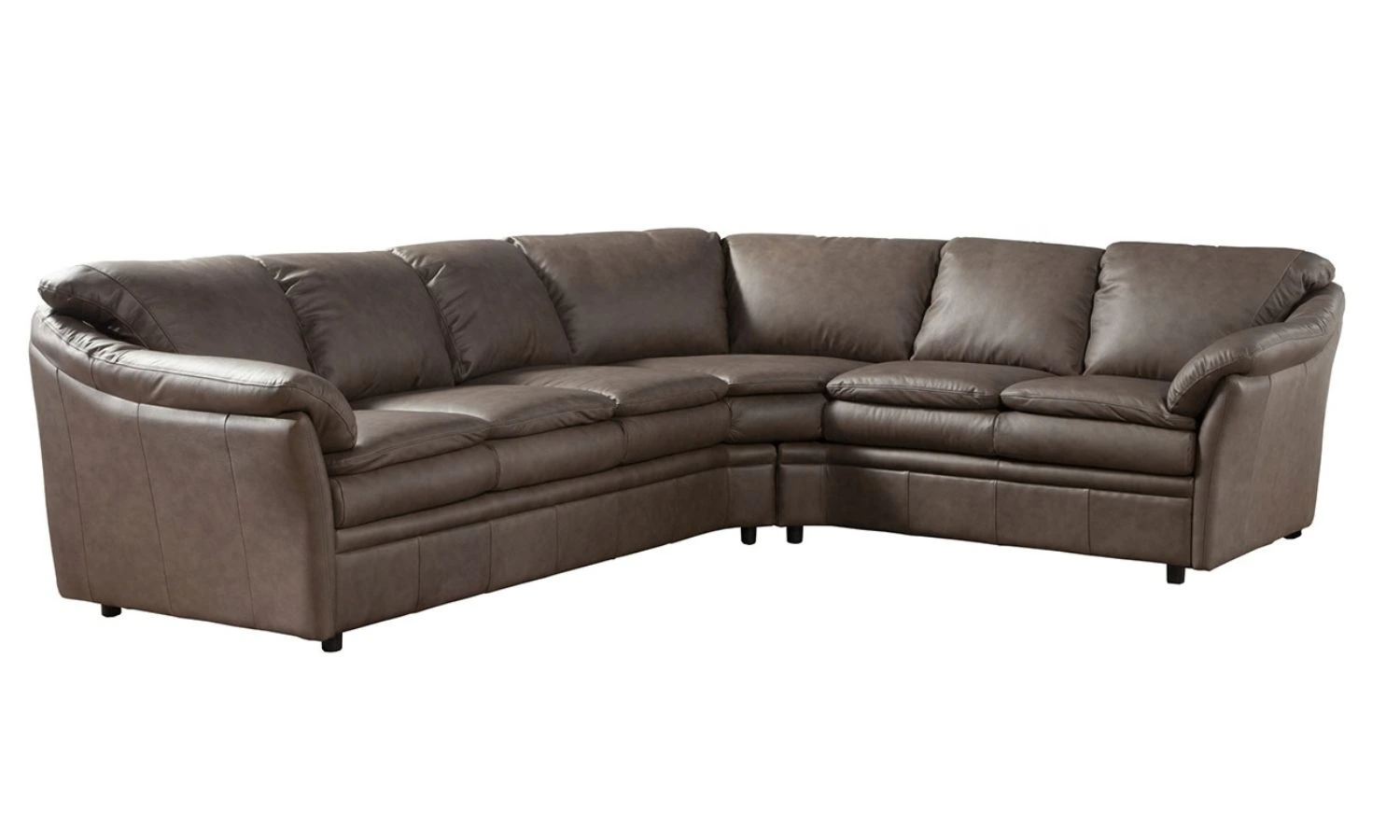
Pro tip: Don’t try to match every brown in the room to the leather. That’s one of the quickest ways to make a luxury space look flat. Aim for a family of related tones instead—two or three “browns” that clearly belong together but aren’t identical.
Get The Scale Right (So The Room Feels Balanced)
Leather often comes in substantial silhouettes (deep seats, thick arms, generous cushions). That’s part of the appeal—but it changes what the room needs around it:
- If your leather piece is large and low (common with sectionals), add height with a floor lamp, taller art, or a bookcase to keep the room from feeling compressed.
- If your leather piece is tailored and upright (like a classic sofa or club chair), add softness with a thicker rug, layered textiles, and warmer lighting.
- If your leather is dark, plan on at least one lighter counterbalance (rug, curtains, or a light accent chair) so the seating doesn’t visually “sink” into the space.
If you’re deciding between a sofa and a sectional as your anchor piece, this breakdown on leather sofa vs sectional can help you choose the right silhouette for your layout. And if you’re thinking long-term (as you should with investment-grade pieces), it’s worth reading how long leather furniture lasts before you buy.
A Simple Palette Rule That Works
If you want a clean framework, use:
- 1 anchor: the leather sofa/sectional/chair
- 2 supporting neutrals: rug + main textiles (think ivory, oatmeal, charcoal, warm gray)
- 1–2 accent notes: one metal + one color accent (brass + olive, or black metal + rust, etc.)
This prevents the common mistake of adding five accent colors and wondering why the room feels busy.
Step 2: Add Depth With Rugs (The Fastest Win)
If you only change one thing to create a layered effect, change the rug. A rug does three big jobs in a leather-centered room:
- Softens leather’s structured look
- Defines the seating zone (especially in open layouts)
- Adds pattern without competing with leather’s grain
In open layouts, the rug becomes even more important because it’s doing visual “architecture.” If your living room flows into the kitchen or dining room, you may also want to review what tends to work best for an open-concept living room before you lock in your seating plan.
Get The Rug Size Right First
Most living rooms look “unfinished” because the rug is too small. In general, you want the front legs of your main pieces on the rug at minimum. In larger rooms, go bigger so the whole arrangement feels intentionally placed.
Quick sizing check: If you can see a big “moat” of bare floor around your seating, your rug is probably undersized.
Pick The Right Texture (Not Just The Right Color)
Leather already has texture (grain, stitching, natural variation). Your rug should add a different kind of texture:
- Wool: resilient, refined, and comfortable underfoot—an easy luxury upgrade.
- Flatweave: cleaner profile, great for a modern ranch look and for high-traffic homes.
- Vintage-style / faded pattern: brings depth and “collected” character without feeling loud.
- Natural fiber (jute/sisal): adds earthy contrast; consider a softer layer elsewhere if comfort is a priority.
If durability is a priority (kids, pets, guests, everyday use), you may also like this practical guide to leather furniture for families.
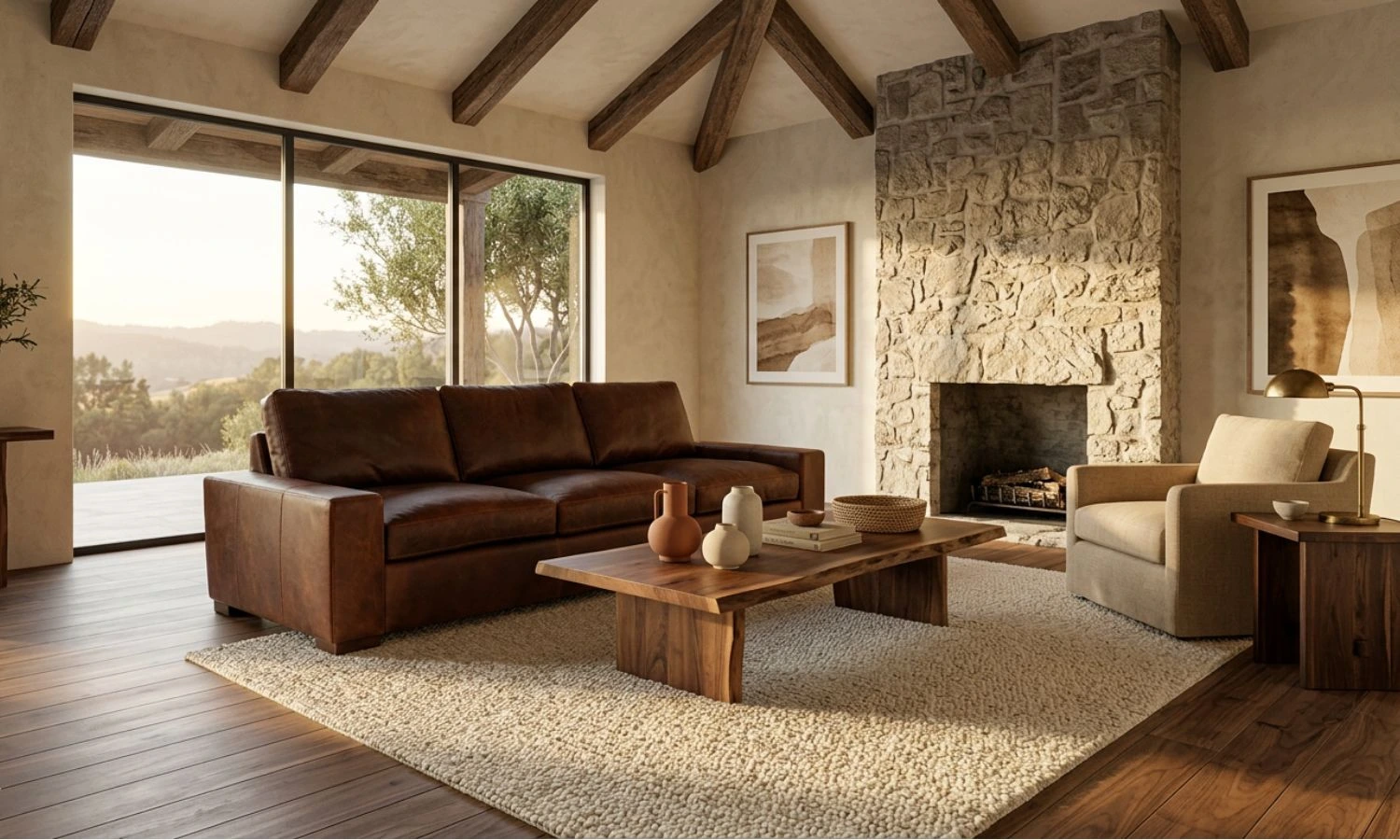
Rug Directions That Complement Leather
|
Leather Tone/Style |
Rug Direction | Result |
|
Cognac / saddle brown |
Cream wool, faded vintage, muted geometric |
Warm, collected, refined |
|
Dark brown / espresso |
Light neutral, textured wool, subtle stripe |
Balanced (less visually heavy) |
|
Black leather |
Ivory/gray/taupe, higher-contrast pattern |
Modern and intentional |
|
Distressed / character leather |
Flatweave, restrained Southwestern influence, simple weave |
Rustic without feeling themed |
| Light tan leather | Charcoal, denim blue, olive, layered neutrals |
Airy, dimensional, relaxed |
Placement Details That Make the Room Feel Designed
- Center the rug on the seating conversation area, not the room. In open layouts, the rug is what visually “builds the room.”
- Leave a consistent border where you can. Uneven edges can make the layout feel accidental.
- Use a quality rug pad. It improves comfort, prevents shifting, and makes the whole room feel more substantial.
Bottom line: the rug doesn’t need to match the leather. It needs to create contrast so the leather reads as the hero.
Step 3: Bring in Wood for Warmth and Structure
Wood is leather’s natural companion: both have grain, variation, and a sense of permanence. The key is to use wood like a supporting actor—present, important, but not overpowering.
Choose the Wood Tone Based on the Mood You Want
- Walnut / darker woods: polished, architectural, modern-luxury
- Oak / mid-tone woods: versatile, open, transitional
- Reclaimed / distressed woods: patina, warmth, modern ranch credibility
Mix Wood Finishes the Right Way
You don’t need every wood surface to match. You do need them to feel like they belong in the same family. Use this simple approach:
- Pick a “dominant” wood: usually your coffee table or your largest casegood.
- Add one “supporting” wood: side tables or a console that is clearly different, but complementary (lighter, darker, or more rustic).
- Repeat one detail: a similar undertone (warm vs. cool), or a repeated metal finish on hardware/legs.
Shape and Silhouette Matter as Much as Finish
Leather can be smooth and tailored, or rugged and character-rich. Let your tables either echo or intentionally contrast:
- Tailored leather + clean-lined wood: feels modern and composed.
- Tailored leather + rustic wood: feels modern ranch (one of the strongest combinations).
- Distressed leather + refined wood: keeps the room elevated, not overly casual.
Pro tip: One strong wood moment (a substantial coffee table, a mantel, a console) often reads more luxurious than five smaller rustic pieces. The more “character” your wood has, the more you’ll want to edit everything else.
Step 4: Use Textiles to Soften Leather Without Hiding It
Textiles are where the room becomes comfortable and lived-in. But there’s a specific goal when you’re decorating around leather: soften it, don’t smother it. A handcrafted leather piece is worth seeing—grain, stitching, shape and all.
Pillows: Fewer, Better, More Intentional
Instead of piling on lots of small pillows, choose a few that bring texture first, pattern second. Here are two easy formulas:
- The 2-2-1 method: two solid textured pillows + two subtle pattern pillows + one accent pillow (different shape or color).
- The “quiet luxury” method: three pillows max, each a different texture (linen + wool + velvet), all within a tight palette.
Texture options that look especially good against leather:
- Linen: relaxed, breathable, great against smooth leather
- Wool / woven textures: instant warmth and depth
- Velvet (sparingly): adds refined contrast
- Leather-on-leather accents (sparingly): a tooled leather pillow or small detail can be a sophisticated Western nod—just avoid overdoing it.
Throws: One Strong Layer Is Enough
A single throw (folded, not tangled) can make the room feel inviting. Focus on contrast:
- Against a smooth leather sofa, try a chunky knit or woven throw.
- Against distressed leather, try a cleaner weave (linen, cotton blend) so the room stays refined.
Don’t Forget Window Treatments
Window treatments are an underrated layer—especially in bright Texas light. They can soften the room visually, reduce glare on leather, and help everything feel finished. Simple options that work well with leather:
- Linen or linen-blend drapery: adds softness and height.
- Woven shades: bring an organic texture that pairs naturally with leather and wood.
- Tailored drapery + woven shade combo: a luxury look that still feels livable.

Textile Layering Checklist
- Does this add a different texture than the leather?
- Does it connect to something else (rug, art, lighting) so it feels deliberate?
- Are you leaving enough leather visible to appreciate the craftsmanship?
- Is the room starting to feel “busy”? If yes, remove the weakest textile layer first.
Step 5: Layer Lighting to Make Leather Look Richer
Leather changes dramatically depending on lighting. The grain can look flat under harsh overhead light—and deep and dimensional with the right side lighting. If your leather doesn’t look as rich at night as it does in the showroom, lighting is usually why.
Build a Layered Lighting Plan
A well-lit living room typically includes:
- Ambient lighting: overall illumination (overhead fixtures, recessed)
- Task lighting: table/floor lamps for reading and conversation
- Accent lighting: art lights, picture lights, shelf lighting
Use Warm Light (and Dimmers) for Leather
Warm light is usually more flattering on leather because it brings out depth and softness. Cool light can make leather feel stark or emphasize shine. Dimmers are especially helpful because they let the room shift from daytime clarity to evening comfort.
Placement Tips That Instantly Improve the Room
- Add at least two lamps in the living room (table lamps, floor lamps, or one of each). Side lighting creates shadow, which is what reveals texture.
- Use shade materials that soften light (linen, fabric, parchment-style) rather than hard, shiny shades that can create glare on leather.
- Give seating its own light. A reading lamp near a leather chair makes that chair feel like a destination, not just extra seating.
Step 6: Finish With Accents That Add a Point of View
Accents are where a layered room becomes personal. They’re also where rooms go off the rails—usually because there’s too much, or everything is the same scale. When leather is the anchor, accents should support the story, not compete with it.
Use Fewer, Larger Accents (Especially With Substantial Seating)
A large leather sectional will visually “absorb” tiny decor. Instead, choose pieces that can hold their own:
- Oversized art above the sofa
- A substantial ceramic bowl or tray on the coffee table
- A tall vessel or sculpture on a console
- A pair of weighty lamps that visually anchor side tables
Art Sizing (the Rule That Prevents the “Floating Frame” Look)
- Above a sofa, aim for art that’s roughly two-thirds the width of the sofa (or a well-balanced pair/triptych).
- If you want multiple pieces, keep frames consistent and spacing intentional so it feels curated, not random.
Expand the Material Mix
If leather + wood are your main materials, bring in 2–3 of these for contrast:
- Ceramic (matte glaze is especially good with leather)
- Stone (travertine, marble, or a textured natural stone)
- Aged metal (antique brass, blackened steel)
- Glass (helps lighten a heavier palette)
- Natural fiber (woven baskets, subtle grasscloth)
How to Style a Coffee Table Without Clutter
Try this simple structure:
- One grounding piece: a tray or large book stack
- One sculptural object: bowl, ceramic piece, or collected item
- One organic element: greenery, branch, or florals (even a single stem)
In Texas homes, a Western note can feel elevated when it’s expressed through materials and craftsmanship (tooled leather details, hand-finished wood, earthy ceramics)—not loud motifs everywhere.
A Simple Layering Sequence You Can Follow
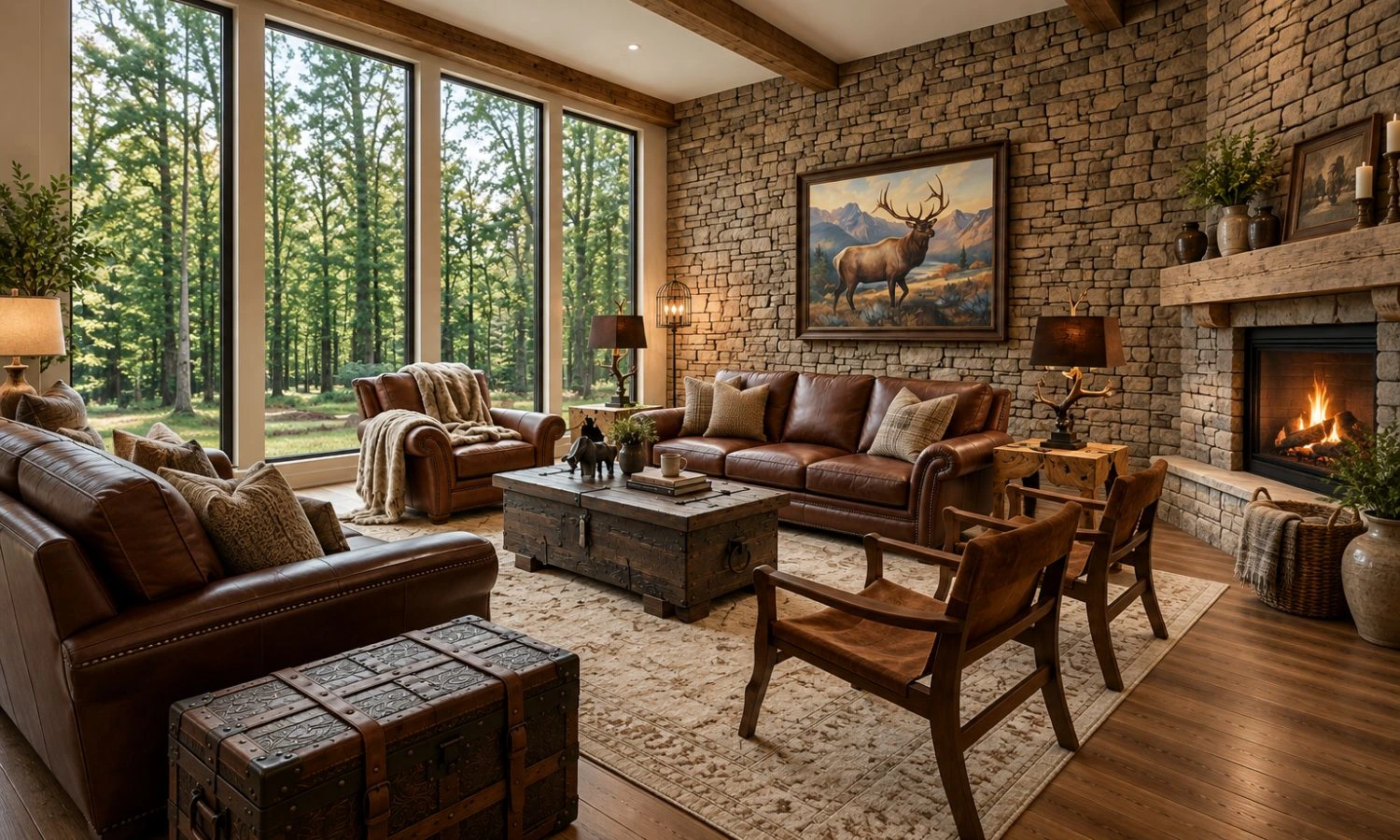
If you’ve ever bought pieces you love individually, but the room still doesn’t feel “done,” it’s often because the layers were built out of order. Here’s a straightforward sequence you can use whether you’re furnishing from scratch or refreshing what you already have:
- Choose the leather anchor. Focus on quality, comfort, silhouette, and scale. This is the investment piece that sets the tone.
- Lay the rug foundation. Size first, then color/pattern. The rug defines the “room within the room.”
- Add wood structure. Coffee table, side tables, console, or shelving. Choose one dominant wood tone and one supporting tone.
- Bring in textiles selectively. Pillows and throws for texture and comfort, plus window treatments for a finished look.
- Layer lighting. Add lamps to create depth and flattering shadows. Dimmers help everything feel richer at night.
- Edit accents last. Art, objects, and greenery—fewer, better pieces with intention.
A Quick “Layering Audit” You Can Do in 10 Minutes
- Stand in the doorway. Does your eye know where to land first? (It should be the leather anchor.)
- Look for one missing layer: rug scale, lighting, or height (often art) are the usual culprits.
- Remove one item that doesn’t add texture, function, or meaning. Layering improves quickly when clutter goes away.
Quick test: Step back and ask, “What’s the hero here?” If it’s the leather (it should be), remove or swap anything that competes with it.
Common Layering Mistakes (and Quick Fixes)
Most layering problems are easy to fix once you know what you’re seeing. Use these as a diagnostic checklist.
Mistake: Everything Is the Same Darkness
What it looks like: dark leather + dark floor + dark rug + dark tables, so the room feels heavy.
Fix: Add contrast with a lighter rug, lighter textiles, or a lighter accent material (ceramic, glass, or a lighter wood tone). Even swapping two pillows to a lighter tone can make the seating feel more dimensional.
Mistake: The Rug Is Too Small
What it looks like: the rug sits like an “island” under the coffee table instead of connecting the seating.
Fix: Move up a size. This alone can make the room feel intentionally designed.
Mistake: Pillows Are Doing All the Work
What it looks like: lots of pillows, but the room still feels unfinished.
Fix: Look at the big layers first (rug, lighting, wood). Pillows should be the finishing touch—not the solution.
Mistake: No Height Variation
What it looks like: everything sits at the same height (low sofa, low table, low accessories), so the room feels flat.
Fix: Add one taller element: a floor lamp, taller art, or a bookcase. Height adds energy and makes the room feel styled, not just furnished.
Mistake: “Themed” Styling Instead of Refined Western Character
What it looks like: too many literal motifs that compete with the natural beauty of leather and wood.
Fix: Choose one or two heritage-driven accents and let the leather, wood, and craftsmanship carry the story.
Mistake: Shiny Glare on Leather at Night
What it looks like: the leather feels harsh or reflective once the sun goes down.
Fix: Add side lighting (lamps) with softer shades, and use dimmers. Leather almost always looks better with warm, layered light.
Conclusion
A layered living room isn’t about filling the space—it’s about building depth with purpose. When you start with quality leather furniture and layer in rugs, wood, textiles, lighting, and well-edited accents, the room feels warmer, more dimensional, and more personal (without losing that refined, high-end finish).
If you’re ready to start browsing anchor pieces, take a look at the Texas Leather Collection for handcrafted options with lasting character.
Want a second set of expert eyes? Request a free design consultation at our San Antonio or Austin showroom and we’ll help you build a layered living room that fits your home, your layout, and your style—down to the details.