A leather sofa isn’t just a seat, it’s one of the biggest color decisions in your entire home. Get the color right and the room feels pulled together for decades. Get it wrong and even beautiful furniture can feel “off” next to your walls, floors, and lighting.
This guide walks you through an easy, designer-approved way to choose between brown, tan, black, cream, and other neutrals, using the finishes you already have (paint, flooring, rugs, and wood tones) plus simple at-home swatch tests. The goal: a leather sofa that looks intentional in your space today and still feels right years from now.
Table of Contents
- Step 1: Start With What Won’t Change (Walls, Floors, Wood)
- Step 2: Pick the “Vibe” You Want Your Leather Sofa to Create
- Step 3: Choose a Color Family (and What It Does to the Room)
- Step 4: Match Undertones (Warm vs. Cool vs. Neutral)
- Step 5: Use Rugs, Wood Tones, and Lighting to Lock It In
- Step 6: Adjust for Room Size, Layout, and Sunlight
- Step 7: Test Swatches the Right Way (So You Don’t Regret It)
- Quick Cheat Sheet: Best Leather Colors for Common Wall + Floor Combinations
- Don’t Forget Finish and Patina
- Conclusion: Make the Final Call With Confidence
Step 1: Start With What Won’t Change (Walls, Floors, Wood)
Before you fall in love with a shade online, anchor your decision to the surfaces you’re not replacing. These are your “non-negotiables,” and they’re the reason one leather sofa looks amazing in a showroom but feels wrong at home.
- Walls: warm white, creamy beige, greige, taupe, gray, or bold paint
- Floors: warm oak, medium walnut, dark-stained wood, tile, stone, concrete
- Wood tones: coffee tables, beams, built-ins, trim, cabinetry
- Rugs: color + pattern (your largest textile often “sets” the palette)
- Stone/metal: fireplaces, hardware, and lighting finishes
Do this first: stand in the room and take a few photos in natural daylight. Then step back and ask: what are the three biggest colors I see? In many Texas living rooms, that answer is usually some mix of warm wood, light walls, and a stone or tile element. Your leather should relate to those big pieces, not fight them.
Rule of thumb: Aim for coordination—not an exact match. Leather has natural variation (and often patinas over time), so a perfect “matchy” brown usually looks less sophisticated than layered tones that feel collected.
If you’re working with both modern and Western elements, say, clean-lined upholstery with hand-carved wood or a rustic beam ceiling, this step matters even more. Your sofa color is one of the easiest ways to make that blend feel intentional.
Step 2: Pick the “Vibe” You Want Your Leather Sofa to Create
Ask yourself one question: Do you want the sofa to blend in… or stand out? That single decision narrows your options fast.
- Blend in (calm + refined): choose a leather color close to your rug or floor value (light/medium/dark).
- Stand out (statement piece): choose contrast—light sofa on dark floor, or dark sofa on a light rug.
Also decide what you want the room to feel like when you walk in:
- Warm + welcoming: tan, cognac, saddle, medium brown
- Moody + dramatic: espresso brown, black, deep charcoal
- Light + elevated: cream, warm ivory, greige, stone
- Clean + tailored: black, charcoal, cooler taupe

This is especially helpful in Texas interiors, where many homes mix modern lines with rustic Western character. A statement leather sofa can “make the room,” but only if the surrounding finishes support it (the right rug, the right wood tones, and the right lighting).
Step 3: Choose a Color Family (and What It Does to the Room)
Leather reflects light differently than fabric, so color has a bigger impact than many people expect. The same neutral can look lighter, darker, warmer, or cooler depending on texture, finish, and lighting. If you want to see how grain, sheen, and texture change the way color reads, reference our Leather Furniture Texture and Grain Guide.
If you’re still narrowing down styles, you can also browse the Texas Leather Collection for leather options across modern, transitional, and Western-inspired looks.
Brown Leather Sofas: Warm, Grounded, and Timeless
Brown is the classic choice for a reason: it’s inviting, forgiving, and it pairs beautifully with natural materials (wood, stone, linen, wool).
- Best with: warm whites, creamy walls, earth tones, natural wood, stone fireplaces
- Overall feel: cozy, collected, “heirloom”
- Great for: transitional, traditional, and Western-inspired spaces
Pro tip: If your floors are medium-to-dark wood, a medium brown (rather than espresso-dark) often keeps the room from feeling heavy—especially with a lighter rug. If you love deep, dark leather, make sure you have enough contrast elsewhere (lighter walls, lighter textiles, and layered lighting).
Not sure which leather type you’re looking at? Read our guide to Understanding Leather Grades (Including Full-Grain) to compare characteristics that can subtly impact color and variation.
Tan/Camel/Cognac Leather Sofas: Bright, Welcoming, and Design-Forward
Tan and cognac leathers are favorites in modern homes because they add warmth without looking traditional. They’re also a great match for rooms that balance rustic texture with clean-lined design.
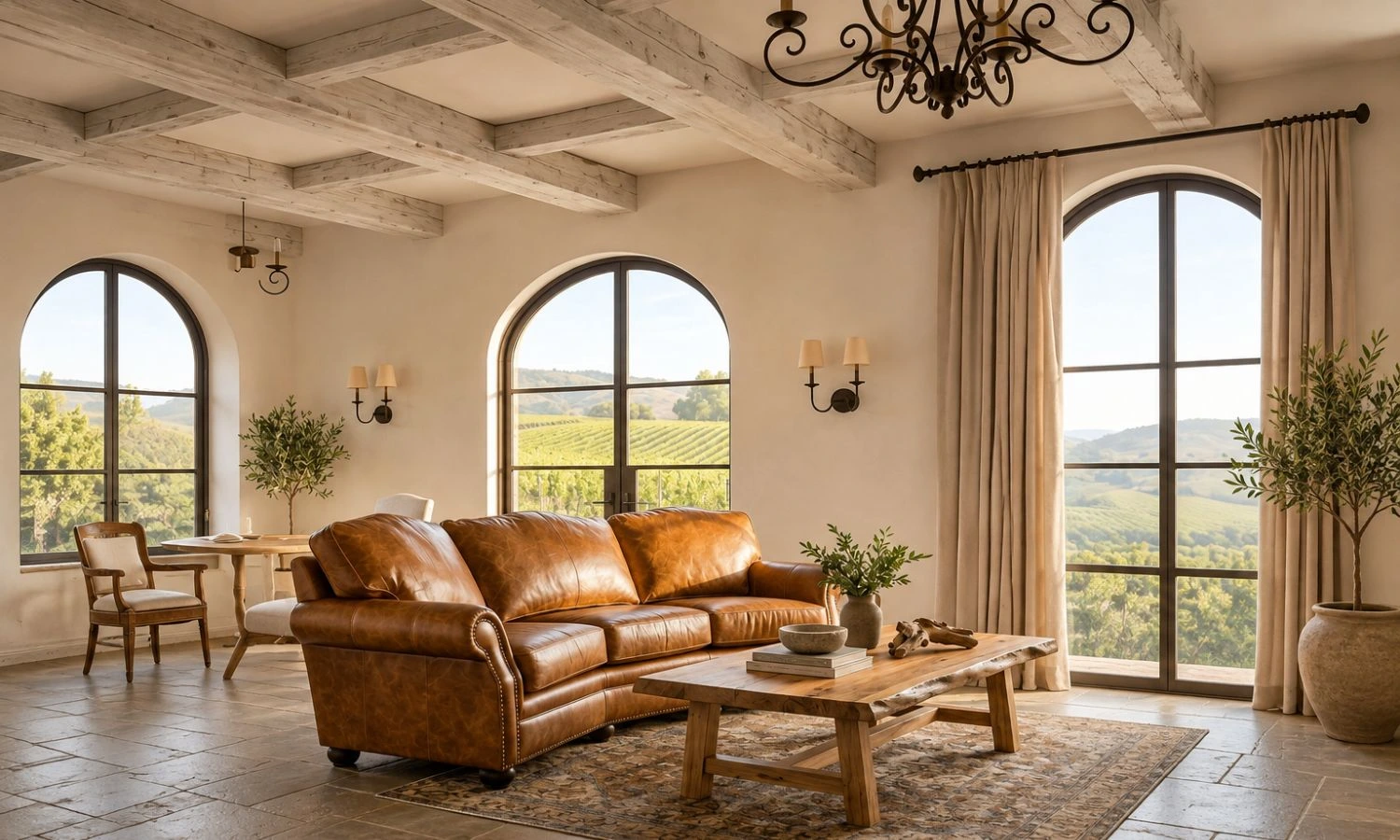
- Best with: white/cream walls, black accents, mixed woods, patterned rugs
- Overall feel: fresh, elevated, “designer”
- Great for: modern and modern-rustic rooms
Watch for: overly golden/yellow leather if your walls and floors already run warm. In that case, a slightly deeper saddle or a more neutral tan often reads richer and more expensive.
Black Leather Sofas: Tailored, Dramatic, and High-Contrast
Black leather can look sleek and architectural—or warm and refined—depending on the textures around it.
- Best with: light walls, lighter flooring, rugs with ivory/sand tones, lots of texture
- Overall feel: crisp modern (or refined Western when paired with rustic woods)
Pro tip: If you want black leather but worry about the room feeling flat, build in texture: a thick wool rug, nubby pillows, a woven chair, or a warm wood coffee table makes black leather feel intentional instead of harsh.
Cream/Ivory/Light Neutral Leather Sofas: Soft, Open, and Luxe
Light leather looks high-end and makes a room feel larger, especially in spaces with limited square footage or lower ceilings.

- Best with: warm woods, layered neutrals, organic textures
- Overall feel: airy, elevated, serene
Light leather shows denim transfer, pet oils, and everyday marks more quickly than mid-tones. If you want a few practical pointers before committing, see our guide to Leather Furniture for Families.
Greige, Taupe, and Stone: The “Go-with-Everything” Neutrals
If your home mixes warm and cool finishes (very common), greige and taupe can be the easiest bridge between them.
- Best with: mixed finishes (warm + cool), gray floors, modern palettes
- Overall feel: calm, sophisticated, easy to accessorize
Design advantage: These shades make it simple to change your look seasonally, swap pillows, throws, and art without the sofa dictating everything.
Step 4: Match Undertones (Warm vs. Cool vs. Neutral)
This is the difference between “perfect” and “something’s not quite right.” Two browns can clash if one is warm (reddish) and the other is cool (ashy/gray). And paint that looks neutral on a wall can suddenly look pink or green once leather enters the room.
- Warm undertones: honey oak, terracotta, travertine, warm beige paint, brass/gold metals
- Cool undertones: gray flooring, crisp white paint, blue-based grays, chrome/nickel, some concrete finishes
- Neutral undertones: balanced woods, soft whites, natural stone, mixed metals
Quick test: Hold your leather swatch next to your floor and a piece of white paper. If the leather looks more orange/red, it’s warm. If it looks more gray/ashy, it’s cool. If it stays balanced, it’s neutral.
Second test (highly recommended): Put the swatch next to your wall paint (or a paint sample). Many homeowners choose paint first—then discover their “neutral” leather suddenly makes the wall color look too yellow, too pink, or too gray. It’s better to catch that now than after delivery.
When in doubt, choose an undertone that connects to something you already love in the room: the warm threads in your rug, the stain on your coffee table, or the stone in your fireplace. That connection is what makes the room feel designed.
Step 5: Use Rugs, Wood Tones, and Lighting to Lock It In
If your leather sofa is the anchor, rugs, wood finishes, and lighting are the pieces that make the color feel “right.” Small adjustments here can make a huge difference.
Rugs (The Easiest Way to Make Leather Look Right)
- Patterned rugs: give you flexibility—pull one or two subtle colors from the rug to connect the room (a warm tan thread, a charcoal detail, a creamy background).
- Solid rugs: make the sofa the star—choose enough contrast to define the seating area and keep the room from looking monotone.
- Natural fiber rugs (jute/sisal): look especially good with tan, cognac, and warm browns, and they fit perfectly with modern-rustic and Western-inspired spaces.

Helpful guideline: If your sofa and rug are similar in color value, add contrast with pillows, a throw, or side chairs. If your sofa and rug are high contrast, keep accessories calmer so the room doesn’t feel busy.
Wood Tones (Don’t Ignore the Coffee Table)
- Warm woods: pair beautifully with cognac, saddle, and chocolate leather.
- Cool/gray-washed woods: often look best with taupe, charcoal, or a deeper neutral brown.
- Rustic/carved woods: can handle contrast—cream leather with dark carved wood can look seriously luxe.
If you have multiple wood tones (common in open-concept homes), don’t try to “match” all of them with the leather. Instead, pick one dominant wood tone to harmonize with and let the others be supporting characters.
Lighting (Leather Changes More Than You Think)
Natural light in Texas homes can be intense, and leather will shift as the day changes. A leather that looks perfect at noon can look much warmer (or much darker) at night.
- Morning light: often cooler and softer
- Midday sun: brighter, can wash colors out
- Evening lamps: warmer, can turn browns more golden
Pro tip: Warm bulbs can make brown leather look more golden at night. Cooler LEDs can make warm browns look muddy. If you’re planning to update lighting, do it before you finalize upholstery.
Step 6: Adjust for Room Size, Layout, and Sunlight
Color isn’t just aesthetic, it changes how big, bright, and balanced a room feels.
- Small rooms: cream, light tan, greige, and medium browns usually feel more open than black or very dark chocolate.
- Large rooms: darker leathers can feel grounded and dramatic, especially with a generous rug and layered lighting.
- Open concept spaces: choose a leather color that relates to the adjacent rooms (kitchen cabinets, dining wood tones, nearby rugs) so the home feels cohesive. If you’re furnishing a great room, see our tips for the Best Leather Sofa Set for an Open-Concept Living Room.
- Low ceilings: lighter leather can visually lift the room; darker leather can still work if walls and rug are lighter for contrast.
- Lots of direct sun: mid-tones (saddle, medium brown, taupe) often strike the best balance between warmth and practicality.
Practical note: If your sofa sits in the sun, consider how the leather might evolve over time. Some homeowners love that lived-in patina; others prefer a more consistent look. Either way, it’s worth thinking through placement, window treatments, and rotation of cushions (if applicable).
Step 7: Test Swatches the Right Way (So You Don’t Regret It)
If there’s one step you don’t want to skip, it’s this one. Leather is tactile and light-reactive, photos and tiny swatches can’t tell the whole story.
- Pick 3–5 finalists. Too many swatches makes it harder to see the real differences.
- Test near the sofa’s future location. Don’t judge color on a kitchen counter under different lighting.
- Compare against the floor and rug. Leather often looks fine against paint—but wrong next to flooring.
- Add your “hero” wood tone. If you have a statement coffee table or carved pieces, test next to that.
- Re-check at night. This is where many people change their mind (for good reason).
Bonus move: If you can, ask for a larger sample or a cutting that shows more variation. With top-grain leather, natural character is part of what makes it beautiful, and larger samples help you understand how that color will read across a full sofa.

Quick Cheat Sheet: Best Leather Colors for Common Wall + Floor Combinations
- Cream walls + warm wood floors: tan, cognac, saddle, medium brown, warm ivory
- White walls + dark wood floors: cognac, medium brown, black (with a lighter rug), cream (for contrast)
- Greige walls + medium wood floors: taupe, chocolate, neutral brown, charcoal
- Gray floors + white walls: black, charcoal, taupe, deeper neutral brown (avoid overly orange leather)
- Warm beige walls + travertine/tile floors: saddle, medium brown, warm ivory, cognac
- Dark paint (navy/green/charcoal) + lighter floors: tan/cognac for contrast, or deep brown for a moody layered look
Don’t Forget Finish and Patina
Two leathers with the same color name can look different depending on finish and how they’re made. Top-grain leather can develop beautiful patina over time, and some leathers show more natural markings and tonal variation than others.
When you’re choosing a leather sofa, ask what changes to expect-and whether you prefer a more uniform look or a more organic, lived-in finish. To see why many homeowners prefer how leather evolves, read Why Leather Sofas Look Better With Age. And if you want a deeper breakdown of what you’re buying, revisit Understanding Leather Grades (Full-Grain vs. More Processed Options).
Make the Final Call With Confidence
When you’re deciding on leather color, let the room do the talking. Start with walls and floors, choose the mood you want, confirm undertones, and then test swatches in your real lighting. That process prevents expensive second-guessing, and helps your leather sofa look intentional for years.
Request a free design consultation at our San Antonio or Austin showroom to compare leather options in person and get guidance tailored to your home. You can find your nearest showroom here: Texas Leather Interiors Locations.